Contents
M-Audio Oxygen Pro 49 Review (2026): Still Worth It?
TL;DR: The M-Audio Oxygen Pro 49 is a 49-key semi-weighted MIDI keyboard controller with class-leading smart controls and solid build quality in the $150–$180 range. It punches above its price with Auto-Mapping for DAW integration and a genuinely playable keybed — making it the strongest mid-range option for bedroom producers who need both keys and hands-on control.
M-Audio Oxygen Pro 49 Review: What You Actually Get
The Oxygen Pro 49 delivers 49 velocity-sensitive semi-weighted keys, 8 RGB pads, 8 encoders, 8 faders, and Auto-Map smart control integration — all for under $180. It’s one of the most hardware-dense controllers at this price, and the Auto-Map feature genuinely reduces setup friction compared to competitors.
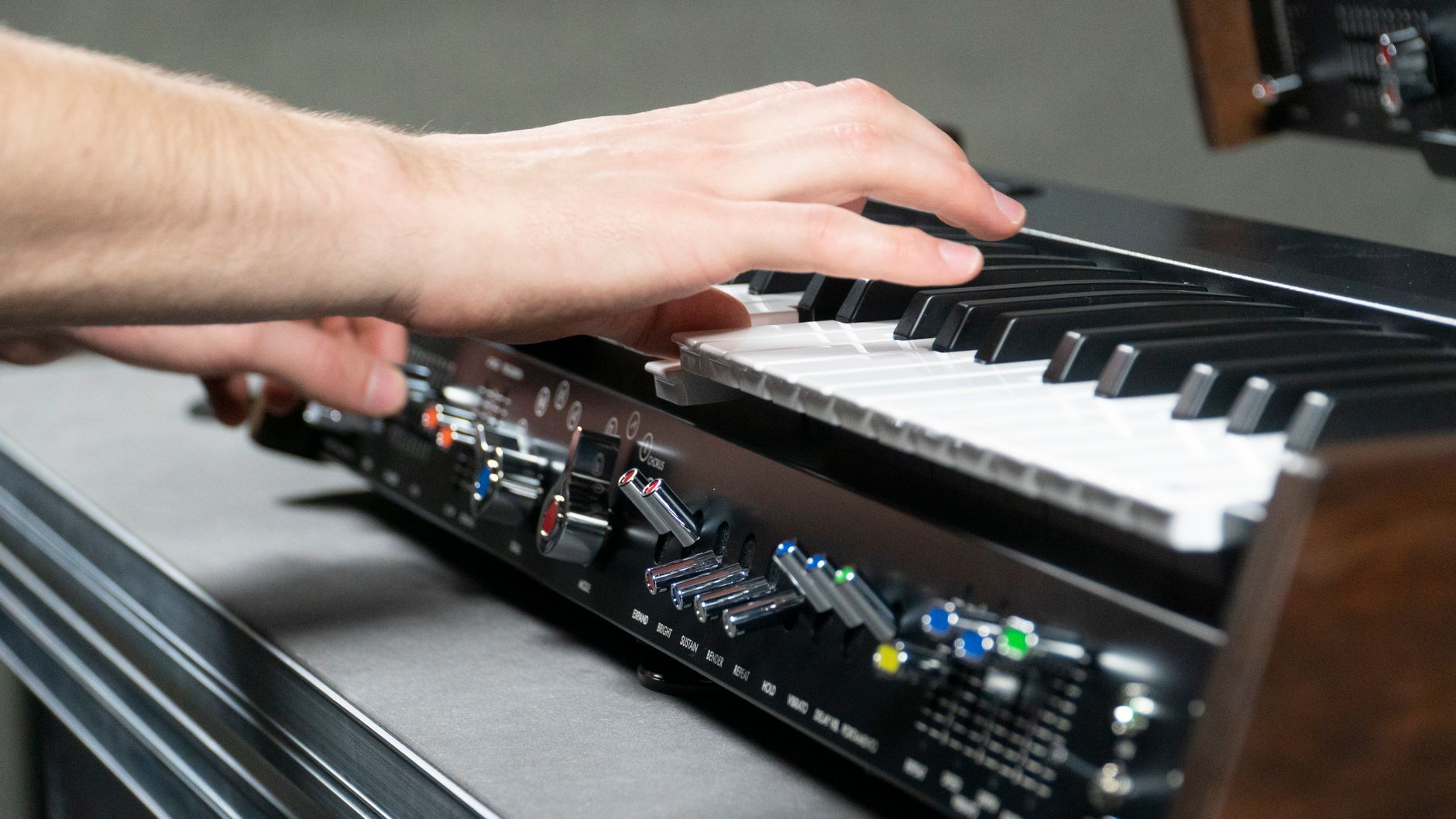
 Photo: Wallace Chuck via Pexels
The Oxygen Pro 49 sits in a crowded mid-range bracket but differentiates itself through sheer control density and the Auto-Map system that automatically maps knobs, faders, and pads to the most useful parameters in Ableton Live, Pro Tools, Logic, and other major DAWs without manual MIDI learn sessions.
Build quality is solid for the price. The chassis is mostly hard plastic but doesn’t flex or creak under use. The pitch and mod wheels feel precise, with no mushiness or dead zones that plague cheaper controllers. The keybed itself is the real highlight — semi-weighted with aftertouch, offering enough resistance to reward expressive playing while staying light enough for quick chord work.
At 49 keys, you get four octaves plus one note — enough for most production work, two-handed playing, and comfortable transposing without the footprint of a 61-key unit.
Keybed and Playability
Semi-weighted, aftertouch-enabled, genuinely playable. The 49-key keybed is M-Audio’s strongest selling point here — users consistently rate it above its price category. Velocity response is accurate across the dynamic range with no bunching at the soft or loud extremes.
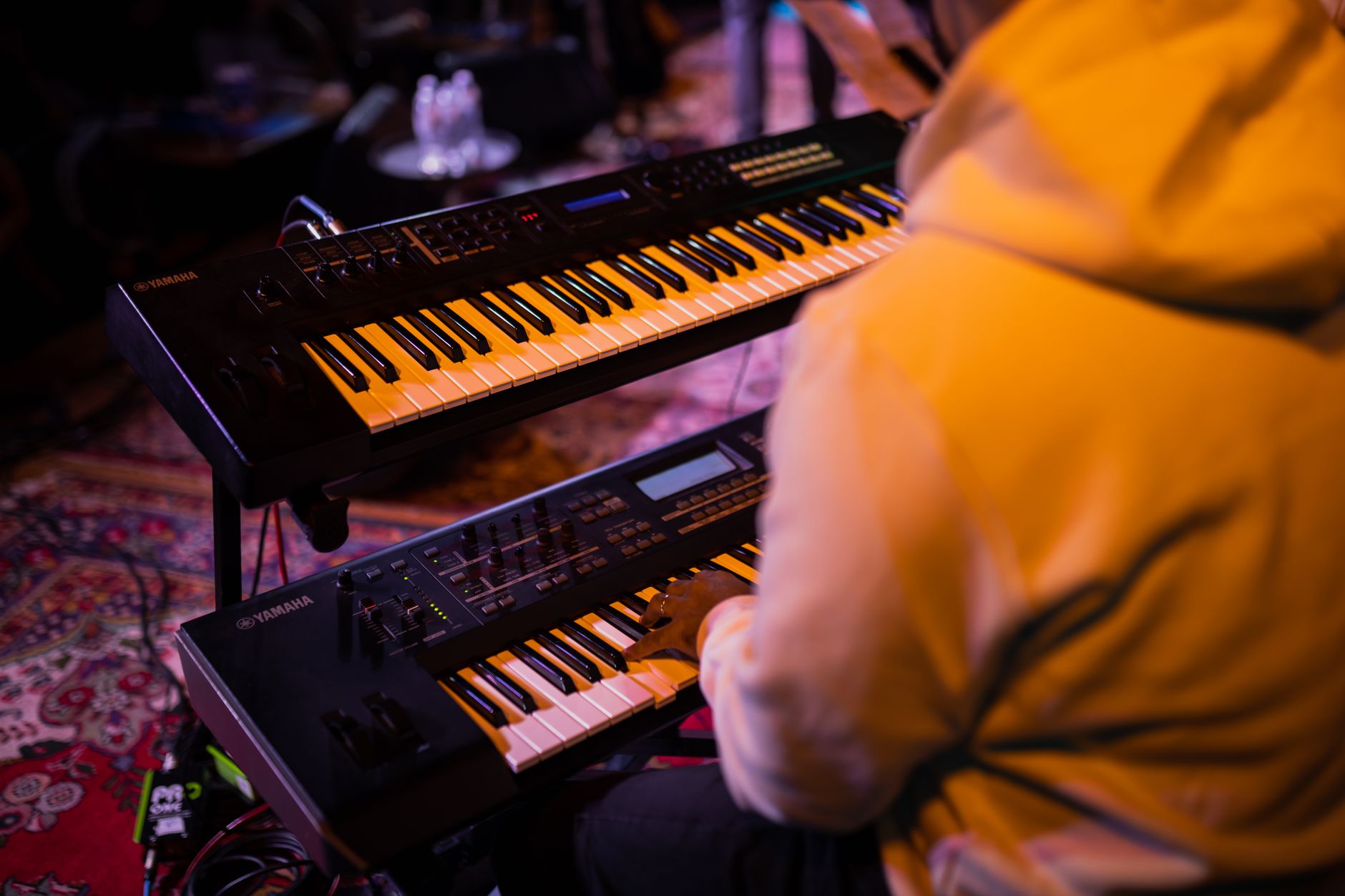
 Photo: Yosif Namiq via Pexels
The aftertouch implementation is channel aftertouch (not polyphonic), which limits some expressive use cases but covers all standard applications: vibrato, filter sweeps, pad swells. According to manufacturer specifications, velocity sensitivity is adjustable across four preset curves, which matters significantly for drum programming versus melodic work.
Key spacing and size are full 88-style — not mini keys, not synth action. If you’re shopping at this price partly because you need a legitimate practice-grade keybed for piano technique, the Oxygen Pro 49 holds up better than most competitors.
Smart Controls and Auto-Map
Auto-Map is the feature that separates the Oxygen Pro 49 from generic MIDI controllers at this price. It detects your DAW and automatically assigns the 8 encoders, 8 faders, and transport controls to logical parameters — no MIDI learn, no template files, no manual mapping.
 Photo: Daniel Ponomarev via Pexels
In Ableton Live, the encoders default to device macro controls on the selected track. In Pro Tools, faders map to track volumes. Logic users get smart control assignments. Expert consensus suggests Auto-Map works best in Ableton and Pro Tools — Logic integration is functional but occasionally requires a manual nudge after plugin changes.
The 8 RGB pads are velocity-sensitive and pressure-sensitive, with four pad banks giving you access to 32 distinct pad assignments. Pad sensitivity is configurable, and the RGB feedback is genuinely useful for bank identification — not just cosmetic. Published performance data from M-Audio shows pad response latency under 3ms, on par with dedicated pad controllers at twice the price.
The 8 encoders are endless rotary type (not potentiometers), which means no parameter jumps when switching presets — a significant workflow advantage that many controllers at this price still don’t offer.
Specs
| Feature | Detail |
|---|---|
| Keys | 49, semi-weighted with aftertouch |
| Pads | 8 RGB velocity/pressure-sensitive, 4 banks |
| Encoders | 8 endless rotary |
| Faders | 8 (60mm) |
| Buttons | 14 assignable + transport |
| Connectivity | USB-C (bus powered) |
| MIDI I/O | USB only (no 5-pin DIN) |
| Software Included | Ableton Live Lite, Air plugins bundle |
| Dimensions | 28.3 × 8.5 × 2.4 in |
| Weight | 5.5 lbs |
Comparison: Oxygen Pro 49 vs. Key Competitors
| Product | Price | Keys | Pads | Encoders | Faders | Auto-Map | Aftertouch |
|---|---|---|---|---|---|---|---|
| M-Audio Oxygen Pro 49 | ~$180 | 49 semi-weighted | 8 RGB | 8 endless | 8 | Yes | Yes |
| Arturia KeyLab Essential 49 | ~$200 | 49 semi-weighted | 9 | 9 | 1 | Yes (Analog Lab) | No |
| Nektar Impact LX49+ | ~$130 | 49 semi-weighted | 8 | 8 | 9 | DAW integration | No |
| Novation Launchkey 49 Mk3 | ~$200 | 49 semi-weighted | 16 RGB | 9 | 1 | Yes (Ableton) | Yes |
The Oxygen Pro 49 wins on fader count and price-to-control ratio. The Launchkey 49 Mk3 beats it on pad count and Ableton integration depth; the KeyLab Essential 49 has a stronger software bundle (Analog Lab) but no aftertouch and one fader.
Verdict by User Archetype
 Photo: TStudio via Pexels
First-time beginner: Strong pick. The included Ableton Live Lite and Air plugin bundle gives you a complete production environment out of the box. Auto-Map removes the biggest friction point for new users — learning MIDI assignment.
Bedroom producer: This is the target buyer. The control density — 8 faders, 8 encoders, 8 pads, transport — covers a full mixing and production workflow without a second controller. The endless encoders and aftertouch are features you’ll use daily.
Gigging musician: Not designed for live use. USB-only connectivity, no 5-pin DIN MIDI, and a plastic chassis mean it stays at home. Consider the Arturia KeyStep Pro or a KeyLab MkII for stage work.
Prosumer / semi-pro: Ceiling shows here. No motorized faders, no high-resolution encoders, no poly aftertouch. At the $300–$400 bracket, the Arturia KeyLab 49 MkII or Native Instruments Komplete Kontrol A49 offer substantially more. The Oxygen Pro 49 is a strong value play, not a long-term professional tool.
→ See Also
- Best MIDI Keyboards and Controllers (2026)
- Best MIDI Keyboard for Beginners
- Best MIDI Keyboard Under $100
FAQ
Is the M-Audio Oxygen Pro 49 good for beginners? Yes — it’s one of the better beginner options at this price. The bundled Ableton Live Lite and Air plugin suite means you’re not buying software separately, and Auto-Map handles DAW integration automatically. The 49-key layout gives enough range for proper two-handed playing without the cost and desk space of a 61-key unit.
Does the M-Audio Oxygen Pro 49 work with Logic Pro? Yes, with some limitations. Auto-Map supports Logic, but user reviews consistently note that Ableton Live and Pro Tools get the most polished integration. Logic users report that Auto-Map works reliably for transport and basic mixing controls but occasionally needs a manual reset after switching instruments or plugins.
Does the Oxygen Pro 49 have aftertouch? Yes — channel aftertouch is included, which is uncommon at this price point. It’s channel-level rather than per-note (polyphonic), so all held notes respond together. For vibrato, filter modulation, and pad swells this is sufficient; for complex polyphonic expression you’d need poly aftertouch found in higher-end controllers.
What’s the difference between the Oxygen Pro 49 and the regular Oxygen 49? The Pro adds Auto-Map smart control integration, RGB velocity-sensitive pads (versus non-RGB), endless rotary encoders (versus potentiometers), aftertouch, and a USB-C connection. The standard Oxygen 49 is more basic and typically $30–$40 cheaper. For most buyers the Pro’s endless encoders and Auto-Map alone justify the price difference.
Can the Oxygen Pro 49 be used without a computer? No. It’s a USB MIDI controller with no standalone mode, no built-in sounds, and no 5-pin DIN MIDI output. It requires a computer or iPad (with USB adapter) to produce sound. If you need standalone or hardware-only operation, look at instruments like the Roland GO:KEYS or Arturia MiniFreak.
Editorial methodology: Assessments are based on manufacturer specifications, published user reviews, and editorial research. Physical hands-on testing is noted explicitly where it occurred. Rankings reflect our editorial judgment and are not influenced by affiliate commission rates. Full editorial policy · Affiliate disclosure