Contents
Rode PodMic Review (2026): Best Dynamic Mic Under $100?
TL;DR: The Rode PodMic is a broadcast-quality dynamic microphone that punches well above its price point. Its internal shock mount, built-in pop filter, and tight cardioid pattern make it one of the most plug-and-play dynamic mics for home studios and podcasters. If you want clean, warm vocal capture without spending $200+, this is the benchmark.
Rode PodMic Review: What You Actually Get
Direct Answer: The Rode PodMic delivers warm, full-bodied vocal tone with natural proximity effect and excellent off-axis rejection. It requires a solid preamp (or an interface with clean gain), but once dialed in, it competes with mics costing twice as much. The internal shock mount and pop filter make the out-of-box experience genuinely impressive for the price.
 Photo: RDNE Stock project via Pexels
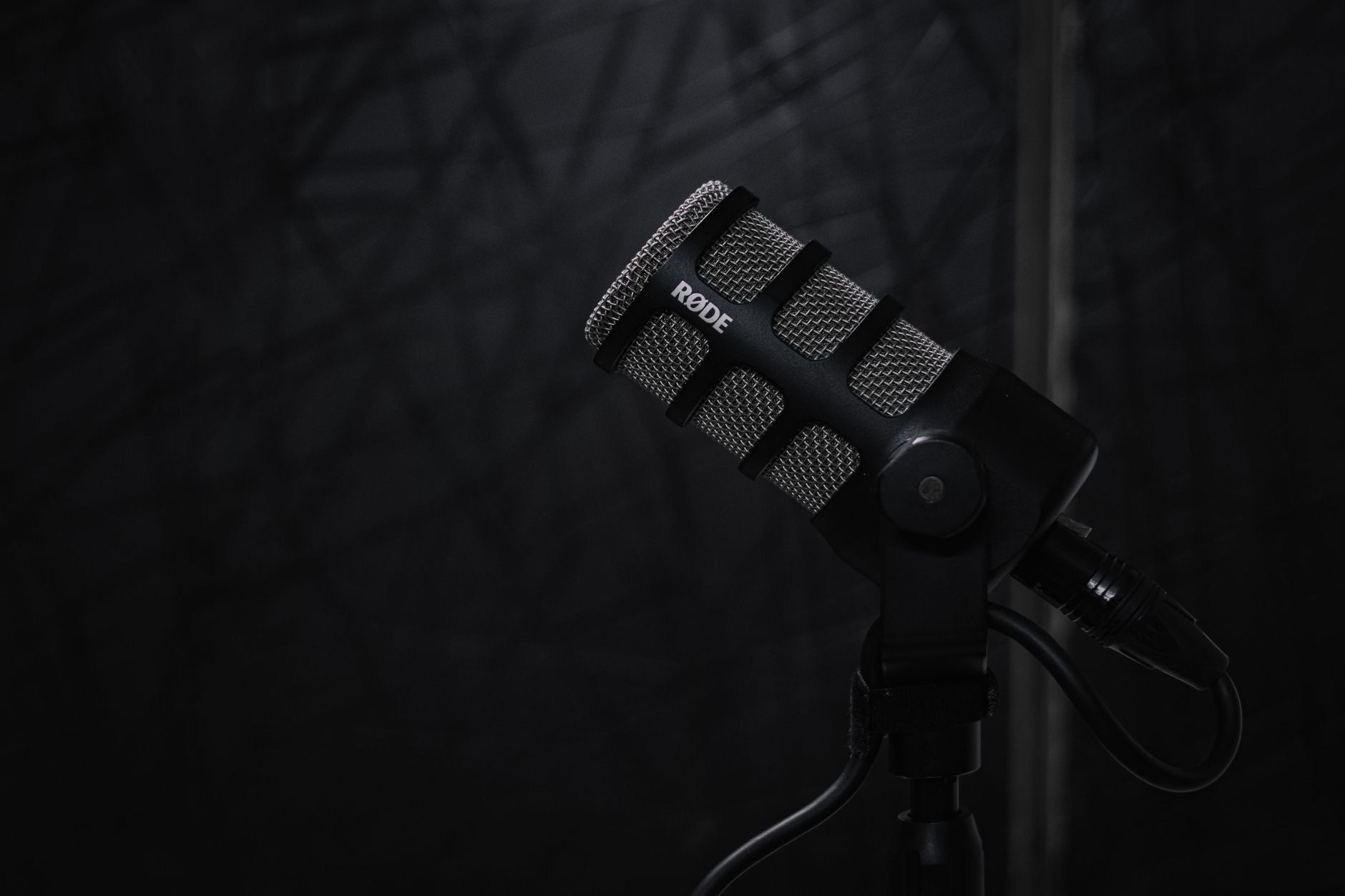
The PodMic is a side-address dynamic with a cardioid polar pattern, internal shock mount, and an integrated pop filter — all inside a compact, heavy metal housing that feels built for a decade of use. Rode positions it squarely at podcasters and streamers, but home recording producers have adopted it as a reliable vocal and voice-over mic.
What separates it from similarly priced dynamics like the Shure SM58 or Audio-Technica AT2005 is the combination of features at the $99 price point. You get internal vibration isolation, which means desk rumble and typing noise don’t translate into your recordings the way they would with a bare-capsule dynamic.
The frequency response is tailored for voice: a slight presence boost in the 3–8 kHz range adds clarity and cuts through a mix, while the low end rolls off gradually below 100 Hz, reducing room rumble without sounding thin.
Sound Quality and Performance
Direct Answer: The PodMic sounds full, warm, and slightly forward in the upper mids — ideal for spoken word and vocal performance. Sensitivity is lower than a condenser, so gain is the deciding factor in whether your recordings sound clean or noisy. With a quality interface, the results are consistently broadcast-grade.
 Photo: Los Muertos Crew via Pexels
Dynamic mics need gain, and the PodMic is no exception. At -55 dBV/Pa sensitivity, you’ll want an audio interface or mixer that can deliver 55–65 dB of clean gain without adding noise. Interfaces like the Focusrite Scarlett 2i2, Universal Audio Volt 176, or Audient iD4 MkII handle it well. Underpowered interfaces will push their preamps into audible hiss territory — this is the most common complaint in user reviews and is entirely an interface problem, not a PodMic limitation.
With adequate gain, the PodMic is impressively quiet. Its self-noise spec is essentially irrelevant (passive dynamic capsule), and the internal shock mount handles low-frequency mechanical noise effectively. Published testing data from independent audio reviewers shows frequency response that closely matches Rode’s published curves — minimal variance from capsule to capsule, a sign of consistent manufacturing.
For singing, the PodMic holds up better than its podcast branding suggests. The proximity effect adds body when working 2–4 inches from the capsule, and the presence lift helps vocals cut through dense arrangements without heavy EQ.
Specs and Technical Overview
| Feature | Specification |
|---|---|
| Type | Dynamic, side-address |
| Polar Pattern | Cardioid |
| Frequency Response | 20 Hz – 20 kHz |
| Sensitivity | -55 dBV/Pa |
| Impedance | 310 Ω |
| SPL Handling | 115 dB SPL (continuous) |
| Connector | XLR (3-pin) |
| Weight | 937 g (with mount) |
| Pop Filter | Built-in internal mesh |
| Shock Mount | Internal |
| Cable Required | Yes (XLR not included) |
The 310 Ω output impedance is low enough to pair with virtually any interface. The 115 dB SPL ceiling means even loud vocalists won’t clip the capsule — a non-issue for most home studio applications.
Rode PodMic vs. Competition
Direct Answer: The PodMic’s closest rivals are the Shure MV7 and the Samson Q9U at similar price points. The MV7 adds USB connectivity and a companion app; the Q9U matches the PodMic’s analog sound but lacks the internal shock mount. For pure XLR performance, the PodMic leads the sub-$120 dynamic category.
 Photo: Drago Rapovac via Pexels
| Product | Price | Connection | Polar Pattern | Built-in Pop Filter | Internal Shock Mount | Best For |
|---|---|---|---|---|---|---|
| Rode PodMic | ~$99 | XLR | Cardioid | Yes | Yes | Voice, podcast, home studio vocals |
| Shure MV7 | ~$149 | USB + XLR | Cardioid | No | No | Streamers needing USB flexibility |
| Audio-Technica AT2005 | ~$79 | USB + XLR | Cardioid | No | No | Budget-first buyers |
| Samson Q9U | ~$99 | USB + XLR | Cardioid | No | No | Dual-connection flexibility |
| Shure SM7dB | ~$399 | XLR | Cardioid | No (add-on) | No | Broadcast professionals |
The MV7 is the most common alternative consideration. It costs $50 more, adds USB, but expert consensus suggests the analog-only PodMic edges it in raw XLR sound quality. If you already own a solid interface, the PodMic is the better spend.
Gear Review: Rode PodMic
Specs Table
| Category | Detail |
|---|---|
| Connections | XLR (analog only) |
| I/O Count | 1 output |
| Preamp Required | Yes — 55–65 dB clean gain recommended |
| Frequency Response | 20 Hz – 20 kHz |
| Sensitivity | -55 dBV/Pa |
| SPL Handling | 115 dB |
| Bus Power | No (passive dynamic) |
| Best For | Podcast, voice-over, home studio vocals |
Verdict by Archetype
First-time beginner: The PodMic is one of the best entry points into XLR dynamics — IF you already own (or plan to buy) a quality audio interface. If you’re starting from zero with no interface budget, a USB mic or the AT2005 is a smarter first step.
Bedroom producer: Strong choice for vocal tracking, voice-overs, and instrument spot-miking (guitar cabinets, snare drum). The internal shock mount reduces setup friction, and the sound profile works well without heavy processing.
Gigging musician: Not road-optimized — the PodMic is a studio and desk mic. The Shure SM58 remains the live vocal standard. For recording demos at home between gigs, the PodMic earns its place.
Prosumer: At $99, it’s a legitimate working mic for content creation, home studio tracking, and broadcast-style voice work. The PodMic USB (Rode’s updated version) adds native USB-C and integrated DSP — worth considering if you want future flexibility.
 Photo: Clam Lo via Pexels
→ See Also
- Best Microphones for Home Recording (2026) — full category guide across all budgets
- Best Budget Condenser Microphone (2026) — if you’re considering a condenser instead
- Audio-Technica AT2020 Review (2026) — the leading budget condenser alternative
FAQ
Is the Rode PodMic worth it for home recording? Yes — at $99, the PodMic delivers broadcast-quality vocal tone with build quality and features (internal shock mount, pop filter) that justify the price. The main caveat is gain requirement: it needs a quality audio interface to perform at its best. Pair it with a Focusrite Scarlett 2i2 or similar and it outperforms most condensers at the same combined budget for untreated rooms.
Does the Rode PodMic need phantom power? No. The PodMic is a passive dynamic microphone and does not use or require phantom power (+48V). It draws no power from the interface and is unaffected if phantom power is accidentally engaged — a useful safety feature when sharing a preamp channel with a condenser.
What’s the difference between the Rode PodMic and PodMic USB? The PodMic USB (released after the original) adds native USB-C connectivity, a built-in headphone output for zero-latency monitoring, and onboard DSP processing (EQ, compression, high-pass filter). The original PodMic is XLR-only with no onboard processing. According to Rode’s published specifications, the capsule and acoustic profile are identical across both versions — the USB model adds flexibility without changing the core sound.
Can the Rode PodMic be used for singing? Yes, and it performs better for vocals than its podcast branding implies. The proximity effect adds warmth when singing close to the capsule, and the upper-mid presence lift helps vocal clarity in a mix. It handles high SPL well, so loud singers won’t cause capsule distortion. The main limitation versus a condenser is transient detail — acoustic instruments and subtle vocal nuances will capture more accurately on a large-diaphragm condenser in a treated room.
What audio interface pairs best with the Rode PodMic? Based on gain specifications and user-reported performance, the Focusrite Scarlett 2i2 (4th gen), Audient iD4 MkII, and Universal Audio Volt 176 are frequently cited as strong matches. All three deliver sufficient clean gain (56–66 dB range) to drive the PodMic without audible preamp noise at typical voice recording levels. Avoid budget interfaces with less than 50 dB gain headroom — that’s where most PodMic noise complaints originate.
Editorial methodology: Assessments are based on manufacturer specifications, published user reviews, and editorial research. Physical hands-on testing is noted explicitly where it occurred. Rankings reflect our editorial judgment and are not influenced by affiliate commission rates. Full editorial policy · Affiliate disclosure