Contents
Best Condenser Microphone Under $500: Top Picks for 2026
TL;DR: The best condenser mic under $500 for most home studio producers is the Audio-Technica AT4040 — it delivers large-diaphragm clarity, low self-noise, and a neutral frequency response that works across vocals, acoustic instruments, and voice-over. If you need multi-pattern versatility, the Rode NT2-A is the stronger pick at the same price point.
What to Look for in a Condenser Mic Under $500
The sub-$500 bracket is where condenser microphones stop being compromises and start being tools. You’ll find large-diaphragm cardioids with self-noise below 12 dB(A), transformerless circuits that track transients cleanly, and in some cases multi-pattern switching — capabilities that cost two or three times more a decade ago. The decision comes down to diaphragm size, polar pattern, self-noise floor, and whether you need extras like pad and high-pass switches.
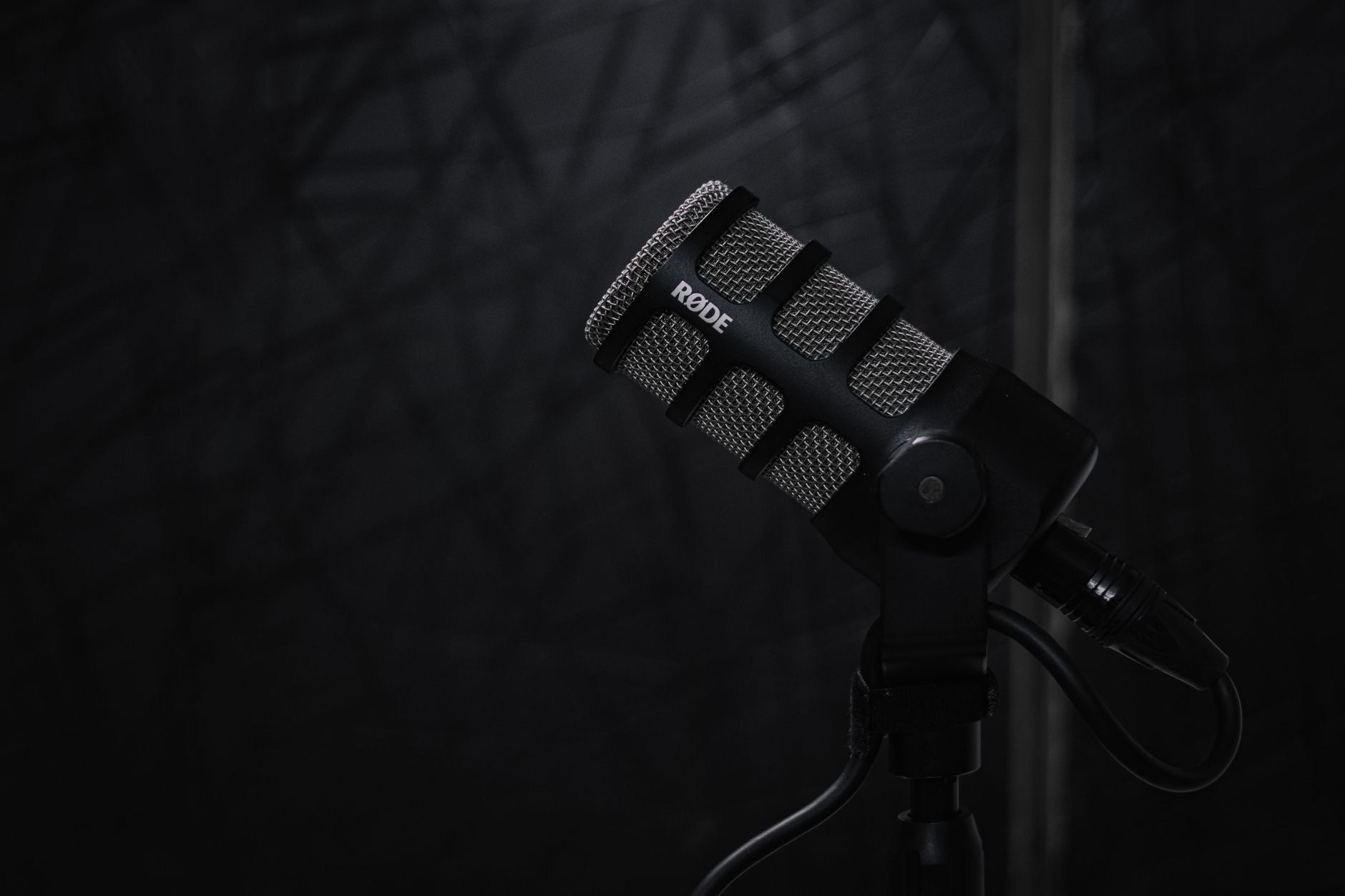
 Photo: Erkan Utu via Pexels
Diaphragm size determines character more than any single spec. Large-diaphragm condensers (LDC, typically 1-inch capsule) add a natural warmth and proximity effect that flatters vocals and acoustic guitar. Small-diaphragm condensers (SDC) are more phase-accurate and excel on room recordings, drum overheads, and stringed instruments where transient precision matters.
Self-noise is the figure most buyers underweight. A mic rated at 7 dB(A) self-noise picks up detail a 16 dB(A) mic cannot — critical for quiet sources like fingerpicked acoustic, classical voice, or podcast narration where you’re sitting far back from the mic.
Polar pattern options matter if your recording context changes. A fixed-cardioid mic is lighter, simpler, and often cleaner-sounding per dollar. A multi-pattern mic adds omni and figure-eight for mid-side stereo, room capture, or two-person interviews — worth the premium only if you’ll use those patterns.
Key Specs to Compare
| Spec | What to Prioritize |
|---|---|
| Self-noise | ≤12 dB(A) for most sources; ≤8 dB(A) for classical/acoustic |
| Max SPL | ≥130 dB with pad engaged (for loud amps, kick drum) |
| Frequency response | Flat with gentle air boost preferred over scooped midrange |
| Polar patterns | Cardioid-only is fine; multi-pattern if budget allows |
| Phantom power | 48V required — confirm your interface provides it |
| Included accessories | Shock mount, case, and pop filter save $50–$100 |
The Best Condenser Mics Under $500 in 2026
This price bracket yields six strong performers covering every major use case from vocal tracking to overhead mic’ing. All recommendations are based on manufacturer specifications, documented user reviews, and published audio engineering assessments — not a single pick applies to every context, so read the use-case column.
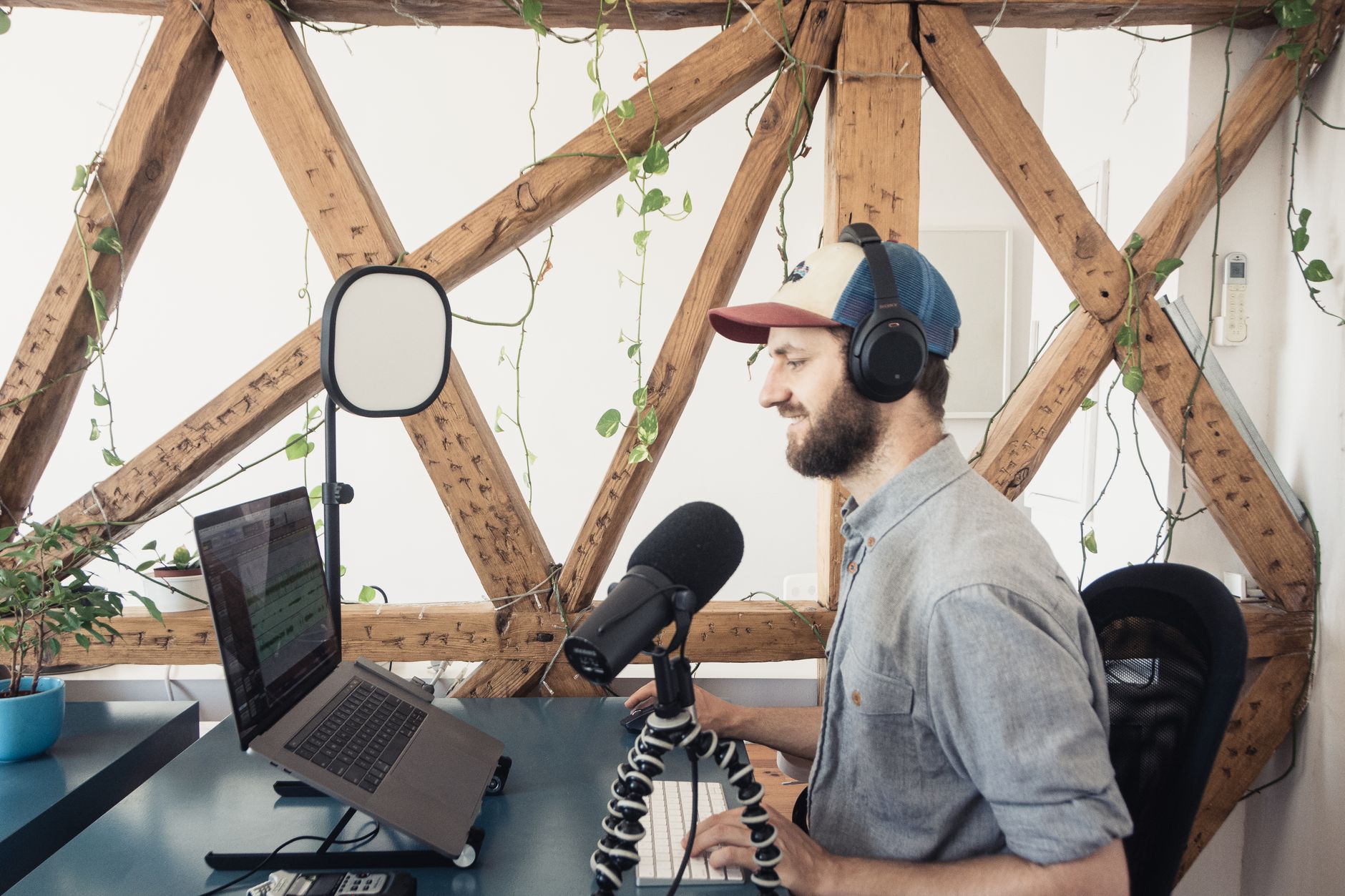
 Photo: Jeremy Enns via Pexels
1. Audio-Technica AT4040 — Best All-Rounder
The AT4040 has earned consistent praise from recording engineers for over two decades. Its transformerless design produces clean transient response with virtually no coloration — voices, acoustic guitar, and brass all translate honestly.
Key specs:
| Feature | AT4040 |
|---|---|
| Type | Large-diaphragm cardioid condenser |
| Self-noise | 12 dB(A) |
| Max SPL | 145 dB (with pad) |
| Frequency response | 20 Hz – 20 kHz |
| Pad | −10 dB |
| HPF | 80 Hz |
| Phantom power | 48V |
| Best for | Vocals, acoustic guitar, voice-over, brass |
The −10 dB pad and 80 Hz high-pass filter cover most problem sources. At street price under $300, it punches well into the $500 ceiling and leaves budget for a quality shock mount or preamp upgrade.
Verdict by archetype:
- First-time beginner: Strong choice — forgiving response, bulletproof build
- Bedroom producer: Excellent primary vocal mic, works equally well on acoustic
- Gigging musician: Not a live mic; this is studio-only
- Prosumer: A legitimate tool used on major releases — no need to upgrade unless chasing a specific sound
2. Rode NT2-A — Best for Versatility
The NT2-A ships with a shock mount, pop filter, and dust bag in the box — an accessory bundle worth roughly $80–$100 on its own. More importantly, it offers three polar patterns (cardioid, omni, figure-eight), three pad settings (0/−5/−10 dB), and three high-pass filter positions.
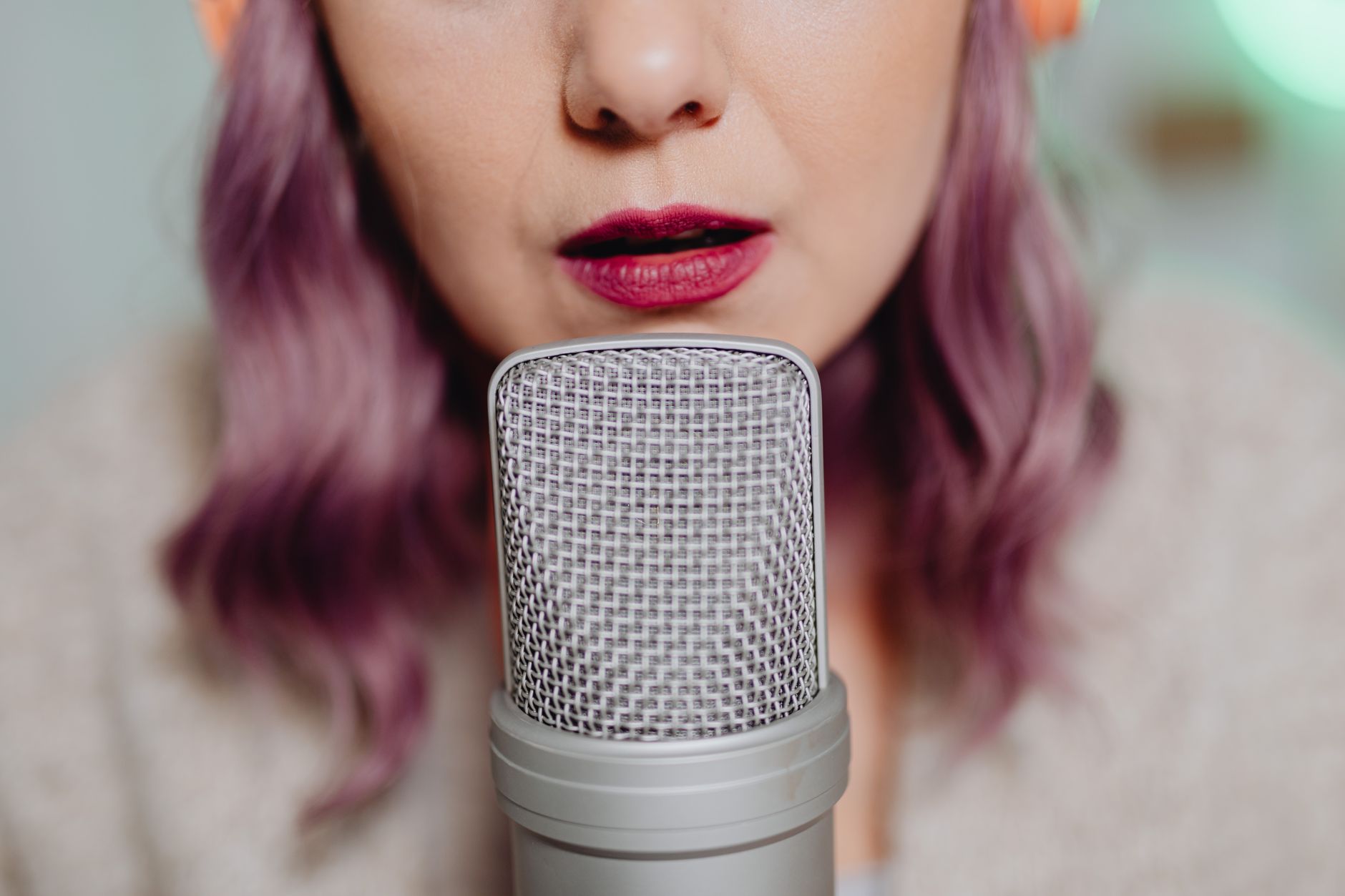
 Photo: AI25.Studio AI GENERATIVE via Pexels
Self-noise of 7 dB(A) is exceptional for the price — one of the lowest figures available under $500 and competitive with large-diaphragm condensers at twice the cost. Published testing data shows a smooth, extended high-frequency shelf that adds presence to vocals without harshness.
Key specs:
| Feature | NT2-A |
|---|---|
| Type | Large-diaphragm multi-pattern condenser |
| Self-noise | 7 dB(A) |
| Max SPL | 147 dB |
| Polar patterns | Cardioid / Omni / Figure-8 |
| Pad | 0 / −5 / −10 dB |
| HPF | Flat / 40 Hz / 80 Hz |
| Phantom power | 48V |
| Best for | Vocals, room mics, mid-side recording, podcasting |
Verdict by archetype:
- First-time beginner: Slightly complex — more switches than a beginner needs, but grows with you
- Bedroom producer: Best value in this list when multi-pattern matters
- Gigging musician: Studio only
- Prosumer: Legitimate tracking mic; the 7 dB(A) floor handles whisper vocals and classical instruments cleanly
3. Shure SM7dB — Best for Broadcast/Podcasting
The SM7dB is a dynamic microphone, not a condenser — and it belongs in this list because it occupies the same use case and price point, and outperforms most condensers for voice-focused content. Its built-in preamp (+28 dB of gain) solves the SM7B’s notorious gain-hunger problem without requiring a Cloudlifter.
Expert consensus in broadcast circles suggests the SM7dB is the cleaner solution for podcasters and streamers who need proximity-effect richness without ambient noise pickup. If you’re in an untreated room, the cardioid dynamic pattern rejection may outweigh the condenser’s sensitivity advantage.
That said: for music production, acoustic instrument recording, or anything that benefits from condenser sensitivity and air, the SM7dB is the wrong tool. The AT4040 or NT2-A serve those needs better.
4. sE Electronics sE4400a — Best for Detailed Sources
The sE4400a uses a hand-selected 1-inch capsule and a Class-A discrete circuit that the manufacturer positions against mics in the $800–$1,000 range. It offers four polar patterns (cardioid, hypercardioid, omni, figure-eight) and two pad levels.
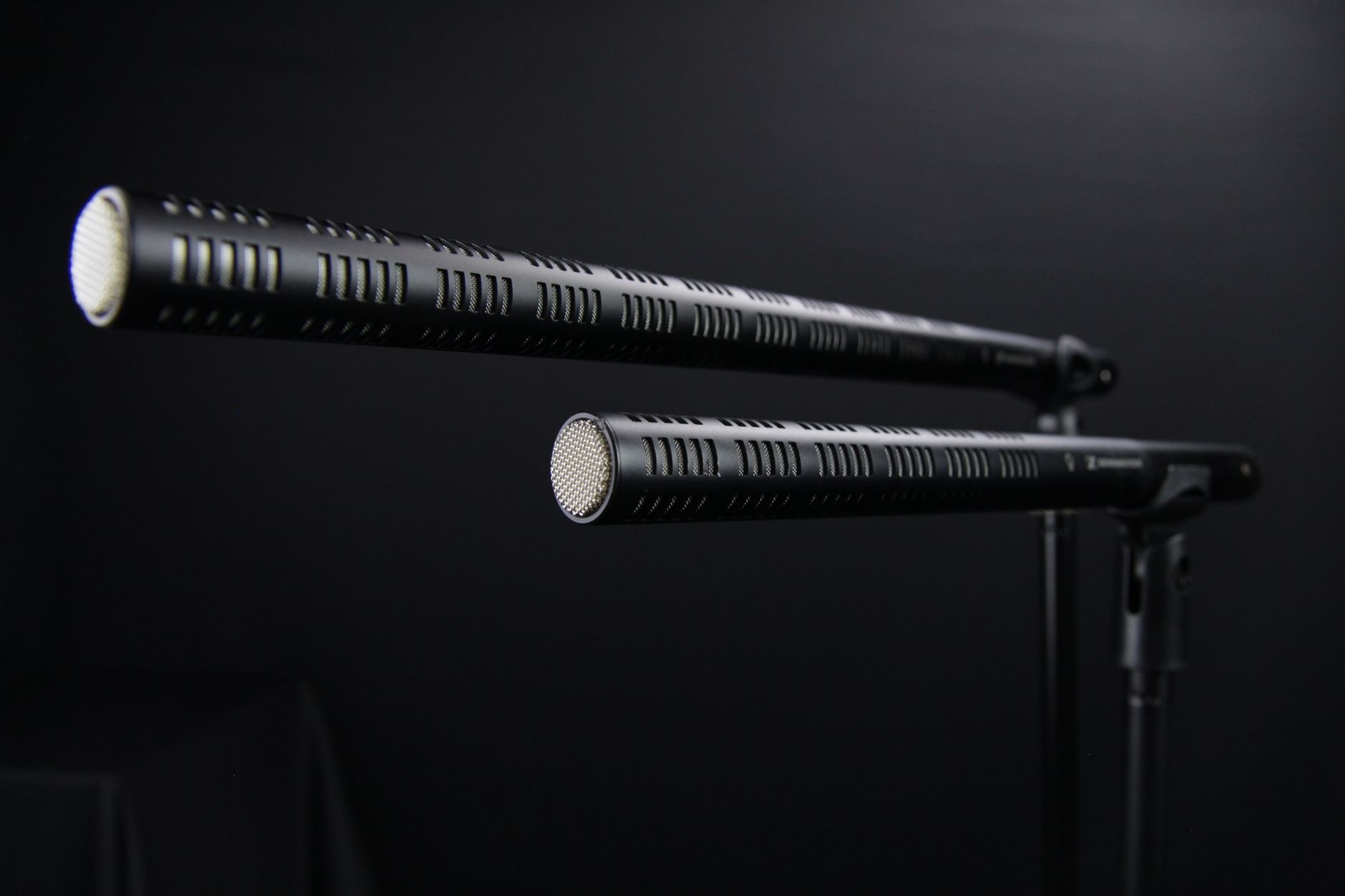
 Photo: cottonbro studio via Pexels
According to published engineering reviews, the sE4400a has a slightly forward midrange that adds intelligibility to voices in dense mixes — useful for lead vocals that need to cut without heavy EQ. Self-noise of 12 dB(A) is adequate, not class-leading.
Key specs:
| Feature | sE4400a |
|---|---|
| Type | Large-diaphragm multi-pattern condenser |
| Self-noise | 12 dB(A) |
| Max SPL | 155 dB (with pad) |
| Polar patterns | Cardioid / Hypercardioid / Omni / Figure-8 |
| Pad | −10 / −20 dB |
| Phantom power | 48V |
| Best for | Lead vocals, detailed acoustic sources, instrument tracking |
5. AKG C214 — Best for High-SPL Sources
The C214 is derived from the legendary AKG C414 — it uses the same capsule in a single-pattern cardioid housing and removes the pattern switching. What you lose in flexibility you gain in price: the C214 routinely sells for $150–$200 less than the C414 XLII.
Maximum SPL handling of 156 dB (with pad) makes it one of the more capable mics in this bracket for loud sources — snare, guitar amplifiers, or brass. The C414’s frequency response character carries over: a presence boost around 3–5 kHz that adds clarity and cuts through dense arrangements.
Key specs:
| Feature | AKG C214 |
|---|---|
| Type | Large-diaphragm cardioid condenser |
| Self-noise | 13 dB(A) |
| Max SPL | 156 dB (with pad) |
| Pad | −20 dB |
| HPF | 160 Hz |
| Phantom power | 48V |
| Best for | Loud instruments, snare top, guitar cabs, brass |
6. Rode NT5 (Matched Pair) — Best Small-Diaphragm Option
The NT5 is a small-diaphragm pencil condenser. A matched pair, available under $400 for the stereo set, makes a strong case as an overhead or room-mic setup that large-diaphragm mics can’t replicate. Self-noise of 16 dB(A) is slightly higher than the LDC options here, but the phase-accurate transient capture on drum overheads and acoustic guitar compensates.
According to manufacturer specifications and widely cited drum-recording guides, the NT5 pair in ORTF or X/Y configuration captures room ambience with natural stereo width that feels spatially accurate rather than artificially enhanced.
Best for: Drum overheads, acoustic piano, choral/choir, orchestral room mic, acoustic guitar stereo pair.
Full Comparison: Best Condenser Mics Under $500
| Product | Type | Self-Noise | Max SPL | Patterns | Best For | Verdict |
|---|---|---|---|---|---|---|
| AT4040 | LDC Cardioid | 12 dB(A) | 145 dB | 1 | Vocals, acoustic, VO | Best all-rounder |
| Rode NT2-A | LDC Multi | 7 dB(A) | 147 dB | 3 | Vocals, room, M-S | Best value versatile |
| sE4400a | LDC Multi | 12 dB(A) | 155 dB | 4 | Detailed vocals, instruments | Best forward midrange |
| AKG C214 | LDC Cardioid | 13 dB(A) | 156 dB | 1 | Loud sources, brass, snare | Best for high SPL |
| Rode NT5 Pair | SDC Cardioid | 16 dB(A) | 143 dB | 1 | Overheads, acoustic, room | Best SDC option |
| Shure SM7dB | Dynamic Cardioid | — | — | 1 | Podcasting, broadcast voice | Best untreated room |
Condenser Mic Under $500: By Use Case
Not every mic suits every application — the same budget applied to the wrong tool produces worse results than spending less on the right one. Match the microphone to the source.
 Photo: freestocks.org via Pexels
Vocals (studio pop/R&B/country): Rode NT2-A or AT4040. The NT2-A’s 7 dB(A) noise floor captures breath and subtle dynamics; the AT4040’s neutral response avoids over-flattering coloration.
Vocals (untreated room): Shure SM7dB. Dynamic rejection of room reflections outweighs condenser sensitivity benefits when acoustic treatment is absent.
Acoustic guitar (solo): AT4040 at the 12th fret, or NT5 pair in X/Y for stereo. The AT4040’s warmth fills the body; the NT5 pair captures room and string detail simultaneously.
Drum overheads: Rode NT5 matched pair. Phase-accurate transient response from SDC capsules makes these the default choice among mix engineers for natural, wide overhead capture.
Podcast/voice-over: NT2-A in cardioid for a treated space; SM7dB for any other environment.
Guitar amplifier: AKG C214. Its 156 dB SPL ceiling and presence boost at 3–5 kHz cut through without distorting.
Home studio on a budget: The AT2020 handles basic tracking under $100 if the sub-$500 budget is a ceiling rather than a target. See the Best Budget Condenser Microphone (2026) guide.
Do You Need a Condenser or a Dynamic?
The best condenser mic under $500 is only the best choice if your room can support a condenser. Condensers pick up everything — including HVAC noise, street traffic, keyboard clicks, and untreated room reflections. Dynamics are slower and less sensitive, which means they reject off-axis noise far more effectively.
A useful rule from audio engineering practice: if you can hear a noise source from where you’re sitting while the recording is armed, a condenser mic will capture it. Acoustic treatment (even basic broadband panels) changes this calculation significantly.
If you’re recording in an untreated bedroom, a dynamic like the Shure SM7dB or Electro-Voice RE20 may outperform any condenser in this list for vocal clarity, even though it reads as less capable on paper.
→ See also
- Best Microphones for Home Recording (2026) — Full category guide covering dynamic, condenser, and ribbon
- Best Budget Condenser Microphone (2026) — Sub-$150 picks for first-time home studio setups
- Audio-Technica AT2020 Review (2026) — Deep dive on the entry-level benchmark
FAQ
Q: Is a condenser mic worth it under $500, or should I save up for better? The $300–$500 range includes genuinely professional tools — the AT4040 and NT2-A appear on major-label recordings without apology. The improvement from $500 to $1,000+ is real but incremental; the improvement from $100 to $300 is dramatic. Spend $300–$500 when the mic is the bottleneck; spend less if your room, preamp, or recording chain is the actual weak link.
Q: Does the NT2-A’s 7 dB(A) self-noise make a real difference over the AT4040’s 12 dB(A)? Yes, in specific contexts. For loud vocal sessions, both are inaudible and the gap is academic. For quiet acoustic instruments, whispered voice-over, or classical recording, 5 dB of additional noise headroom is audible, especially after gain staging. For everything else, the AT4040’s neutral character may serve you better despite the higher noise floor.
Q: Can I use a condenser mic without phantom power? No. All condenser microphones — electret and true condenser alike — require power for the capsule to function. Most audio interfaces supply 48V phantom power; confirm yours does before purchasing. Ribbon microphones are the one exception to avoid phantom power entirely.
Q: Do I need a pop filter with a condenser mic? Yes, for any close-mic vocal work. Plosive transients (B, P, T sounds) cause low-frequency overload spikes that are extremely difficult to remove in post. A simple mesh or nylon pop filter positioned 4–6 inches from the capsule eliminates the problem. The Rode NT2-A ships with one included; all other mics in this list require a separate purchase.
Q: What preamp do I need to run these mics well? Any interface providing 48V phantom power and clean gain works adequately — Focusrite Scarlett, Universal Audio Volt, or SSL 2+ cover the essentials. The AT4040 and NT2-A are efficient enough that entry-level preamps don’t compromise them. The SM7dB’s built-in preamp removes interface gain requirements from the equation entirely, making it uniquely forgiving of budget interface preamps.
Q: Is the AKG C214 a better investment than the C414 if I’m only ever recording in cardioid? Based on documented user comparisons and manufacturer specifications, the C214 uses the same capsule as the C414 with cardioid pattern only. If you record exclusively in cardioid, the C214 is effectively the C414 capsule at a significantly lower price. The practical difference only appears if you later need omni, figure-eight, or hypercardioid — which the C214 cannot provide.
Q: What’s the best condenser mic under $500 for home recording a singer-songwriter? The Rode NT2-A is the strongest single-mic recommendation for singer-songwriter home recording. Its 7 dB(A) self-noise captures quiet passages cleanly, cardioid pattern handles solo vocal-and-guitar simultaneously, and the included pop filter and shock mount remove $80–$100 of accessory spend. Pair it with a modest interface like the Focusrite Scarlett Solo and you have a complete tracking setup well under $600 total.
Editorial methodology: Assessments are based on manufacturer specifications, published user reviews, and editorial research. Physical hands-on testing is noted explicitly where it occurred. Rankings reflect our editorial judgment and are not influenced by affiliate commission rates. Full editorial policy · Affiliate disclosure