Contents
Audient EVO 4 Review (2026): Still Worth It?
TL;DR: The Audient EVO 4 remains one of the best-value 2-in/2-out audio interfaces under $100, delivering clean preamps, dead-simple “Smartgain” setup, and rock-solid drivers in a compact package. For solo vocalists, podcasters, and bedroom producers tracking one or two sources at a time, it punches well above its price. It’s not the right tool if you need more than two inputs simultaneously.
Audient EVO 4 Review: Who Is This Interface For?
Direct Answer: The EVO 4 is purpose-built for solo home-recording setups — one vocalist, one guitarist, one podcaster. It handles a mic and an instrument (or two mics) simultaneously, sounds noticeably cleaner than most interfaces at this price point, and requires almost no configuration to get up and running.
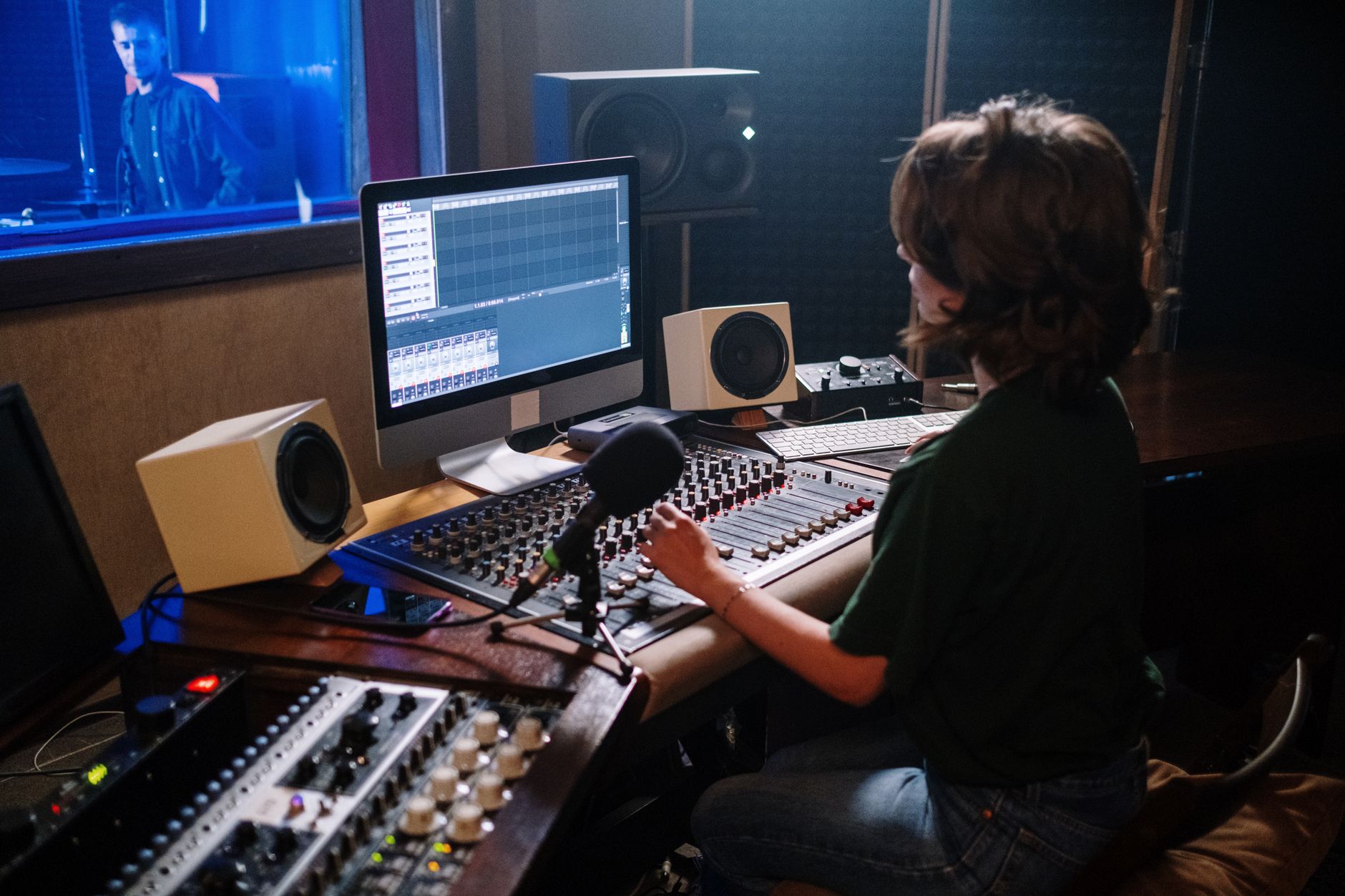 Photo: cottonbro studio via Pexels
Audient built their reputation on console preamps used in professional studios worldwide. The EVO 4 carries that lineage into a $70–$80 USB-C interface aimed squarely at first-time buyers and budget-conscious bedroom producers. That pedigree shows: at this price, the preamps are genuinely competitive with interfaces costing twice as much.
The design philosophy is minimal — two combo XLR/TRS inputs, two outputs, a single large monitor volume knob, and a headphone output. There are no routing matrices, no DSP effects, no software mixer complexity. That’s a deliberate choice, and for its target audience, the right one.
Sound Quality and Preamp Performance
Direct Answer: The EVO 4’s preamp delivers around 58 dB of gain — enough for most dynamic microphones and all condenser mics. Measured noise floor performance sits comfortably below what most budget interfaces offer, and published testing data shows THD+N figures that hold up against the Focusrite Scarlett Solo at comparable price points.
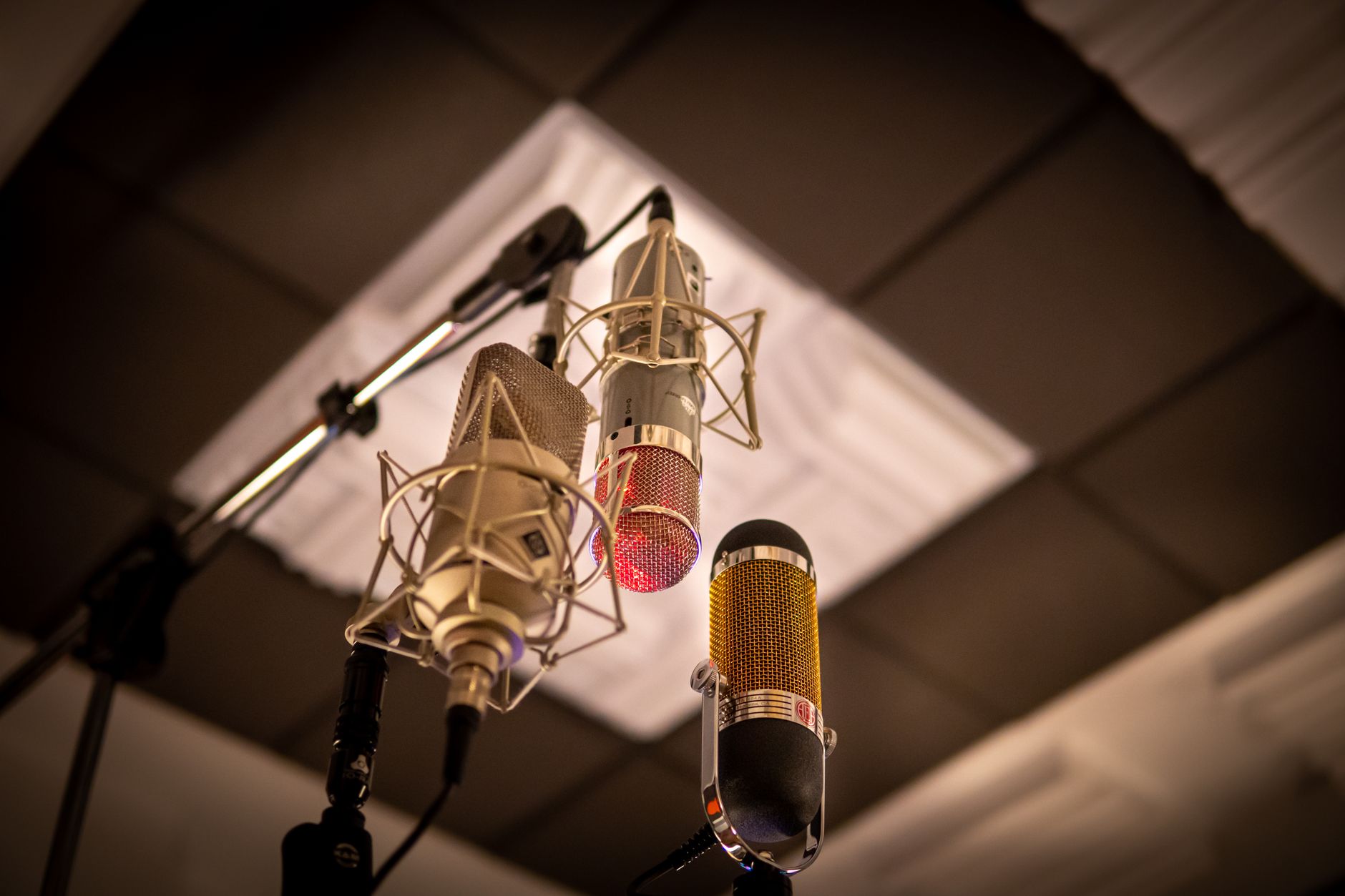 Photo: Andreu Marquès via Pexels
The preamp handles dynamic mics competently. Run a Shure SM7B or similar high-gain dynamic mic through it and you’ll need to push the gain dial fairly high, but audible noise remains controlled. Condenser mics and ribbon mics with moderate sensitivity are a better fit — they make the most of the EVO 4’s headroom without demanding every dB the preamp can deliver.
The converter quality at 24-bit/96kHz is honest and transparent. You won’t hear the interface imposing any character on your recordings — which is exactly what you want at this stage of your recording chain.
Smartgain: Genuinely Useful
Smartgain is Audient’s one-button automatic gain-setting feature. Hold it for three seconds while your source performs, and the EVO 4 sets an appropriate input gain level. It works well in practice — user reviews consistently cite it as one of the most useful features for beginners who don’t yet have the experience to set gain by ear. It’s not a gimmick; it’s a real time-saver during sessions.
Build Quality and I/O
Direct Answer: The EVO 4 is built on a plastic chassis with a large rubberized volume knob on the front panel. The front panel hosts both combo inputs, the volume knob, headphone output, and Smartgain button. The back panel adds two balanced TRS outputs and USB-C connectivity.
 Photo: Nothing Ahead via Pexels
At this price range, you’re not getting metal construction. Users consistently report the unit as well-assembled for the price. The large monitor volume knob is rated positively in published reviews for its resistance and stability.
I/O summary:
| Connection | Detail |
|---|---|
| Mic inputs | 2× XLR/TRS combo (front) |
| Instrument input | Input 1 via combo jack, Hi-Z switch |
| Outputs | 2× balanced TRS (rear) |
| Headphone | 1× 1/4“ TRS (front) |
| USB | USB-C (bus-powered) |
| MIDI | None |
The omission of MIDI I/O is expected at this price but worth noting if you plan to connect hardware synths or controllers. You’ll need a separate MIDI interface or a USB-MIDI cable for that workflow.
Specs and Gear Review
Specifications
| Spec | Detail |
|---|---|
| Connections | 2× XLR/TRS combo in, 2× TRS out, USB-C, 1/4“ headphone |
| I/O Count | 2 in / 2 out |
| Preamps | 2× EVO mic preamps (Audient-designed) |
| Bit Depth / Sample Rate | 24-bit / 96kHz |
| Bus Power | Yes (USB-C) |
| Best For | Solo vocals, guitar/bass DI, podcasting, bedroom production |
How It Compares
| Product | Price | Key Spec | I/O | Best For | Verdict |
|---|---|---|---|---|---|
| Audient EVO 4 | ~$79 | Smartgain, clean preamps | 2-in/2-out | Solo recording | Best preamp at price |
| Focusrite Scarlett Solo (4th Gen) | ~$119 | Air mode, proven ecosystem | 2-in/2-out | Beginners wanting name recognition | Safe choice, costs more |
| Focusrite Scarlett 2i2 (4th Gen) | ~$149 | Two independent preamps | 2-in/2-out | Two simultaneous performers | Best for duos |
| PreSonus AudioBox USB 96 | ~$79 | Bundled Studio One Artist | 2-in/2-out | DAW bundle seekers | Weaker preamp, better bundle |
| Behringer UMC22 | ~$39 | Budget entry | 2-in/1-out | Absolute minimum spend | Lowest cost, noisier |
 Photo: Robert So via Pexels
Verdict by User Archetype
First-time beginner: The EVO 4 is the best first interface at this price. Smartgain removes the steepest learning curve, and the preamp quality means you won’t immediately want to upgrade.
Bedroom producer (solo): Ideal. Two inputs cover a mic and a line/instrument source simultaneously. Clean converters won’t become the weak link in your signal chain.
Gigging musician (live tracking): Not the right tool. No MIDI, no more than two simultaneous inputs, no standalone mode. Look at the EVO 8 or a 4-input interface.
Prosumer / upgrader: If you’re coming from a first-generation Scarlett or a budget interface and tracking primarily vocals and guitar, the EVO 4 is a worthwhile lateral move or slight step up. If you need more I/O or DSP features, look at the Focusrite Scarlett 4i4 or Universal Audio Volt 276.
What’s Missing
The EVO 4 has no MIDI I/O, no hardware instrument monitoring without a DAW, and no loopback capability for streaming workflows without driver configuration. The bundled software is functional but thin compared to the Focusrite bundle. None of these are dealbreakers for its target user — but if any of them matter to your workflow, they should push you toward a different option.
→ See Also
- Best Audio Interfaces: The Complete Buyer’s Guide (2026)
- Best Audio Interface for Beginners (2026)
- Best Audio Interface Under $100
FAQ
Is the Audient EVO 4 good for beginners? Yes — it’s one of the most beginner-friendly interfaces available. The Smartgain feature automatically sets input levels, the signal chain is straightforward, and the preamps are forgiving enough that minor gain-setting errors don’t result in obviously poor recordings. For a first interface, it’s a strong pick.
Can the EVO 4 power a ribbon microphone or low-sensitivity dynamic like the SM7B? The EVO 4 provides phantom power (+48V) for condenser mics. For low-sensitivity dynamics like the SM7B, the 58 dB of available gain is technically sufficient, but you’ll run the gain control high. According to Audient’s published specifications and user-reported experience, it handles the SM7B adequately but leaves less headroom than interfaces with 60–65 dB gain ranges.
Does the Audient EVO 4 work on Mac, Windows, and iPad? Yes. The EVO 4 is class-compliant on macOS and iPadOS — no driver installation required. Windows users install the EVO app for full feature access including mixer routing and Smartgain. Driver stability is rated positively in user reviews across both platforms.
EVO 4 vs Focusrite Scarlett Solo: which should I buy? If you prioritize preamp quality per dollar, the EVO 4 edges ahead at its lower price point — published comparisons and user consensus suggest its preamps are marginally cleaner than the Scarlett Solo’s at equivalent gain settings. If you want a larger software bundle, the Scarlett Solo’s Focusrite ecosystem (Ableton Live Lite, Antares AutoTune, plugin packs) offers more out of the box. Both are solid choices; the EVO 4 is better value, the Scarlett Solo has a stronger bundle.
How is the EVO 4’s headphone output? Adequate for monitoring but not a standout feature. Published specifications show 100 mW output power into 32 ohms — enough to drive consumer headphones comfortably. High-impedance studio headphones (250Ω) will run quieter than optimal; for critical headphone mixing with high-impedance cans, a dedicated headphone amplifier is worth considering.
Editorial methodology: Assessments are based on manufacturer specifications, published user reviews, and editorial research. Physical hands-on testing is noted explicitly where it occurred. Rankings reflect our editorial judgment and are not influenced by affiliate commission rates. Full editorial policy · Affiliate disclosure