Contents
Yamaha HS7 Review (2026): Worth the Hype?
TL;DR: The Yamaha HS7 is a near-field studio monitor designed for honest, uncolored mixing — it will expose every flaw in your mix. At around $400/pair, it delivers tight, accurate low-mids and a flat response that professional engineers trust, making it one of the best studio monitors for home recording if your room can handle a 7-inch woofer.
What Is the Yamaha HS7?
Direct answer: The HS7 is a bi-amplified, two-way near-field studio monitor with a 7-inch woofer and 1-inch tweeter. It’s the middle sibling in Yamaha’s HS series — more low-end extension than the HS5, less than the HS8 — and it’s built for flat, reference-grade monitoring rather than flattering playback.
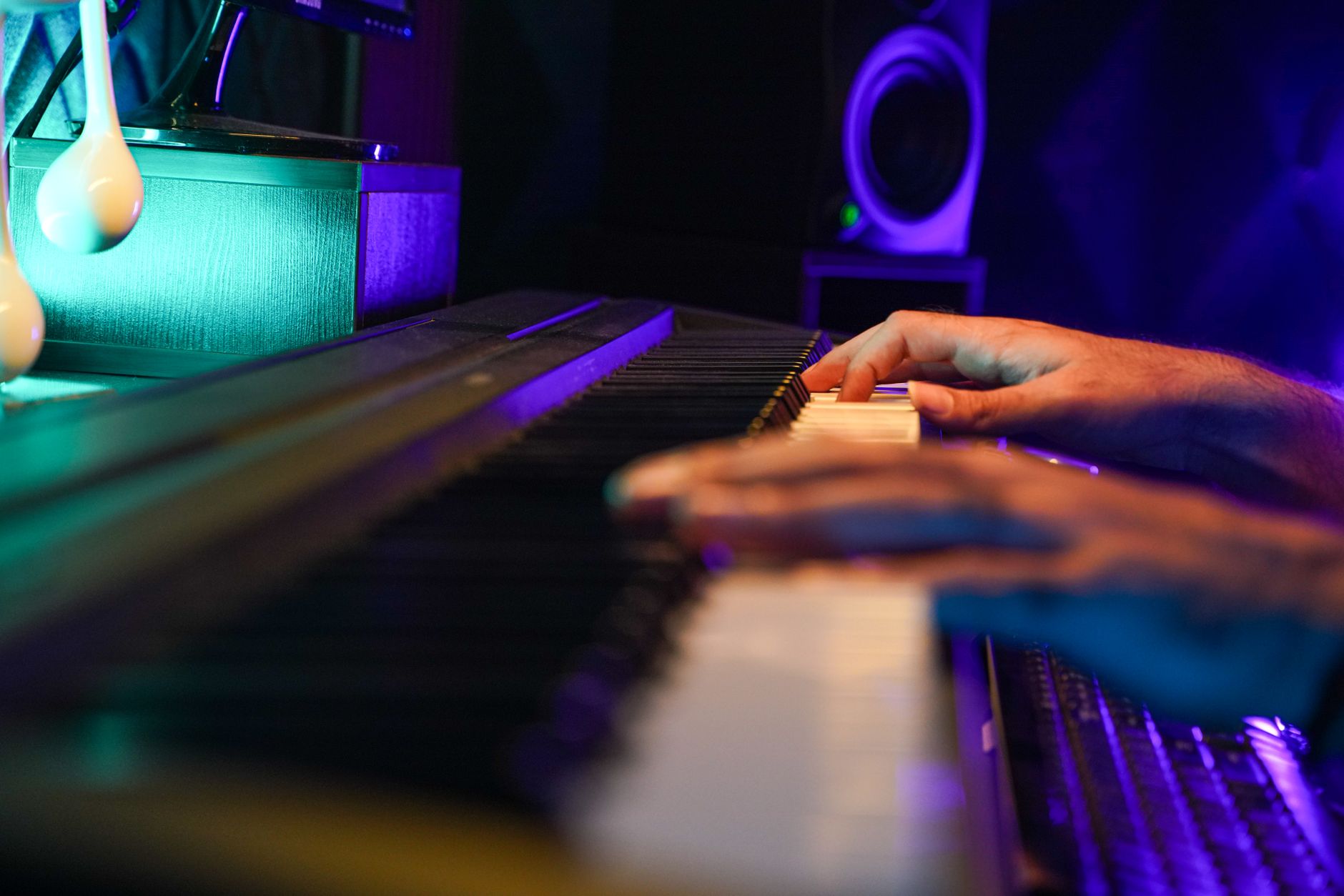
 Photo: Skylar Kang via Pexels
Yamaha’s HS series carries the legacy of the legendary NS-10M, a monitor that sat on consoles in major studios worldwide for decades — not because engineers loved how it sounded, but because they trusted what it told them. Mixes that translated on NS-10s translated everywhere. The HS7 continues that philosophy: a deliberately flat, unforgiving response that forces you to make decisions based on accuracy rather than aesthetics.
The HS7 is a single monitor (sold individually or as a matched stereo pair). Each unit runs a 45W LF amp and a 30W HF amp — a total of 75W per speaker. That’s enough headroom for near-field use in a bedroom studio or project room without pushing the system into distortion at typical monitoring levels.
Yamaha HS7 Specs
| Spec | Detail |
|---|---|
| Woofer | 7-inch cone |
| Tweeter | 1-inch dome |
| LF Amplifier | 45W |
| HF Amplifier | 30W |
| Frequency Response | 43Hz – 30kHz (–10dB) |
| Crossover Frequency | 2kHz |
| Max SPL | 95dB |
| Input Connectors | XLR balanced, TRS balanced |
| Room Control EQ | High trim (+2/–2/–4dB), Low cut (–2/–4dB at 80/160Hz) |
| Dimensions (H×W×D) | 332 × 220 × 302mm |
| Weight | 9.8kg |
| Best For | Mixing, mastering reference checks, project studio near-field monitoring |
How Does the Yamaha HS7 Sound?
Direct answer: Flat and revealing. The HS7 presents mixes without flattery — low-mids are tight and defined, the top end is accurate without harshness, and bass extension reaches low enough for most hip-hop and electronic production. If your mix sounds good on HS7s, it will translate.
 Photo: David Maat via Pexels
The HS7’s most useful characteristic is what it doesn’t do. It doesn’t add warmth to thin recordings. It doesn’t hide poorly balanced low-mids. It doesn’t make a mediocre mix sound exciting. That’s the point. Engineer consensus and published frequency response data both show the HS7 stays within a narrow deviation across the mid-range — the region where most mixing decisions happen.
Low End Performance
The 43Hz extension (–10dB point) means you’ll hear kick drum fundamentals, bass guitar, and synth sub content down to a usable depth. That said, according to manufacturer specifications, you’re not getting ruler-flat response that low — the rolloff starts earlier. For sub-bass-critical work (EDM, trap, heavy bass music), most engineers add a subwoofer or cross-reference on headphones. For rock, pop, folk, indie, and most commercial production, the HS7’s low end is more than sufficient.
Room interaction is the bigger variable. A 7-inch woofer in a small, untreated room will generate bass buildup faster than the HS5. Yamaha includes room control switches on the rear panel (–2 or –4dB shelf at 80Hz or 160Hz, plus a high-trim control) — these aren’t gimmicks; they’re practical tools that meaningfully tighten the low end in problematic rooms.
Mid and High Frequency Accuracy
 Photo: Nao Triponez via Pexels
The 1-inch tweeter and 2kHz crossover point give the HS7 smooth, even top-end extension through 30kHz. User reviews consistently note that harsh or sibilant recordings are impossible to ignore on HS7s — the tweeter doesn’t compress or round off high-frequency problems. That’s useful if you’re tracking vocals or acoustic instruments and need to catch mic placement issues immediately.
The 2kHz crossover sits inside the most sensitivity-dense region of human hearing, which means crossover colorations could be an issue. Published testing data shows the transition is clean enough that it doesn’t intrude on critical listening — Yamaha’s cabinet design (internal resonance control with a port-free sealed chamber concept) helps minimize the diffraction and resonance that cheaper monitors allow here.
Yamaha HS7 vs. The Competition
| Monitor | Price (each) | Woofer | Freq Response | Power | Best For |
|---|---|---|---|---|---|
| Yamaha HS7 | ~$400 | 7“ | 43–30kHz | 75W | Flat reference mixing |
| Yamaha HS8 | ~$450 | 8“ | 38–30kHz | 120W | Larger rooms, deeper bass |
| Yamaha HS5 | ~$200 | 5“ | 54–30kHz | 70W | Small rooms, budget-conscious |
| Adam Audio T7V | ~$200 | 7“ | 39–25kHz | 70W | Detailed top end, tighter budget |
| KRK Rokit 7 G4 | ~$220 | 7“ | 42–40kHz | 145W | V-shaped, musical-sounding mix |
| Focal Alpha 50 Evo | ~$375 | 5“ | 45–22kHz | 105W | Accurate, comfortable for long sessions |
The HS7 occupies an interesting position: it costs more than the Adam T7V and KRK Rokit 7, but it offers a specifically neutral response character that those monitors don’t match. The KRK in particular trends toward a more hyped, enjoyable-to-listen-to sound — useful for creative work, less useful as a mix reference. The Adam T7V is closer to neutral but with a ribbon-adjacent AMT tweeter that some engineers find slightly forward.
Against the Focal Alpha 50 Evo, the HS7 is similarly accurate but slightly less comfortable for extended sessions. The Focal’s response is arguably more refined, but it also costs about the same for a smaller woofer and narrower low-end reach.
Who Should Buy the Yamaha HS7?
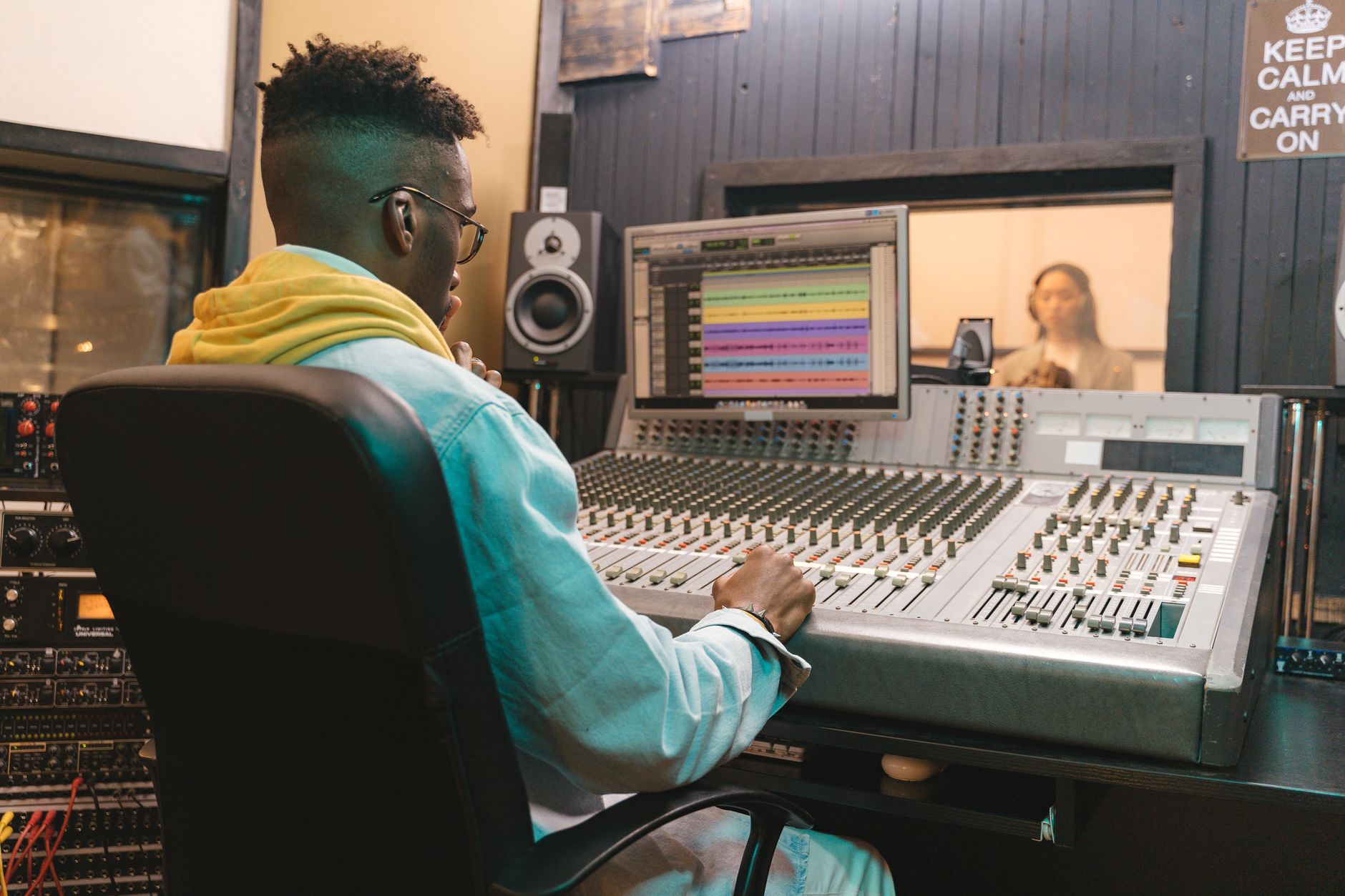
 Photo: RDNE Stock project via Pexels
Verdict by user archetype:
First-time beginner — Probably not your first monitor. The HS7’s honesty is a feature for experienced ears; beginners may find it discouraging without the critical listening skills to act on what they’re hearing. Start with the HS5 or a comparable budget option and grow into the HS7.
Bedroom producer — Strong choice if your room is treated or you’re willing to use the rear EQ switches and cross-reference on headphones. The 7-inch woofer needs some room to breathe; a room under 10×10 ft may require careful speaker placement or a low-cut adjustment.
Gigging musician — This isn’t a PA or live-monitoring tool. If you want the HS7 for a home studio between shows, it’s excellent. For rehearsal playback or live use, look elsewhere.
Prosumer / semi-professional — The HS7’s sweet spot. If you’re producing for clients, scoring for picture, or mixing tracks that need to translate to commercial playback systems, the HS7’s neutral response is one of the most reliable references at this price. Expert consensus suggests it punches at a level above its price in terms of professional credibility.
→ See also:
- Best Studio Monitors for Home Recording (2026) — full comparison across all budgets
- Best Studio Monitors Under $150 — if the HS7 is over budget
- Best Studio Monitors Under $200 — mid-range alternatives
FAQ
Is the Yamaha HS7 good for beginners? The HS7 is technically capable for any level, but its unforgiving flat response can be discouraging for beginners who haven’t yet developed critical listening habits. Most starting producers benefit more from a more forgiving monitor while they develop their ears — upgrade to the HS7 once you’re actively mixing full tracks.
Do I need acoustic treatment to use the HS7? You’ll get better results in a treated room, but it isn’t mandatory. The HS7’s rear panel includes high-trim and low-cut EQ controls specifically designed to compensate for common room problems. Starting with the –2dB shelf at 80Hz in a small, untreated space is a common and effective workaround.
Are Yamaha HS7 monitors sold individually or in pairs? The HS7 is sold as individual units — you buy two to build a stereo pair. Yamaha offers an HS7 matched pair bundle (sometimes labeled HS7 MP), which ensures the two units come from the same production batch for tighter channel matching.
How does the Yamaha HS7 compare to the HS8? The HS8 extends slightly deeper (38Hz vs. 43Hz), hits higher SPL (101dB vs. 95dB), and costs around $50–100 more per unit. According to published specifications, the HS8 is better suited to medium-sized rooms and production that demands extended sub-bass detail. In a small home studio, the HS7 is often the better choice — the HS8’s extra low-end can overload an untreated room.
Is the Yamaha HS7 still worth buying in 2026? Yes. The HS7 hasn’t changed significantly in design, and that’s a feature not a criticism — its core value proposition is a stable, trusted reference. Competing monitors have improved in the budget tier, but few under $500 per unit match the HS7’s combination of neutral response, build quality, and professional credibility in mixing and mastering contexts.
Editorial methodology: Assessments are based on manufacturer specifications, published user reviews, and editorial research. Physical hands-on testing is noted explicitly where it occurred. Rankings reflect our editorial judgment and are not influenced by affiliate commission rates. Full editorial policy · Affiliate disclosure