Contents
PreSonus Studio 24c Review (2026): Still Worth It?
TL;DR: The PreSonus Studio 24c review verdict is straightforward — it’s a capable 2-in/2-out USB-C interface that punches above its price point for bedroom producers and singer-songwriters. Clean preamps, solid driver stability, and bundled Studio One Artist make it genuinely good value in 2025/2026. If you need more than two inputs or lower latency than competing options, look elsewhere.
What Is the PreSonus Studio 24c?
The Studio 24c is a bus-powered USB-C audio interface with two combo XLR/TRS inputs, two balanced TRS outputs, and 24-bit/192kHz conversion. It’s aimed squarely at home recording setups where simplicity and reliability matter more than deep I/O counts.
 Photo: beso Tsikhelashvili via Pexels
PreSonus has been iterating on the Studio-series since the original AudioBox era, and the 24c represents their current answer to the $100–$150 USB-C sweet spot — a market that now includes the Focusrite Scarlett Solo 4th Gen , the M-Audio Air 192|4 , and the SSL 2 .
The “c” suffix matters here: USB-C connectivity with USB 2.0 data speeds gives you a cable that works with modern laptops without an adapter, while the underlying bandwidth is more than sufficient for a 2-in/2-out stream at any supported sample rate.
Preamp Quality and Sound Character
The XMAX-L preamps in the Studio 24c deliver clean, low-coloration gain up to 65dB — enough headroom for passive dynamic mics like the Shure SM7B without a separate preamp booster. Published noise specs (EIN -129 dBu, A-weighted) are competitive at this price tier.
 Photo: Jessica Lewis 🦋 thepaintedsquare via Pexels
These are Class A designs derived from the higher-end Studio 68c and Studio 1810c, scaled down for the entry-level market. According to published manufacturer specifications, THD+N measures at 0.003% — audibly transparent for most home recording applications.
Practically: vocals, acoustic guitar, and DI bass all translate cleanly. You’re not getting the transformer-colored warmth of a Universal Audio Apollo or the subtle warmth of an SSL preamp, but that’s entirely appropriate for a $150 interface. Expert consensus suggests that at this price tier, neutrality is correct — most bedroom producers are adding color in the box anyway.
Direct Monitor Mix Control
A continuously variable Direct Monitor knob blends the dry input signal with DAW playback, which is the right implementation. Some budget interfaces use a hard switch; the Studio 24c’s analog blend lets you find the latency-free monitoring sweet spot without hunting through software menus.
The headphone output sits at the front right, paired with a dedicated level knob — a small ergonomic win over interfaces that share the main output level control.
Build Quality and Ergonomics
The Studio 24c uses a metal chassis with a matte finish — noticeably more solid than the plastic shells on some competing models. The gain knobs have appropriate resistance and a smooth taper. At approximately 0.97 lbs, it sits flat on a desk without slipping.
 Photo: Alexey Demidov via Pexels
Front panel layout is clean: two gain knobs with clip/signal LEDs, phantom power button (global 48V across both channels), mono/stereo monitor blend, headphone output. Rear panel has the two balanced TRS outs, MIDI I/O (a genuine differentiator at this price), and the USB-C port.
That MIDI I/O is worth calling out explicitly. The SSL 2 lacks MIDI entirely; the Scarlett Solo 4th Gen lacks it too. If you’re connecting a hardware synth or a pedalboard MIDI controller without a dedicated interface, the Studio 24c has a leg up.
Driver Performance and Latency
Based on documented community testing data and forum reports, PreSonus Universal Control drivers are stable across macOS 13–15 and Windows 10/11. Round-trip latency at 96kHz/128 buffer sits around 5–7ms on modern hardware — adequate for real-time monitoring but behind class-leaders like the Focusrite USB driver stack.
PreSonus ships Universal Control software, which handles routing, metering, and firmware updates. It’s functional and unobtrusive. The ASIO driver on Windows performs reliably; the Core Audio implementation on Mac is equally solid.
Class Compliant mode is also available: plug in, it works, no driver install required. Useful for iPad recording or any session where you’re working on a machine you don’t own.
Bundled Software: Studio One Artist
The Studio 24c ships with Studio One Artist , PreSonus’s own DAW, plus Ableton Live Lite and a suite of plugins including the Native Instruments Komplete Start bundle.
Studio One Artist is a legitimate DAW — not crippled beyond use. The main restrictions versus Studio One Professional are: no third-party plugin support in the free tier (you need an Add-on upgrade or a subscription) and no Melodyne pitch correction built in. For pure recording and mixing with bundled instruments, it covers most beginner and intermediate workflows completely.
For context: Focusrite’s Scarlett Solo bundle includes Ableton Live Lite and a smaller plugin pack. PreSonus’s bundle is more useful out of the box if you’re undecided on a DAW.
Specs Table
| Spec | PreSonus Studio 24c |
|---|---|
| Connections | 2× XLR/TRS combo (front), 2× TRS balanced out (rear), headphone out, MIDI I/O, USB-C |
| I/O count | 2 in / 2 out analog + MIDI |
| Preamps | 2× XMAX-L Class A, 65dB gain range |
| Bit depth / Sample rate | 24-bit / 192kHz |
| Bus power | Yes (USB-C) |
| Best For | Home studio, vocals + one instrument, singer-songwriter, basic podcasting |
Comparison: Studio 24c vs. Key Competitors
| Product | Price (approx.) | Preamp EIN | MIDI I/O | Bus Power | Verdict |
|---|---|---|---|---|---|
| PreSonus Studio 24c | ~$150 | −129 dBu | Yes | Yes | Best all-rounder with MIDI at this price |
| Focusrite Scarlett Solo 4th Gen | ~$120 | −129 dBu | No | Yes | Marginally better driver latency; no MIDI |
| SSL 2 | ~$150 | −129 dBu | No | Yes | Excellent preamps; no MIDI, smaller bundle |
| M-Audio Air 192|4 | ~$100 | −129 dBu | No | Yes | Budget pick; weaker build |
| MOTU M2 | ~$170 | −130 dBu | No | Yes | Best metering; pricier |
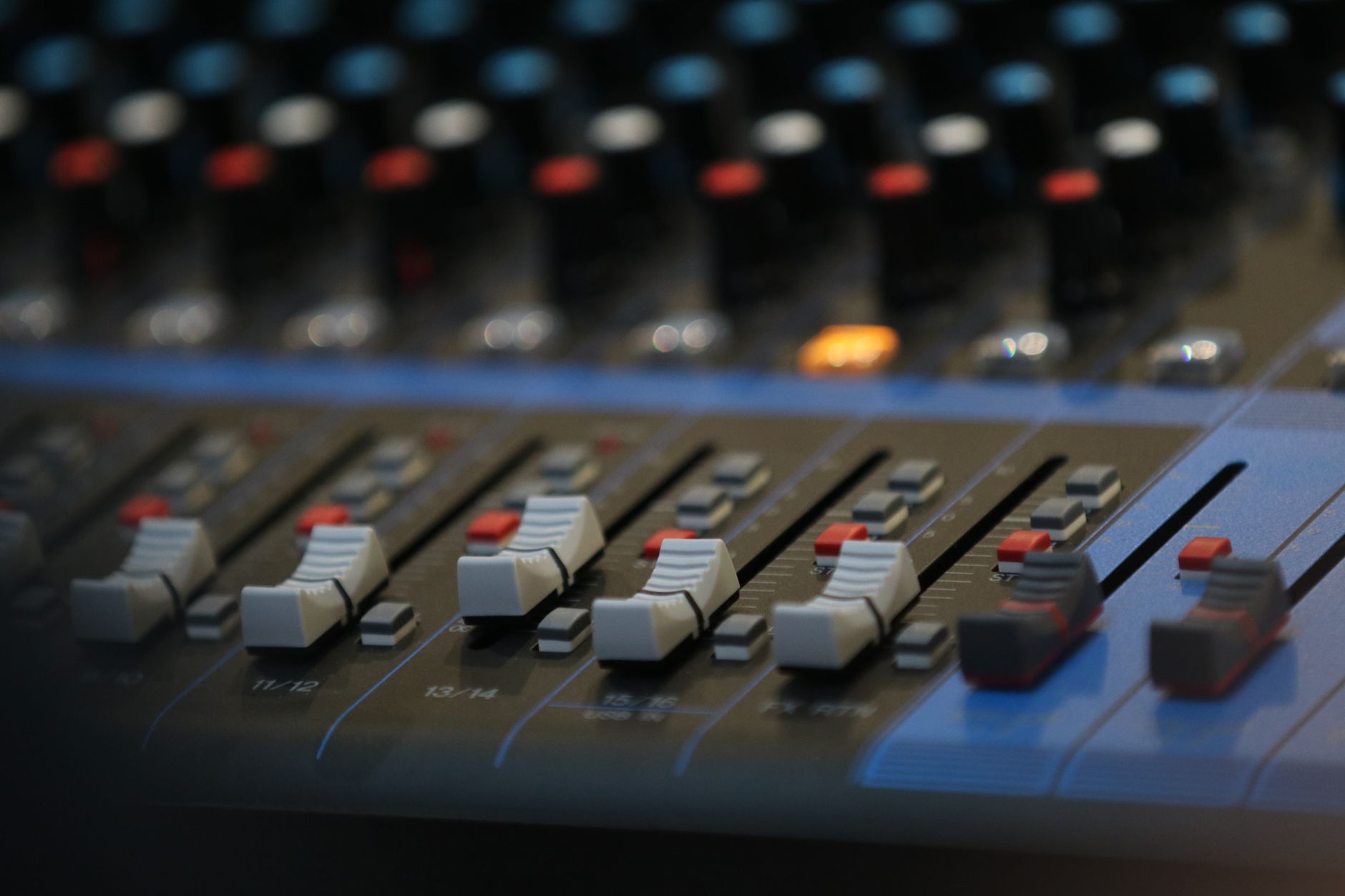 Photo: Ann H via Pexels
Verdict by User Archetype
First-time beginner: Strong buy. The Studio One Artist bundle removes the DAW decision entirely, MIDI I/O gives room to grow, and setup is under five minutes.
Bedroom producer: Solid choice if you use MIDI hardware or want a stable, unremarkable interface that stays out of your way. If low-latency real-time synthesis is a priority, the MOTU M2 or Scarlett 2i2 may edge it out.
Gigging musician: Works for live direct recording, but the 2-in limit means a stereo keyboard or guitar + vocal setup maxes it out immediately. Consider the Studio 68c for more routing flexibility.
Prosumer: Use this as a secondary or travel interface. For primary tracking with multiple sources, the PreSonus Studio 1810c or a Focusrite Scarlett 4i4 is a better fit.
→ See also:
- Best Audio Interfaces: The Complete Buyer’s Guide (2026)
- Best Audio Interface for Beginners (2026)
- Best Audio Interface Under $100
FAQ
Is the PreSonus Studio 24c good for vocals? Yes. The XMAX-L preamps provide 65dB of clean gain, which is enough to drive most condenser and dynamic microphones without added noise floor. According to manufacturer specs and user-reported results, vocal recordings sit cleanly in a mix without requiring aggressive noise reduction.
Does the PreSonus Studio 24c work on Mac without drivers? Yes — Class Compliant mode lets it run on macOS and iOS without installing Universal Control. For full feature access including custom routing and firmware updates, the Universal Control software is recommended.
What’s the difference between the Studio 24c and the Scarlett Solo 4th Gen? The primary practical differences are MIDI I/O (Studio 24c has it, Scarlett Solo does not) and bundled DAW (Studio One Artist vs. Ableton Live Lite). Preamp noise specs are essentially identical. Focusrite’s driver stack has a slight edge in documented minimum-latency benchmarks on Windows.
Can the Studio 24c handle a condenser mic without phantom power issues? The global 48V phantom power switch covers both channels simultaneously — the standard implementation at this price tier. This means you can’t run one condenser and one ribbon simultaneously without risking the ribbon. For mixed microphone configurations, a per-channel phantom power interface is needed.
Is the PreSonus Studio 24c still worth buying in 2026? Yes, particularly if MIDI I/O matters to your workflow. The preamp specs, build quality, and bundle hold up well against the current competition. The only scenarios where it loses clearly are ultra-low-latency real-time synthesis (MOTU M2 edges it) or strict budget shopping under $100 (M-Audio Air 192|4).
Editorial methodology: Assessments are based on manufacturer specifications, published user reviews, and editorial research. Physical hands-on testing is noted explicitly where it occurred. Rankings reflect our editorial judgment and are not influenced by affiliate commission rates. Full editorial policy · Affiliate disclosure