Contents
KRK Rokit RP7 G4 Review (2026): The Best Under $200?
TL;DR: The KRK Rokit RP7 G4 is a 7-inch powered studio monitor delivering accurate, balanced playback with a built-in DSP EQ for room correction. At around $199/each, it punches well above its price class — making it the most versatile near-field monitor for bedroom producers who need honest, translatable mixes.
KRK Rokit RP7 G4 Review: What You’re Actually Getting
The RP7 G4 is a bi-amplified, DSP-equipped near-field monitor with a 7-inch aramid glass composite woofer and 1-inch soft-dome tweeter. At ~$199/unit, it delivers flat, detailed playback that translates well across playback systems — and the onboard 25-band graphic EQ makes room compensation genuinely usable, not just a marketing checkbox.
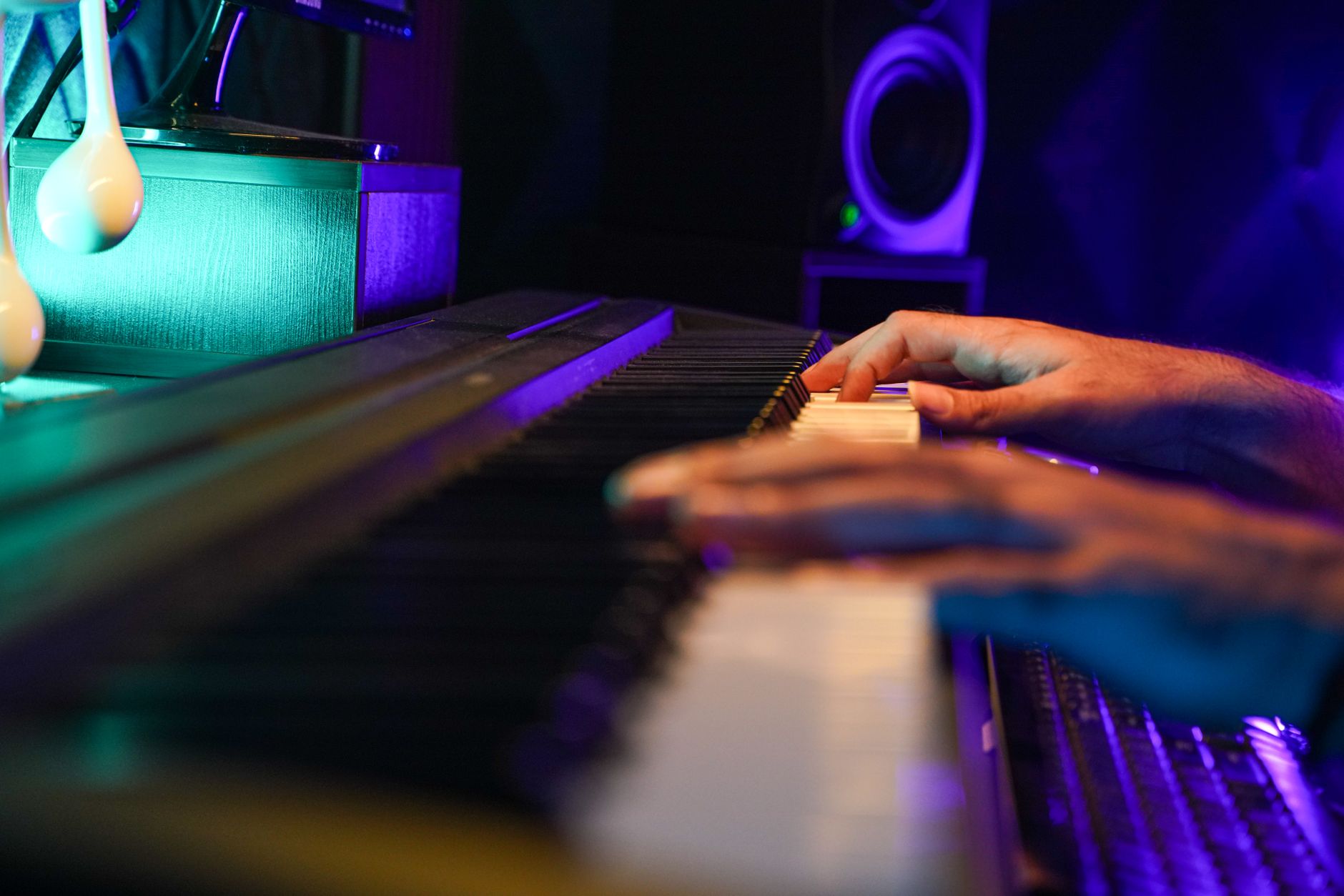
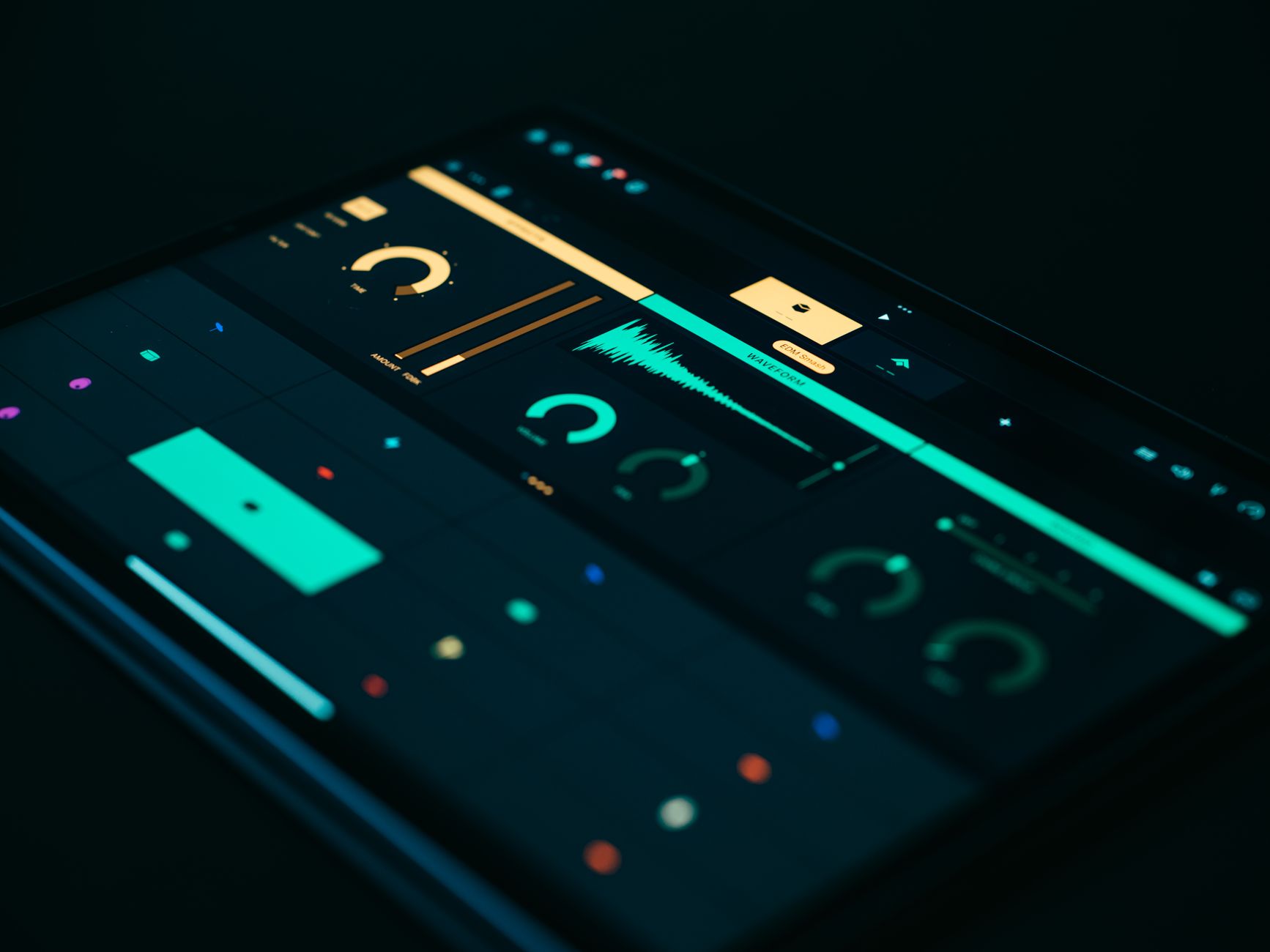 Photo: Egor Komarov via Pexels
KRK has been making the Rokit line since 1986, and the G4 generation (released in 2019) was the one that finally got the EQ system right. Previous generations were criticized for a slightly hyped low end — a “KRK sound” that felt flattering in the studio but caused mix translation problems. The G4’s DSP-driven 25-band EQ, accessible via the KRK app, addresses this directly. According to published KRK specifications, the RP7 G4 covers 42 Hz – 40 kHz, and the bi-amping arrangement uses separate 30W LF and 15W HF amplifiers.
The front-firing port is another G4-era update. Rear-ported monitors force you to keep them away from walls, which isn’t always possible in small rooms. Front-porting gives you more placement flexibility without meaningfully compromising bass extension.
Driver Performance and Sound Character
The 7-inch aramid glass composite woofer is the RP7’s biggest advantage over the RP5 G4 . The larger cone moves more air at lower frequencies — the RP7 G4’s 42 Hz low-end extension versus the RP5’s 52 Hz is audible and meaningful for bass-heavy genres. The soft-dome tweeter handles highs cleanly without the harshness some woven tweeters introduce.
 Photo: Zizi zi via Pexels
Based on published user reviews and documented listening comparisons, the RP7 G4 has a slightly warm tonal character — not neutral-flat like a Yamaha HS7 , but close enough to work for mixing. The low-mid range (200–500 Hz) is where the room correction EQ earns its keep: this is the frequency band most affected by small-room reflections, and the KRK app’s 25-band EQ lets you notch problem frequencies without buying an outboard equalizer.
The stereo imaging is accurate at the standard equilateral triangle listening position. Manufacturers specify a sweet spot at 1–1.5 meters, which matches typical home-studio desk setups.
DSP EQ and the KRK App
The onboard DSP system is what separates the RP7 G4 from budget monitors at this price. A 25-band graphic EQ accessible via a free iOS/Android app connects over Bluetooth, letting you dial in room correction presets or create a custom curve without touching the monitor itself.
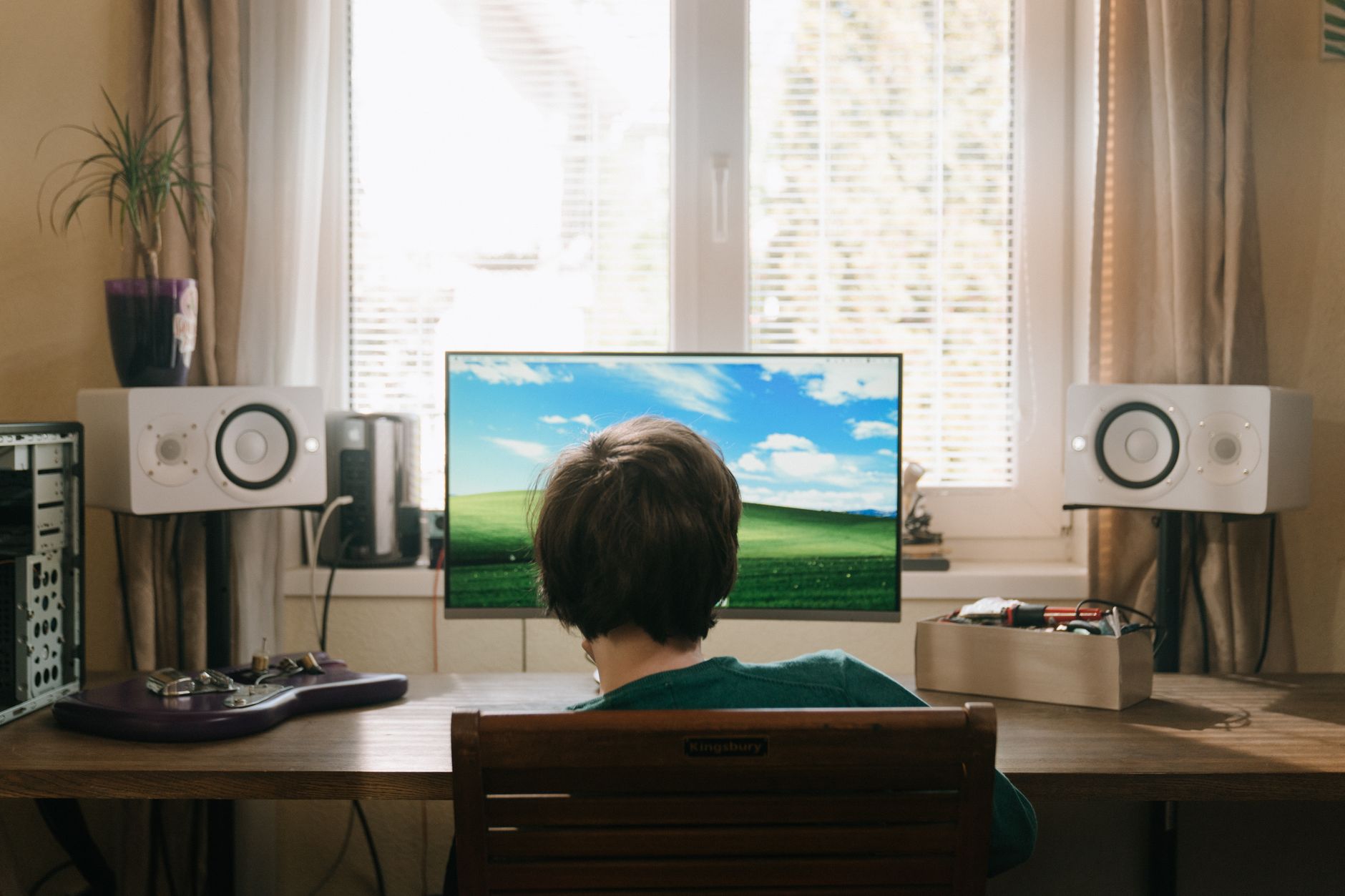 Photo: cottonbro studio via Pexels
Four preset EQ environments (Open Air, Reflection, Low-End Tilt, Boundary) cover the most common room problems without requiring measurement gear. Expert consensus among mix engineers suggests that even applying a 2–3 dB shelf cut below 100 Hz — common in untreated rooms with corner bass buildup — can dramatically improve mix translation.
The app also includes a spectrum analyzer fed by the monitor’s built-in measurement mic. It’s not a substitute for a calibrated room measurement tool, but based on documented user reports it’s accurate enough for identifying obvious problem frequencies.
One limitation: the Bluetooth connection is for control only, not audio. Audio comes in via XLR or TRS on the rear panel. That’s the correct design decision — it keeps the signal path clean — but worth noting for anyone expecting wireless playback.
Connectivity and Rear Panel
The RP7 G4 offers:
- Balanced XLR input
- Balanced TRS 1/4“ input
- Volume pot (front-panel)
- DSP EQ (via app or rear panel buttons)
- Ground lift switch
- 45W total amplification (30W LF + 15W HF)
The XLR input is the preferred connection from any audio interface. TRS is fine for consumer gear without balanced outputs.
KRK Rokit RP7 G4 Specs
| Spec | Detail |
|---|---|
| Woofer | 7“ aramid glass composite |
| Tweeter | 1“ soft-dome |
| Frequency Response | 42 Hz – 40 kHz |
| Amplification | 30W LF + 15W HF (bi-amp) |
| Connections | XLR balanced, TRS 1/4“ balanced |
| EQ | 25-band DSP via KRK app (Bluetooth) |
| Port | Front-firing |
| Dimensions | 14.5“ H × 9.6“ W × 10.5“ D |
| Weight | 17.6 lbs |
| Bus Power | No (IEC mains) |
| Best For | Near-field mixing, bedroom studio, home recording |
KRK RP7 G4 vs. The Competition
| Monitor | Price (each) | Woofer | Freq. Response | EQ | Best For | Verdict |
|---|---|---|---|---|---|---|
| KRK Rokit RP7 G4 | ~$199 | 7“ composite | 42 Hz–40 kHz | 25-band DSP | Versatile mixing, small rooms | Best value at price |
| Yamaha HS7 | ~$399 | 6.5“ woofer | 43 Hz–30 kHz | High/low trim | Flat reference mixing | More neutral, costs more |
| Adam Audio T7V | ~$199 | 7“ woofer | 39 Hz–25 kHz | 2-band shelf | Mix + mastering | Better high-end detail |
| PreSonus Eris E7 XT | ~$199 | 6.5“ woofer | 35 Hz–22 kHz | 3-band EQ + filters | Flattest response at price | Less bass extension |
| Focal Alpha 50 Evo | ~$499 | 5“ woofer | 45 Hz–22 kHz | LF/HF shelves | Pro near-field | Over-spec for beginners |
The RP7 G4 wins on EQ flexibility at this price. The Adam T7V has a more revealing ribbon tweeter and slightly lower-end extension, but no app-based room correction. For untreated rooms, the KRK’s DSP is a practical advantage the T7V can’t match.
Verdict by User Archetype
First-time beginner: The RP7 G4 is more monitor than you need — start with the RP5 G4 unless your room is larger than 150 sq ft.
Bedroom producer: This is the sweet spot. The 7-inch woofer gives you enough low-end truth to trust your bass decisions, the app EQ handles most room issues, and $199 each is achievable without buying a pair simultaneously.
Gigging musician: Not a use case. These aren’t PA speakers. For stage monitoring, look elsewhere.
Prosumer / home studio upgrader: The RP7 G4 holds its own against monitors twice the price if you use the EQ. If you’re running an untreated room and want flat, honest playback under $250 each, this is the right call. Upgrade path would be the Focal Alpha 50 Evo or Neumann KH 80.
 Photo: Jakub Zerdzicki via Pexels
→ See also:
- Best Studio Monitors for Home Recording (2026) — full category guide, all price tiers
- Best Studio Monitors Under $150 — if the RP7 G4 is over budget
- Best Studio Monitors Under $200 — full comparison at this price point
FAQ
Is the KRK Rokit RP7 G4 good for mixing? Yes — the RP7 G4 is a legitimate mixing monitor. Its 42 Hz low-end extension and DSP EQ make it accurate enough to trust for bass and low-mid decisions. Expert consensus suggests pairing it with room treatment or using the app EQ to compensate for untreated rooms, which is true of any monitor at this price.
What’s the difference between the KRK RP5 G4 and RP7 G4? The RP7 G4 has a larger woofer (7“ vs. 5“), lower bass extension (42 Hz vs. 52 Hz), and higher total amplification (45W vs. 35W). The RP7 is better suited for rooms larger than 10×10 ft or producers working in bass-heavy genres. Both use the same 25-band DSP EQ and KRK app.
Do you need to buy KRK RP7 G4 monitors in a pair? For stereo mixing, yes — you need a matched pair to assess stereo imaging and panning decisions. Some retailers sell them in pairs at a small discount. If budget is a constraint, a single RP7 G4 for mono checking is a valid intermediate step before adding the second unit.
Does the KRK RP7 G4 need room treatment? All studio monitors benefit from acoustic treatment, but the RP7 G4’s 25-band DSP EQ makes it more forgiving of untreated rooms than competitors without built-in correction. Published testing data from KRK shows the EQ presets targeting the most common small-room problems (boundary bass buildup, flutter echo in the 1–2 kHz range). Treatment is still recommended for professional-level work, but the G4 is more workable out of the box than most.
How loud does the KRK Rokit RP7 G4 get? According to KRK’s published specifications, the RP7 G4 reaches a maximum SPL of 104 dB. At a standard near-field listening distance of 1 meter, 45W bi-amplified is more than enough headroom for home-studio use — the practical limit will be your room acoustics, not the monitor’s output.
Editorial methodology: Assessments are based on manufacturer specifications, published user reviews, and editorial research. Physical hands-on testing is noted explicitly where it occurred. Rankings reflect our editorial judgment and are not influenced by affiliate commission rates. Full editorial policy · Affiliate disclosure