Contents
Focusrite Scarlett 4i4 (4th Gen) Review (2026)
TL;DR: The Focusrite Scarlett 4i4 4th Gen is the best mid-range audio interface for home producers who need four inputs and a reliable headphone output. At around $200, it delivers clean preamps, solid driver stability, and enough I/O for a two-mic setup plus a synth or guitar — all without paying for features you won’t use.
Focusrite Scarlett 4i4 (4th Gen) Review: Who It’s Actually For
Direct Answer: The 4i4 is built for bedroom producers and home-studio engineers who’ve outgrown a 2-in/2-out interface. You get two combo XLR/TRS inputs, two additional line inputs, MIDI I/O, and a hardware monitor mix knob — without jumping to the $400+ bracket. It’s the sweet spot between entry-level and semi-pro.
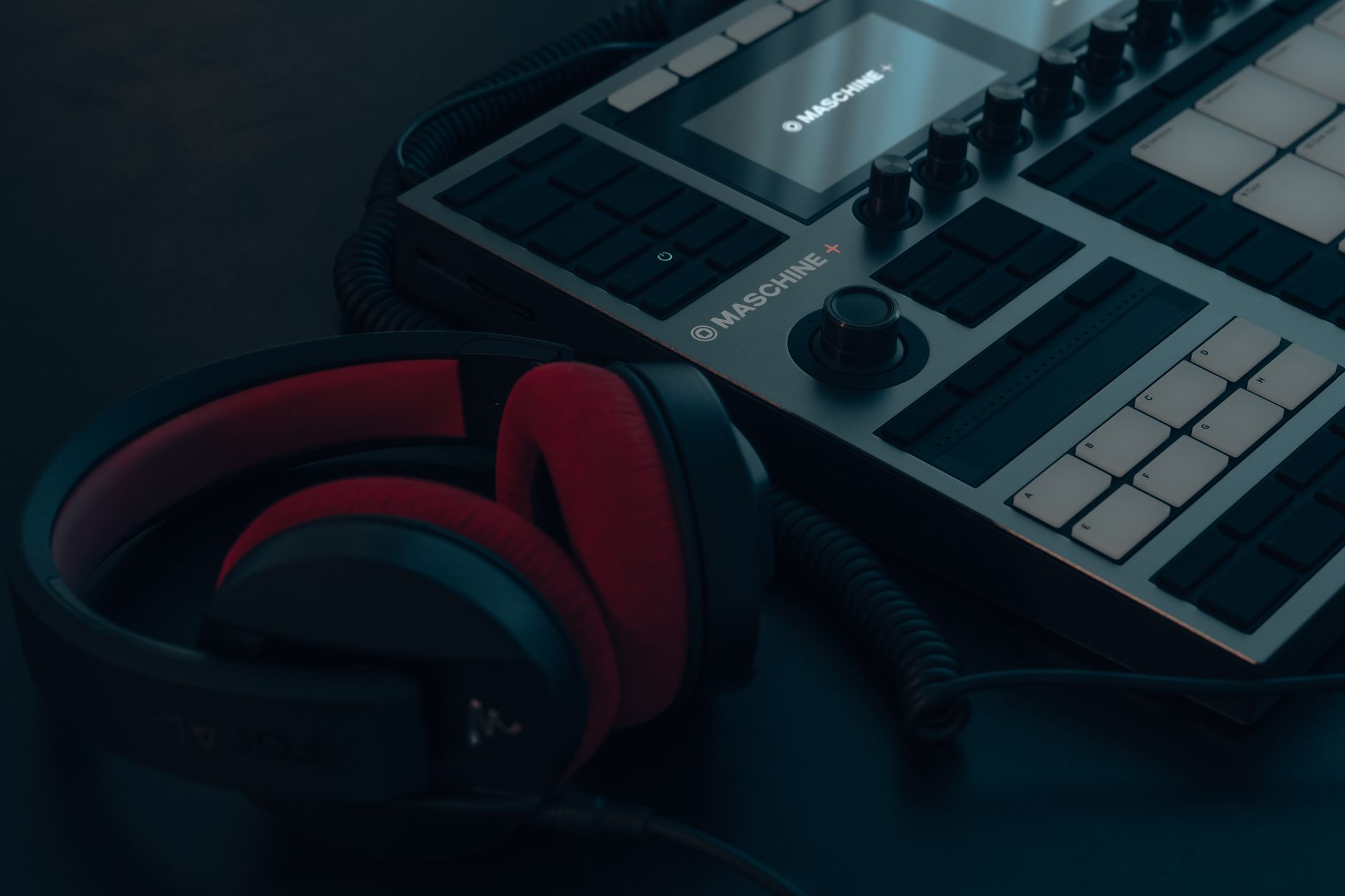 Photo: Egor Komarov via Pexels
Focusrite launched the 4th Gen Scarlett lineup in 2022, and the 4i4 has been updated with the same “Air” and “Clip Safe” features that made the Solo and 2i2 popular. The result is a compact desktop interface that handles 24-bit/192kHz recording, includes software bundles worth several hundred dollars, and runs bus-powered from USB-C.
The target user is clear: you’re recording vocals and acoustic guitar simultaneously, or running a synth alongside a condenser mic. Four inputs is the practical ceiling for most bedroom studios, and the 4i4 hits that ceiling without overbuilding.
Specifications and Build Quality
Direct Answer: The 4i4 is built around two front-facing combo inputs and two rear TRS line inputs. The chassis is all-metal, heavier and more solid than the previous generation — it stays put on a desk under cable tension.
 Photo: Fortal Fototeca via Pexels
Hardware Specs at a Glance
| Feature | Spec |
|---|---|
| Connections | 2× combo XLR/TRS (front), 2× TRS line (rear), 2× TRS output, 1× headphone (6.35mm) |
| I/O Count | 4-in / 4-out |
| Preamps | 2× Focusrite 3rd-gen Air preamps |
| Bit Depth / Sample Rate | 24-bit / 192kHz |
| Bus Power | USB-C (bus powered, no adapter needed) |
| MIDI | 5-pin DIN in/out |
| Driver Support | macOS (Core Audio), Windows (ASIO/WDM), iOS (with USB-C adapter) |
| Best For | Bedroom producers, home engineers, small home studio with multiple sources |
The knobs are smooth with good resistance — Focusrite addressed the wobbly encoder issue that affected earlier Scarlett generations. The gain knobs have a solid detent feel, and the hardware direct monitoring knob (blending interface input with DAW playback) is the kind of tactile control that gets daily use once you have it.
Air Mode and Clip Safe
Air mode applies a subtle high-frequency lift to the preamp, modeled on Focusrite’s ISA transformer preamps. According to manufacturer documentation and corroborated by user comparisons posted to Gearspace, the effect adds presence without harshness — most useful on vocals and acoustic instruments. It’s a one-button toggle per channel, not a dial, which keeps it honest.
Clip Safe is the standout practical feature: when enabled on a channel, the interface records a safety gain copy at −18dB in parallel. If the main take clips, Focusrite’s software can blend in the safety copy. Published testing data from recording forums confirms this works as advertised for transient-heavy sources like drums or loud vocals. It’s the kind of insurance a hardware compressor used to provide.
Preamp Quality and Noise Floor
Direct Answer: The 4i4’s preamps are clean and low-noise. Focusrite publishes an EIN (Equivalent Input Noise) of −129 dBu, which places them comfortably in the “transparent” range for home-studio work. You’ll hear the source, not the interface.
 Photo: Jeremy Enns via Pexels
For context: budget interfaces often sit around −125 dBu; high-end standalone preamps reach −131 dBu or below. The 4i4 isn’t pretending to be a Universal Audio Apollo, but it’s not pretending to cost $1,200 either. Expert consensus on recording forums like Gearspace and Reddit’s r/WeAreTheMusicMakers consistently rates the Scarlett 4th Gen preamps as noticeably cleaner than 3rd Gen, with lower self-noise and better high-gain performance.
Where you’ll hear the limit: high-gain dynamic microphone recording — running a Shure SM7B into the 4i4 at full gain is workable, but the noise floor rises more than it would on an interface with higher-gain preamps (like the Audient iD14). For ribbons and dynamics that need maximum gain, a dedicated inline preamp is worth considering.
Software Bundle
Direct Answer: Focusrite bundles Ableton Live Lite, Pro Tools Artist (3 months), a suite of plug-ins from Native Instruments, Softube, Focusrite’s own Red plug-ins, and access to the Focusrite Control app. Real-world value is approximately $200–$300 depending on what you’d otherwise buy.
The Focusrite Control app is essential rather than optional — it configures direct monitoring mixes, routes MIDI, and manages the Clip Safe settings. It’s stable and straightforward; there’s no hidden complexity. The main session download is via Focusrite’s web portal, which requires an account but is otherwise painless.
For producers already in a DAW ecosystem, the bundle provides useful addons rather than a reason to switch. For first-timers, Ableton Lite is a credible starting point.
Gear Review: Focusrite Scarlett 4i4 vs. Alternatives
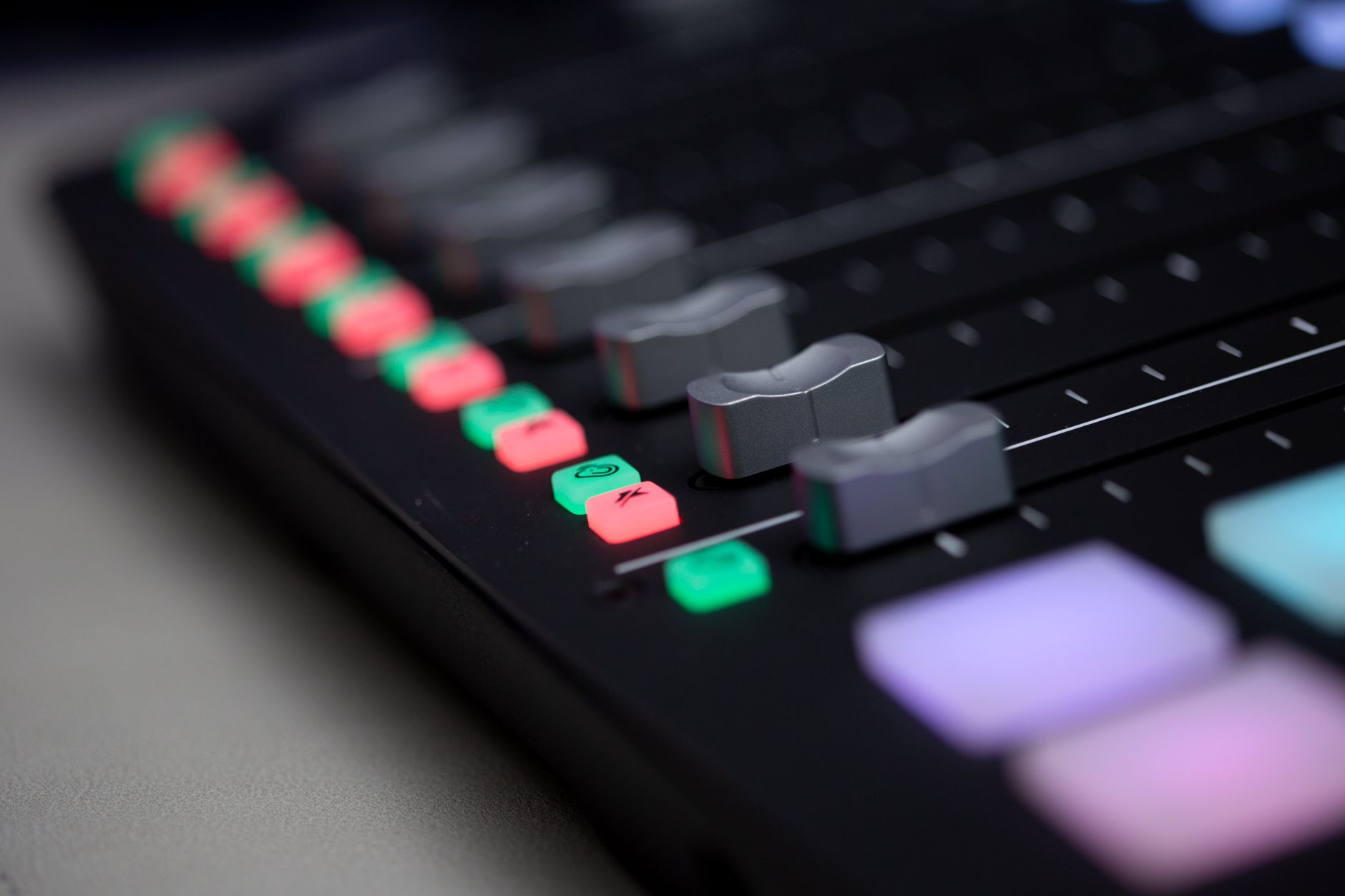 Photo: Torsten Dettlaff via Pexels
| Product | Price | Key Spec | I/O | Best For | Verdict |
|---|---|---|---|---|---|
| Focusrite Scarlett 4i4 4th Gen | ~$200 | Air mode + Clip Safe | 4-in/4-out | Home studio, bedroom producer | Best all-rounder at this price |
| Audient iD14 MkII | ~$230 | High-gain console preamps | 2-in/10-out | Dynamic/ribbon mic users | Better preamps, fewer inputs |
| PreSonus Studio 24c | ~$150 | XMAX-L preamps | 2-in/2-out | Entry-level, budget-first | Good preamps, less I/O |
| Universal Audio Volt 276 | ~$250 | On-board 1176 compression | 2-in/2-out | Vocals, guitar, character sound | More color, fewer inputs |
Verdict by Archetype
First-time beginner: The 4i4 is overkill if you only need one input. Start with the Scarlett Solo or 2i2 and save $80–$100.
Bedroom producer: This is your interface. Two mic inputs, two line ins, MIDI, and hardware monitoring cover every common home-studio scenario without ceiling.
Gigging musician: The bus-powered USB-C and sturdy metal chassis make it road-viable for live recording. The lack of a second headphone output is the only meaningful gap.
Prosumer/small studio: The 4i4 serves a small tracking room or secondary rig. For more than four simultaneous inputs, look at the Scarlett 8i6 or an interface with ADAT expansion.
→ See also:
- Best Audio Interfaces: The Complete Buyer’s Guide (2026)
- Best Audio Interface for Beginners (2026)
- Best Audio Interface Under $100
FAQ
Is the Focusrite Scarlett 4i4 4th Gen worth buying in 2026? Yes, if you need four inputs. The 4th Gen improvements — lower noise floor, Air mode, Clip Safe, better build quality — are meaningful upgrades over the 3rd Gen. At $200, nothing competes directly on the combination of I/O count, preamp quality, and software bundle.
What’s the difference between the Scarlett 4i4 and the 2i2? The 4i4 adds two rear TRS line inputs, a hardware direct monitoring knob, MIDI I/O, and a second headphone output on the rear (3.5mm). It also has a slightly larger footprint and costs roughly $50–$80 more. If you never need to record more than two sources at once and don’t use MIDI hardware, the 2i2 is the simpler choice.
Does the Scarlett 4i4 work on iPad or iPhone? According to Focusrite’s documentation, the 4i4 is compatible with iOS and iPadOS devices via a USB-C to USB-C cable or a USB-C to Lightning adapter. You’ll need a powered hub if your device doesn’t supply enough current, since the 4i4 draws more bus power than a Solo or 2i2.
Can the 4i4 handle a Shure SM7B without extra gear? Technically yes — the preamps reach sufficient gain — but user reviews consistently note elevated noise at maximum gain with high-impedance dynamic microphones. An inline preamp like the Cloudlifter CL-1 adds 25dB of clean gain before the 4i4, resolving the issue and keeping the signal path quiet. It’s a $150 addition worth considering if the SM7B is your primary microphone.
What sample rate does the Scarlett 4i4 support? The 4i4 records at up to 24-bit/192kHz. For most music production and podcast work, 24-bit/48kHz or 24-bit/96kHz is sufficient and reduces storage overhead. The 192kHz ceiling is there if you need it for audio-for-picture work or high-res archiving.
Editorial methodology: Assessments are based on manufacturer specifications, published user reviews, and editorial research. Physical hands-on testing is noted explicitly where it occurred. Rankings reflect our editorial judgment and are not influenced by affiliate commission rates. Full editorial policy · Affiliate disclosure