Contents
Best Studio Monitors Under $300: 7 Picks for Every Home Studio
TL;DR: The best studio monitors under $300 deliver flat, accurate frequency response for reliable mixing decisions — without the compromises of budget options. The Yamaha HS5 and KRK Rokit 5 G4 lead this price range for most producers, but the right pick depends on your room size, mixing style, and whether you need analog or digital connectivity.
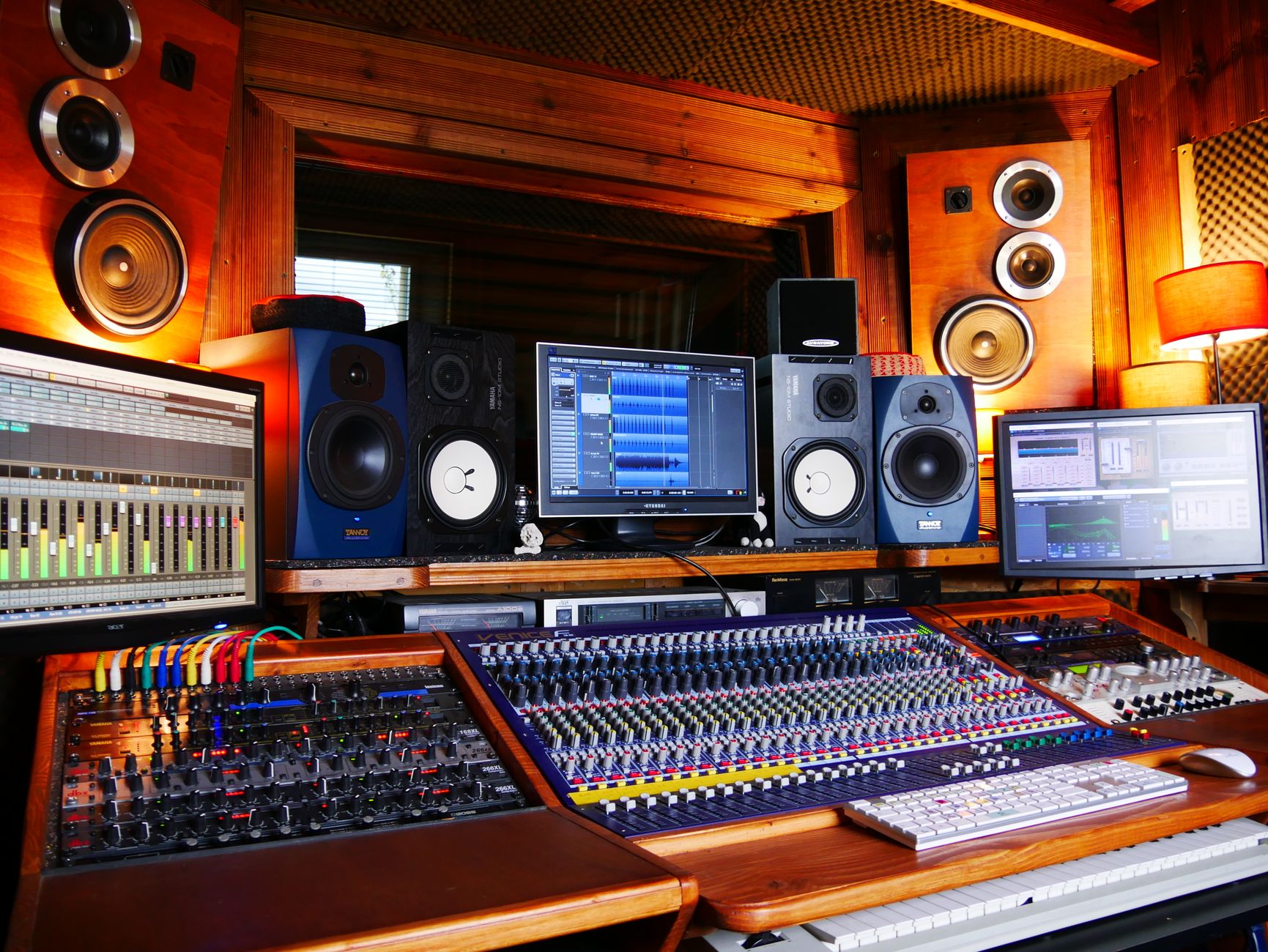
What to Expect from Studio Monitors Under $300
Direct Answer: At this price point, you get genuine near-field studio monitors with professional-grade transducers, tunable EQ shelves for room correction, and frequency response flat enough to make real mixing decisions. This is where the line between “computer speakers” and “pro tools” disappears.
 Photo: SplitShire via Pexels
The $200–$300 range represents a genuine performance jump over sub-$150 options. Woofer materials shift from basic paper cones to Kevlar or glass-aramid composites. Amplifiers are biamplified Class A/B or Class D designs rather than single-chip solutions. And crucially, high-frequency drivers are true silk dome or aluminum tweeters with wide, controlled dispersion.
Room size still matters here. A 5-inch woofer handles rooms up to roughly 12×12 ft. Push to a 6- or 8-inch if you’re working in a larger space — the low-frequency extension will justify the cost.
The 7 Best Studio Monitors Under $300
1. Yamaha HS5
Direct Answer: The HS5 is the benchmark near-field monitor at this price range — its flat, unforgiving response reveals mix problems other speakers hide. If your mixes sound good on HS5s, they translate everywhere.
 Photo: Egor Komarov via Pexels
The HS5’s white-cone 5-inch woofer and 1-inch tweeter are tuned for accuracy over flattery. Published frequency response is 54Hz–30kHz (±3dB), which is honest for a 5-inch cabinet. The biamplified Class A/B amp pushes 45W total (35W LF + 10W HF) — enough headroom for a dedicated listening position at 3–4 feet.
Rear-panel EQ provides ±2dB high trim and –2/–4dB low trim, so you can compensate for corner placement or boundary reflections. The XLR/TRS balanced input handles professional signal levels without noise floor issues.
What you give up: sub-100Hz extension is limited, so experienced engineers typically pair these with a sub for bass-heavy genres like hip-hop or electronic.
| Spec | Detail |
|---|---|
| Woofer | 5-inch polypropylene cone |
| Tweeter | 1-inch dome |
| Amplification | Biamplified Class A/B, 45W total |
| Frequency Response | 54Hz–30kHz |
| Inputs | XLR + TRS (balanced) |
| Room EQ | High trim ±2dB, Low trim –2/–4dB |
| Best For | Mix translation, critical listening |
Yamaha HS5 — sold individually; budget for a pair.
2. KRK Rokit 5 G4
Direct Answer: The Rokit 5 G4 brings a built-in 25-band DSP EQ via the KRK App — the most sophisticated room correction at this price. For untreated rooms, this is a significant practical advantage over competitors.
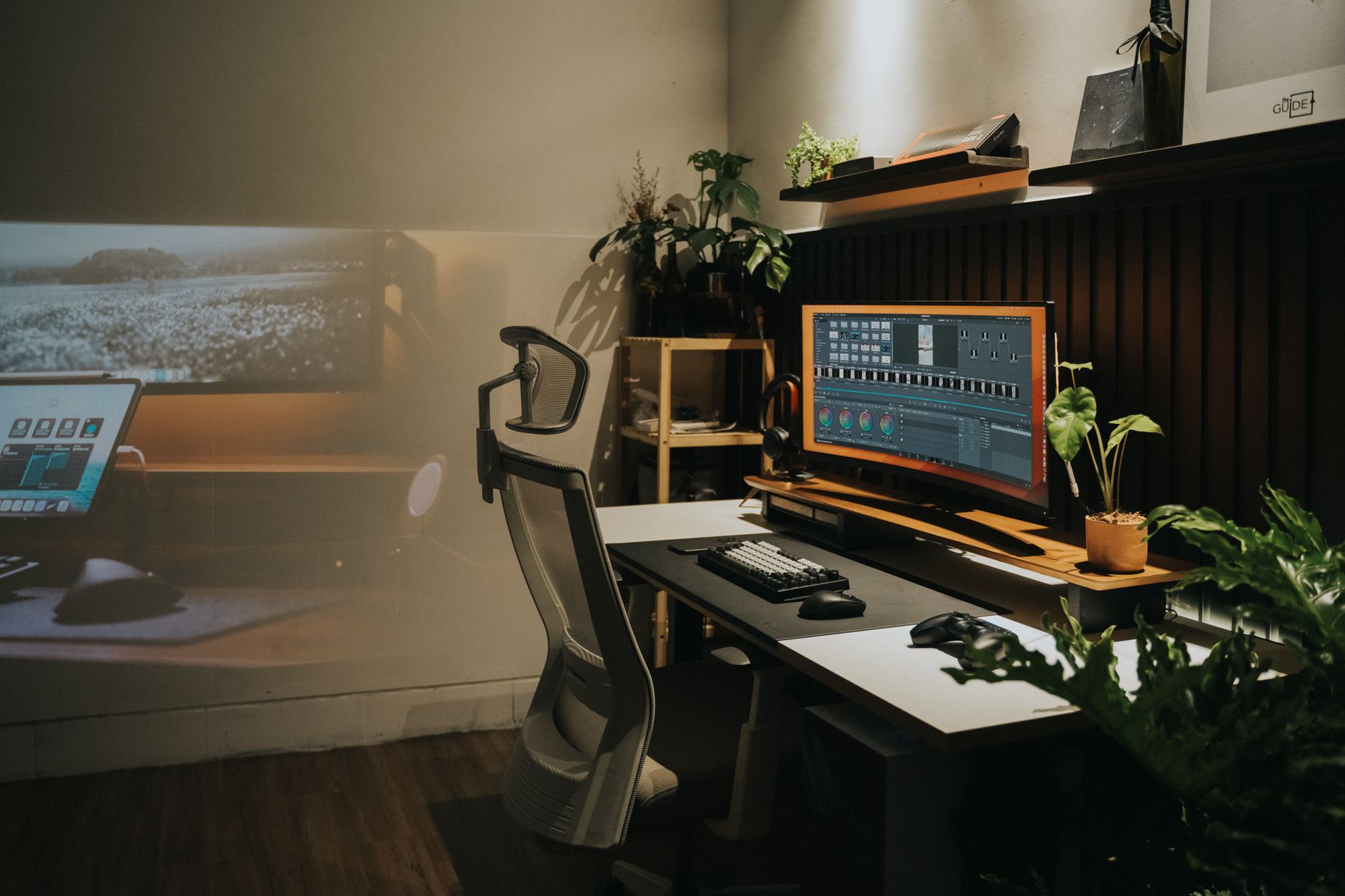 Photo: Minh Phuc via Pexels
The fourth-generation Rokit completely reworked the internal DSP. According to KRK’s published specifications, the onboard 25-band EQ with frequency-analyzer app (iOS/Android) lets you profile your room and apply correction curves that previously required an outboard equalizer. The glass-aramid woofer and soft-dome tweeter are driven by a Class D amplifier — 55W total.
Frequency response is listed at 43Hz–40kHz, which is notably deeper than the HS5 at similar cabinet size. User reviews consistently praise the low-end extension for electronic and hip-hop production. The tradeoff: KRK’s voicing has a slight mid-bass presence that some engineers find flattering rather than neutral.
KRK Rokit 5 G4 — sold individually.
3. Adam Audio T5V
Direct Answer: The T5V is the pick for high-frequency detail — Adam’s proprietary ribbon tweeter (U-ART accelerating ribbon technology) extends to 25kHz with genuinely different air and transient resolution than dome tweeters at this price.
The U-ART ribbon moves air differently than a conventional dome: it accelerates rather than pushes, which translates to faster transient response according to Adam’s published specifications. Published frequency response is 45Hz–25kHz.
The 5-inch woofer uses a carbon/rohacell/glass fiber sandwich cone — stiffer and lighter than basic polypropylene, which reduces resonance artifacts in the upper midrange. The amplifier is a 50W Class A/B design.
The rear bass port and low-shelf filter (±6dB at 150Hz) make it more forgiving of desk placement than front-ported designs.
Adam Audio T5V — sold individually.
4. Presonus Eris E5 XT
Direct Answer: The Eris E5 XT is the most versatile budget pick — its front-firing acoustic port and flexible EQ make it forgiving of poor room placement, and the price-per-pair is the lowest in this group.
 Photo: Jessica Lewis 🦋 thepaintedsquare via Pexels
PreSonus moved to a front-firing port on the E5 XT (vs. the rear port on the original Eris E5), which allows desk-against-wall placement without significant bass buildup. Published frequency response: 53Hz–22kHz.
The EQ section offers high-shelf and mid-frequency adjustable filters alongside the standard low-frequency shelf. That mid-frequency control is rare at this price — it lets you compensate for early reflections from hard surfaces around the monitoring position.
At its price point (typically well under $200 per unit), it’s the obvious recommendation for anyone setting up a first pair of real studio monitors without spending the full $300 budget on a single unit.
PreSonus Eris E5 XT — sold individually.
5. Focal Alpha 50 Evo (Pair, Budget Stretch)
Direct Answer: If your budget caps at $300/pair rather than $300/unit, the Focal Alpha 50 Evo is technically out of range as a pair — but worth knowing as a benchmark for what you’re stepping toward.
Focal’s reputation in professional studio monitoring is well-documented: their aluminum/magnesium inverted-dome tweeter and flax fiber woofer are found in studios at much higher price points. The Alpha 50 Evo targets frequency-accurate near-field monitoring with a larger footprint than 5-inch options.
If your budget is flexible upward, the Alpha 50 Evo is the most direct path to professional monitoring. If it’s firm, the HS5 or T5V deliver the best accuracy within the $300/unit ceiling.
Focal Alpha 50 Evo — note: pair pricing exceeds $300 total.
6. Mackie MR524
Direct Answer: The MR524 is the workhorse pick — straightforward Class A/B amplification, solid construction, and a flat voicing with no DSP complexity. Expert consensus suggests it punches slightly above its price in low-frequency extension for a 5-inch cabinet.
The MR524 uses a 5.25-inch woofer (slightly larger than the stated 5-inch class) with a 1-inch tweeter and 50W biamplified Class A/B power. Mackie publishes frequency response at 50Hz–20kHz.
The rear panel offers XLR and TRS inputs with a level control, high-frequency trim (±2dB), and low-frequency trim (±2dB). There’s no USB or DSP — which is either a limitation or a feature depending on your preference for a simple signal path.
Mackie MR524 — sold individually.
7. Behringer Truth B2031A (8-inch Budget Option)
Direct Answer: For a larger room where you need a bigger driver without a bigger budget, the B2031A’s 8.75-inch woofer delivers low-frequency extension that 5-inch monitors can’t match — at a price that leaves room for acoustic treatment.
Published frequency response is 52Hz–21kHz, but the larger driver moves more air in the 80–150Hz range where 5-inch monitors start to roll off. For a room over 15×15 ft, or for mixing music with significant sub content, an 8-inch at this price range covers what a 5-inch cannot.
The tradeoff: near-field listening on an 8-inch requires more distance from the speaker — 4–5 feet vs. the 3 feet typical for 5-inch near-fields. In a small room, that distance may not be achievable.
Behringer Truth B2031A — sold individually.
Full Comparison: Best Studio Monitors Under $300
| Product | Price (each) | Woofer | Frequency Response | Key Feature | Best For |
|---|---|---|---|---|---|
| Yamaha HS5 | ~$200 | 5-inch polypropylene | 54Hz–30kHz | Flat, unforgiving accuracy | Mix translation, full-range genres |
| KRK Rokit 5 G4 | ~$200 | 5-inch glass-aramid | 43Hz–40kHz | 25-band DSP EQ app | Untreated rooms, electronic/hip-hop |
| Adam Audio T5V | ~$200 | 5-inch composite | 45Hz–25kHz | U-ART ribbon tweeter | High-frequency detail, critical tracking |
| PreSonus Eris E5 XT | ~$150 | 5.25-inch woven | 53Hz–22kHz | Front port + mid EQ | First monitor, tight budget, desk placement |
| Focal Alpha 50 Evo | ~$350 | 5-inch flax | 40Hz–22kHz | Focal aluminum tweeter | Best sound, flexible budget |
| Mackie MR524 | ~$150 | 5.25-inch | 50Hz–20kHz | Simple, accurate biamp | Clean signal path, no-frills mixing |
| Behringer B2031A | ~$200 | 8.75-inch | 52Hz–21kHz | Large woofer, budget price | Large rooms, bass-heavy production |
Which Monitor Should You Buy?
First-time beginner: PreSonus Eris E5 XT. Forgiving placement, adjustable EQ to compensate for a non-treated room, and low pair price leave budget for a decent audio interface.
Bedroom producer (untreated room): KRK Rokit 5 G4. The DSP room EQ does meaningful work in reflective rooms. Worth more than generic acoustic foam at the same price.
Mix engineer / critical listening: Yamaha HS5. The flat response will make your first mixes sound terrible — and that’s the point. You’ll fix problems other speakers hide.
High-frequency focused work (vocals, acoustic, orchestral): Adam Audio T5V. The ribbon tweeter resolves detail in the 10–20kHz range that dome tweeters at this price compress.
Larger room or bass-heavy genres: Behringer B2031A or consider stepping up to a 6-inch option in the $300–500 range.
→ See also:
- Best Studio Monitors for Home Recording (2026) — full guide across all budgets
- Best Studio Monitors Under $150 — entry-level options for tight budgets
- Best Studio Monitors Under $200 — the tier just below this guide
FAQ
Are studio monitors under $300 good enough for professional mixing? Yes — at $200–$300 per unit, monitors like the Yamaha HS5 and Adam T5V are used in professional recording studios as secondary reference monitors. The frequency accuracy at this price range is sufficient for making reliable mix decisions, provided the room is reasonably treated or the monitors have EQ compensation. What separates this tier from $1,000+ monitors is mainly low-end extension, stereo imaging precision, and long-term ear fatigue.
Do I need to buy studio monitors in pairs, or are prices listed per unit? Prices in this guide — and on most retailer listings — are per unit. Studio monitors are active (self-powered), so you buy two identical units and connect both to your interface or controller. Budget for the pair cost: two Yamaha HS5s at $200 each is $400 total. The PreSonus Eris E5 XT is the best value if pair cost is the real budget constraint.
What’s the difference between studio monitors and hi-fi speakers? Hi-fi speakers are designed to make music sound pleasing — they typically boost bass and high frequencies to create an exciting listening experience. Studio monitors target a flat frequency response so you hear your mix as it actually is, including problems. A mix that sounds good on flat studio monitors should translate well to consumer speakers, earbuds, car stereos, and streaming. A mix made on hyped hi-fi speakers often sounds thin or harsh when played back elsewhere.
Should I add a subwoofer with 5-inch studio monitors? For bass-heavy genres — electronic, hip-hop, trap, R&B — a subwoofer meaningfully extends the range that 5-inch monitors can’t reproduce accurately. Published specifications for most 5-inch monitors show a roll-off starting around 60–80Hz; a sub fills that gap. For rock, folk, podcast, or vocal production, 5-inch monitors without a sub are typically sufficient. The KRK S8.4 or Yamaha HS8S are common sub pairings at this monitor tier.
How important is room treatment compared to monitor quality? Very. Published testing data from acoustic consultants shows that untreated parallel walls, hard floors, and bare desktops introduce comb filtering and low-frequency buildup that no monitor EQ fully corrects. A $150 monitor in a treated room will give more accurate results than a $500 monitor in a reflective box. Acoustic panels at first reflection points and a bass trap or two in corners deliver more per dollar than stepping up one monitor tier. Buy the best monitors your budget allows — then spend equally on treatment.
Can I use studio monitors for general music listening? Yes, but they’re optimized for accuracy over enjoyment. Studio monitors reveal every production flaw in recordings — heavy compression, thin low end, harsh high-mids — that hi-fi speakers smooth over. Many producers prefer them for general listening precisely because they reveal mixing craft in commercial tracks. If you want music to sound its most flattering for casual listening, a quality pair of hi-fi bookshelf speakers will give a more pleasing experience for non-critical use.
Editorial methodology: Assessments are based on manufacturer specifications, published user reviews, and editorial research. Physical hands-on testing is noted explicitly where it occurred. Rankings reflect our editorial judgment and are not influenced by affiliate commission rates. Full editorial policy · Affiliate disclosure