Contents
Best 5-Inch Studio Monitors: Top Picks for Home Studios
TL;DR: The best 5-inch studio monitors balance accurate frequency response, low-end translation, and near-field imaging in a footprint that suits most home studios. For most bedroom producers, the Yamaha HS5 or Adam Audio T5V deliver the most reliable mix translation at their price points. Budget-conscious buyers get genuine performance from the PreSonus Eris E5 XT without sacrificing too much.
Five-inch monitors sit in a sweet spot: big enough to reproduce meaningful low-mids, small enough to work in untreated rooms without bass buildup destroying your mix decisions. The best 5-inch studio monitors aren’t the ones with the flashiest specs — they’re the ones that tell you the truth about your mix so it translates everywhere else.
This guide covers the top picks across every budget tier, with direct comparisons on the specs that actually matter for recording and mixing.
Why 5-Inch Monitors Hit the Sweet Spot
5-inch monitors give you enough woofer surface area to reproduce 80–100 Hz with reasonable accuracy, while their compact cabinets minimize room interaction. Most home-studio rooms under 200 sq ft are better served by a 5-inch pair than an 8-inch pair — the room is the limiting factor, not the speaker.
 Photo: Pich Lokei via Pexels
The tradeoff is sub-bass extension. A 5-inch woofer typically rolls off below 50–60 Hz, meaning you’ll miss what’s happening in kick drum sub-frequencies and 808 bass without a subwoofer. Experienced engineers compensate by referencing on headphones for sub content — a workflow that works well at this monitor size.
For genres with heavy sub content (trap, EDM, hip-hop), consider pairing your 5-inch monitors with a dedicated studio sub, or factor in headphone A/B referencing as standard practice.
The Best 5-Inch Studio Monitors: Our Top Picks
Yamaha HS5 — Best Overall
The HS5 inherits Yamaha’s “ugly mix” philosophy from the legendary NS-10: it sounds deliberately lean and unforgiving so that anything that sounds good on it will sound good anywhere. Published frequency response is 54 Hz–30 kHz (±3 dB), bi-amplified at 70W total. Expert consensus consistently ranks it as the most reliable translation reference in its class.
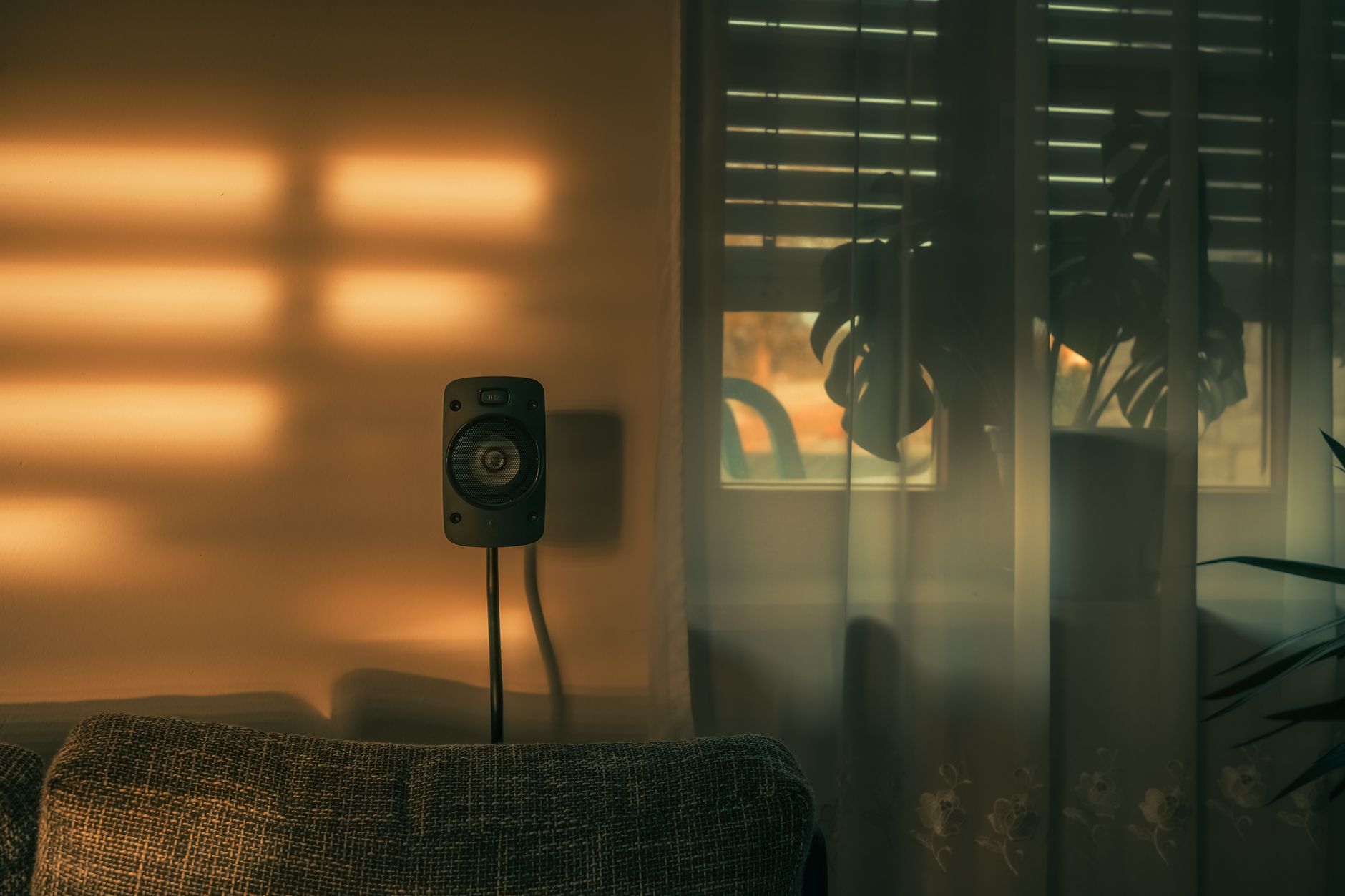 Photo: Lucian Cornea 🇩🇪 via Pexels
The HS5’s room control and high-trim EQ shelves (±2 dB each) give you basic acoustic compensation without a dedicated DSP panel. The low end is honest rather than flattering — you’ll hear every muddy 200–400 Hz buildup immediately, which is the point.
Who it’s for: Producers who mix in multiple environments and need a consistent reference. If you’ve worked on NS-10s in professional studios, the HS5 is the closest direct successor.
Who should skip it: Listeners who want a monitor that sounds enjoyable. The HS5 is a tool, not a pleasure speaker.
| Spec | Detail |
|---|---|
| Woofer | 5-inch cone |
| Tweeter | 1-inch dome |
| Amplification | Bi-amp, 45W LF + 25W HF |
| Frequency Response | 54 Hz–30 kHz |
| Inputs | XLR, TRS (balanced) |
| EQ Controls | Room control, High trim (±2 dB) |
| Weight | 5.3 kg per unit |
Adam Audio T5V — Best for Detail and Imaging
The T5V uses Adam’s proprietary A-Ribbon tweeter, which extends to 25 kHz with lower distortion than conventional dome tweeters at high frequencies. Published response is 45 Hz–25 kHz. The result is exceptional transient detail and stereo imaging — critical for vocal production, acoustic recording, and anything where spatial placement matters.
The ribbon tweeter gives the T5V a character that’s smoother in the top end than the HS5 — less hyped in the presence region, more extended at the top. Bass response is slightly more generous, which can flatter mixes but requires calibration on the rear bass port controls (+2 dB / –2 dB shelving EQ at 150 Hz and 6 kHz).
User reviews consistently report the T5V as the more enjoyable monitor to work on for long sessions, with fatigue arriving later than with brighter alternatives.
Who it’s for: Vocals, acoustic instruments, podcasting, scoring. Any application where high-frequency detail is critical.
Who should skip it: Engineers who want the deliberately harsh NS-10 style reference — the T5V is more forgiving.
| Spec | Detail |
|---|---|
| Woofer | 5.5-inch carbon/rohacell/glass-fiber |
| Tweeter | 1.9-inch A-Ribbon (HPS waveguide) |
| Amplification | Bi-amp, 50W LF + 20W HF |
| Frequency Response | 45 Hz–25 kHz |
| Inputs | XLR, RCA |
| EQ Controls | Low shelf, High shelf (±2 dB) |
| Weight | 4.5 kg per unit |
PreSonus Eris E5 XT — Best Budget Pick
At roughly half the price of the HS5, the Eris E5 XT delivers a flat, accurate response backed by Acoustic Tuning controls that most entry-level monitors lack. Published response of 53 Hz–22 kHz with three-band acoustic compensation (100 Hz low cut, mid cut, high shelf) gives you meaningful room correction without DSP.
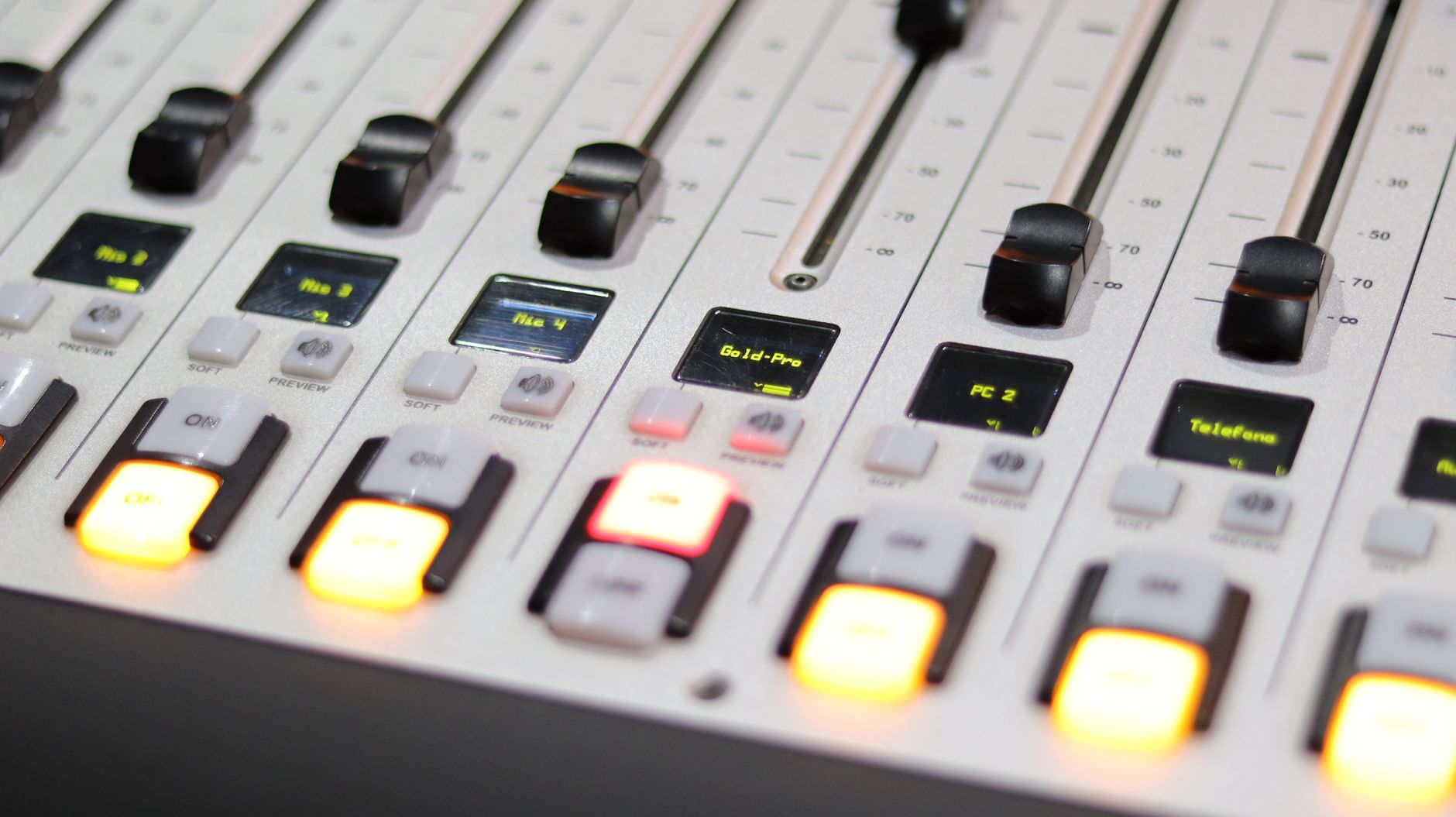 Photo: Alexis Emanuel Salinas via Pexels
The E5 XT uses a woven-composite woofer and a 1.25-inch silk-dome tweeter, with a front-firing port that makes it more placement-flexible than rear-ported designs. Published testing data and user reviews consistently note it punches above its price tier in accuracy, though it lacks the low-distortion performance of the Adam or Yamaha at higher volumes.
Where it falls short: dynamic headroom. At mixing volumes above 85 dB SPL, compression artifacts become audible. For low-to-moderate volume work in smaller rooms, this is a non-issue.
Who it’s for: First-time buyers, home-studio setups under $300 total, content creators needing reliable reference without pro-tier investment.
| Spec | Detail |
|---|---|
| Woofer | 5.25-inch woven composite |
| Tweeter | 1.25-inch silk dome |
| Amplification | Bi-amp, 45W LF + 35W HF |
| Frequency Response | 53 Hz–22 kHz |
| Inputs | XLR, TRS, RCA |
| EQ Controls | Acoustic tuning (3-band) |
| Weight | 4.3 kg per unit |
KRK Rokit 5 G4 — Best for Producers with Room Issues
The Rokit 5 G4 includes a built-in DSP-driven graphic EQ (25 bands via companion app) that actively compensates for room acoustics — a feature not found in competitors at this price. Published response is 45 Hz–35 kHz. For untreated rooms, the DSP EQ can make a meaningful difference to mix accuracy.
KRK’s house sound leans slightly warm in the low-mids compared to Yamaha or Adam. This flatters bass-heavy mixes during production but can cause engineers to under-EQ in the 200–400 Hz range. The DSP EQ can correct for this tendency with the right calibration measurements.
The Rokit 5 G4’s iOS/Android app makes real-time EQ adjustments during setup straightforward, and the DSP retains settings across power cycles. For producers who can’t afford acoustic treatment, this is a genuine advantage.
Who it’s for: Producers in untreated rooms, beatmakers, hip-hop and electronic production where the house sound’s warmth aids workflow.
Focal Alpha 50 Evo — Best Prosumer Option
The Alpha 50 Evo is the largest step up in this roundup at roughly 3–4× the price of the E5 XT, but it delivers a measurably flatter response, higher maximum SPL, and Focal’s proprietary Flax cone technology. Published response of 35 Hz–22 kHz is exceptional for a 5-inch class monitor, with the low end extension typically reserved for 6–8 inch designs.
According to published measurements and professional user reviews, the Alpha 50 Evo has among the lowest distortion figures in the near-field category at 85 dB SPL — the level at which most mixing decisions are made. The LF Shelf, MF Shelf, and HF Shelf EQ controls (±6 dB) with a flexible 100V/230V power supply make it suitable for professional environments worldwide.
Who it’s for: Semi-professional and professional engineers who need reliable decisions at higher volumes, mastering engineers, and anyone mixing for broadcast or streaming where accuracy at the low end matters.
Full Comparison Table
| Product | Price Range | Freq Response | Amp Power | Tweeter | DSP EQ | Best For |
|---|---|---|---|---|---|---|
| Yamaha HS5 | $$ | 54 Hz–30 kHz | 70W | 1“ dome | No | Translation reference |
| Adam Audio T5V | $$ | 45 Hz–25 kHz | 70W | 1.9“ ribbon | No | Detail, imaging |
| PreSonus Eris E5 XT | $ | 53 Hz–22 kHz | 80W | 1.25“ silk | 3-band analog | Budget accuracy |
| KRK Rokit 5 G4 | $$ | 45 Hz–35 kHz | 55W | 1“ soft dome | 25-band DSP | Untreated rooms |
| Focal Alpha 50 Evo | $$$$ | 35 Hz–22 kHz | 105W | 1“ Al/Mg | No | Prosumer/pro |
How to Choose: By User Type?
First-time beginner: PreSonus Eris E5 XT. It has the most acoustic flexibility for the price, front-firing ports for desk placement, and three-band EQ that helps in typical bedroom conditions.
Bedroom producer (mixing focus): Yamaha HS5. The unforgiving character trains your ears faster. Mixes that translate off the HS5 translate everywhere.
Vocalist / acoustic recording focus: Adam Audio T5V. The ribbon tweeter reveals performance nuance and spatial detail that dome tweeters at this price miss.
Producer in untreated room: KRK Rokit 5 G4. The DSP EQ is the most practical solution to room problems short of acoustic treatment.
Prosumer / semi-pro: Focal Alpha 50 Evo. When accuracy at volume and longevity of the monitoring relationship matter, the investment pays back in fewer revision cycles.
Placement and Setup: Getting the Most from 5-Inch Monitors
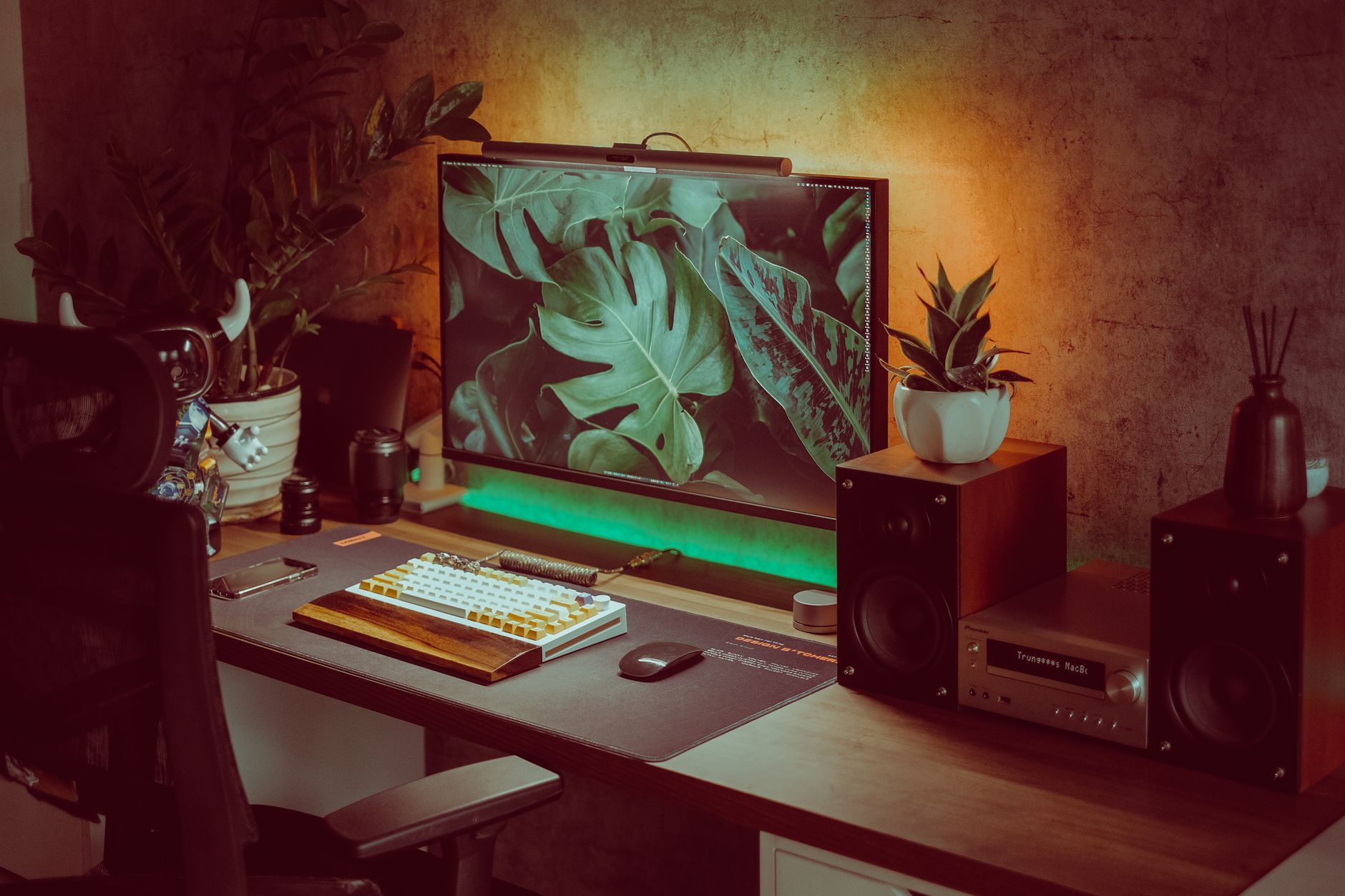 Photo: Pew Nguyen via Pexels
Speaker placement has more impact on mix accuracy than any component swap at this price tier. The standard equilateral triangle setup — each monitor and your listening position forming a 60° triangle, tweeters at ear height — applies regardless of which model you choose.
Key placement rules for 5-inch monitors:
- Distance from rear wall: minimum 30 cm (12 inches) from the rear port; front-ported designs (E5 XT) are more forgiving
- Isolation: monitor isolation pads reduce sympathetic vibration from the desk surface and tighten imaging noticeably
- Toe-in: 0°–15° toe-in is sufficient; aggressive toe-in narrows the sweet spot without meaningful accuracy benefit at near-field distances
The HS5 and T5V’s rear shelf EQ controls exist specifically to compensate for boundary proximity. If you can’t achieve ideal placement, use them — a –2 dB low-shelf cut at the default setting noticeably reduces low-end buildup from wall proximity.
→ See also:
- Best Studio Monitors for Home Recording (2026) — full-size guide covering 5-inch through 8-inch picks across all budgets
- Best Studio Monitors Under $150 — entry-level picks when budget is the primary constraint
- Best Studio Monitors Under $200 — the best value options under the $200 threshold
FAQ
What is the best 5-inch studio monitor for beginners? The PreSonus Eris E5 XT is the most practical first monitor: its three-band analog EQ compensates for typical bedroom acoustics, the front-firing port gives placement flexibility, and the price leaves budget for other essential gear. The Yamaha HS5 is the better long-term investment once your ears are trained to use its honest character productively.
Do 5-inch monitors have enough bass for mixing? For most music genres, yes — with a workflow adjustment. A 5-inch woofer typically rolls off below 50–60 Hz, so sub-bass content (kick sub-frequencies, 808 bass lines) needs cross-referencing on headphones or a studio sub. For rock, pop, folk, country, jazz, and most acoustic genres, 5-inch monitors provide fully adequate low-end for reliable mix decisions.
Are the Yamaha HS5 monitors good for home studios? According to expert consensus and professional user reviews, the HS5 is among the most reliable home-studio monitors available. Its deliberately lean character — inherited from the NS-10 — means mixes that sound balanced on the HS5 tend to translate well to consumer systems, streaming platforms, and car speakers. The tradeoff is that the HS5 is not enjoyable to listen to recreationally.
Should I buy one monitor or a pair? Always buy a matched pair. Stereo imaging — the left-right placement of elements in your mix — is only evaluable with two speakers. Using a single monitor forces you to mix in mono, which produces mixes with poor width and spatial placement. Manufacturers price monitors per-unit but all mixing and recording work requires a stereo pair.
How do I know if my room is too small for 5-inch monitors? Rooms under roughly 6 feet wide can develop problematic early reflections that smear stereo imaging even at near-field distances. If your room is this narrow, acoustic treatment on the side walls (absorption panels at the first reflection points) is more important than monitor choice. In very small rooms, headphones become a co-primary reference rather than a secondary check.
What’s the difference between front-ported and rear-ported studio monitors? Rear-ported monitors (HS5, T5V, Rokit 5 G4) require more clearance from the back wall — typically 30 cm minimum — to avoid port chuffing and bass buildup. Front-ported designs (Eris E5 XT) are more placement-flexible and work on a desk shelf with less clearance. The port position doesn’t inherently determine sound quality, but rear-ported designs placed too close to a wall produce an artificially boosted, inaccurate low end.
Editorial methodology: Assessments are based on manufacturer specifications, published user reviews, and editorial research. Physical hands-on testing is noted explicitly where it occurred. Rankings reflect our editorial judgment and are not influenced by affiliate commission rates. Full editorial policy · Affiliate disclosure