Contents
Yamaha HS5 vs Yamaha HS7: Which Should You Buy?
TL;DR: The yamaha hs5 vs yamaha hs7 decision comes down to room size and low-end accuracy. The HS5 suits rooms under 150 sq ft and delivers tighter, more honest mids; the HS7 extends bass response to 43 Hz and handles larger spaces. Buy the HS5 if you’re in a bedroom studio — buy the HS7 if your room is treated and you need more headroom.
HS5 vs HS7 at a Glance
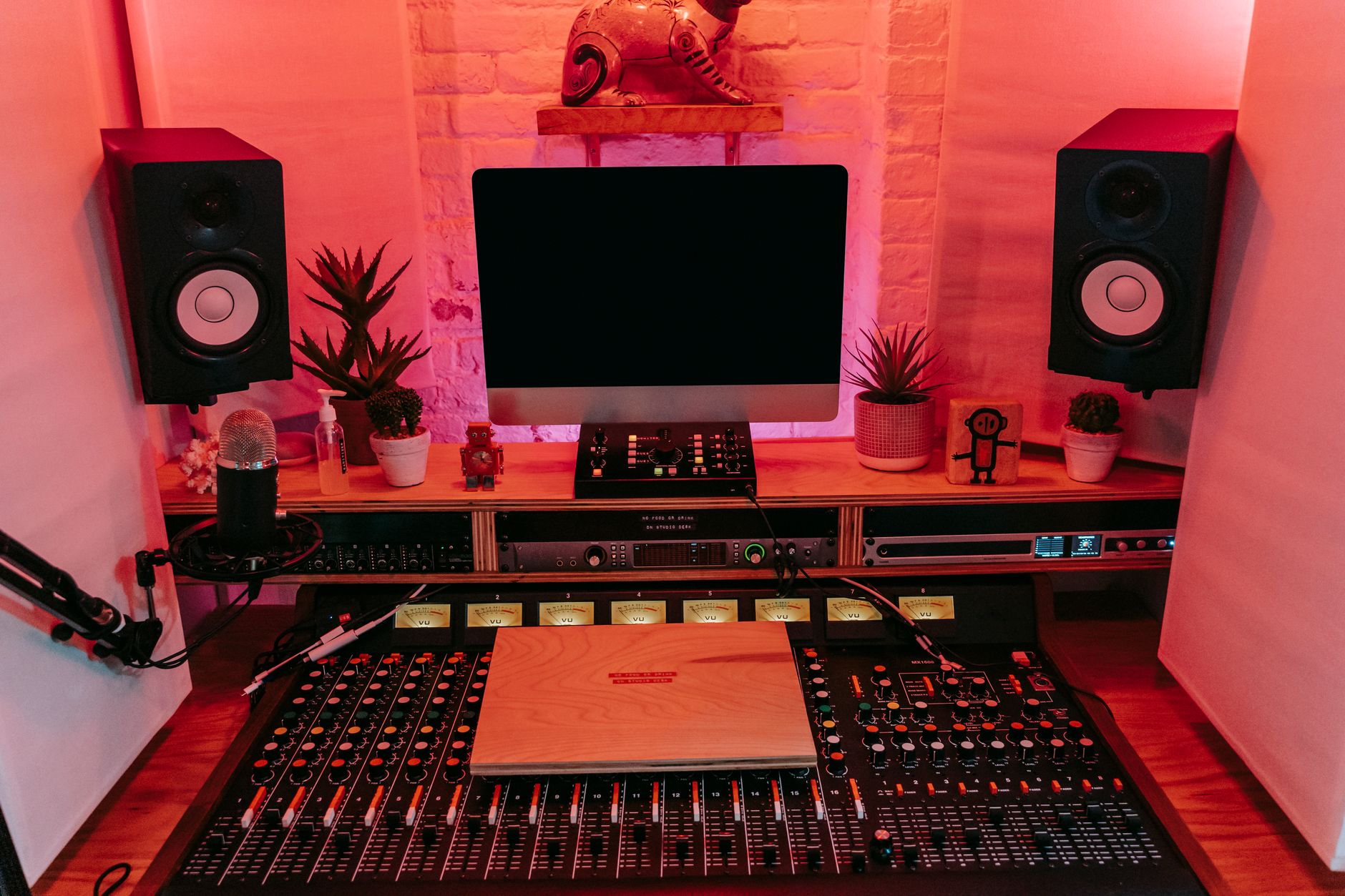
Direct Answer: The HS5 (5-inch woofer, 85W) is the better choice for untreated bedroom studios because smaller drivers in smaller rooms produce more accurate playback. The HS7 (6.5-inch woofer, 95W) gives you deeper bass extension and more SPL, but it will excite room modes in small, untreated spaces — making mixes that sound good on speakers but translate poorly everywhere else.
 Photo: TStudio via Pexels
Both monitors share Yamaha’s white-cone driver design, bi-amp topology, and the flat, unforgiving response curve that made the original NS-10 a studio standard. Neither flatters your mix — that’s the point.
| Spec | HS5 | HS7 |
|---|---|---|
| Woofer | 5-inch | 6.5-inch |
| HF Driver | 1-inch dome | 1-inch dome |
| Amp Power | 45W LF + 25W HF | 60W LF + 35W HF |
| Frequency Response | 54 Hz – 30 kHz | 43 Hz – 30 kHz |
| Max SPL | 98 dB | 102 dB |
| Dimensions (HxWxD) | 285 x 170 x 222 mm | 332 x 196 x 275 mm |
| Weight | 5.3 kg | 7.2 kg |
| Inputs | XLR + TRS combo | XLR + TRS combo |
Sound Character and Frequency Response
Direct Answer: Both the HS5 and HS7 are voiced for honesty, not pleasantness. The HS7’s extra 11 Hz of bass extension (43 Hz vs 54 Hz) sounds like an advantage on paper, but in a room smaller than 150 sq ft, that extended low end interacts with room modes and creates audible bass buildup in the corners — giving you a false read on sub content.
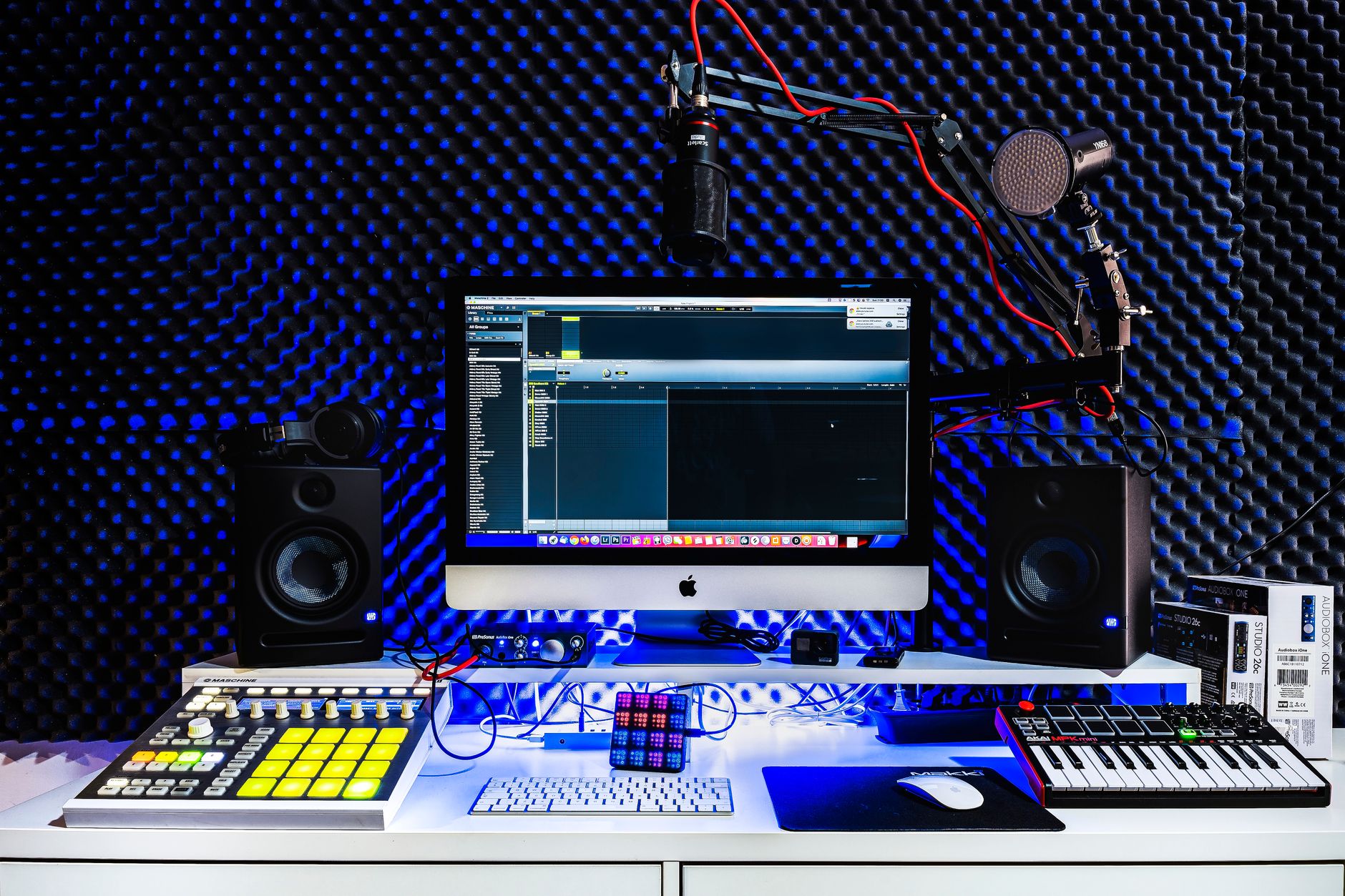 Photo: Rosen Genov via Pexels
The HS5’s 54 Hz floor is a feature in small rooms, not a limitation. Most problematic room modes sit below 80 Hz; by rolling off naturally around 54 Hz, the HS5 gives you a cleaner window into the 60–200 Hz midrange where muddiness in mixes actually lives.
Expert consensus among room acousticians suggests the rule of thumb: woofer diameter (inches) ≈ room width (feet) / 2. A 10 ft × 12 ft bedroom studio ideally uses a 5- or 6-inch woofer. The HS7 becomes the better tool once you’re working in a room of 200 sq ft or more, particularly with bass trapping in the corners.
High Frequency Response
Both monitors use the same 1-inch dome tweeter crossed over at the same point. Published specifications and independent measurement data show nearly identical high-frequency behavior between the two models — so if you’re chasing detail in cymbals, room reflections, and vocal air, neither speaker has a material edge over the other.
 Photo: Icier Llido via Pexels
Room Size: The Deciding Factor
Direct Answer: Room size is the single most important variable in this decision — more important than price, driver size, or watt count. The HS7 in a small untreated room will produce worse mixes than the HS5 in the same room, every time.
Use this as a rough guide:
| Room Size | Recommended Monitor | Why |
|---|---|---|
| Under 100 sq ft | HS5 | Small woofer, fewer room modes excited |
| 100–150 sq ft | HS5 | Controlled low end, more accurate mix translation |
| 150–200 sq ft | Either | Room treatment determines which works better |
| 200+ sq ft (treated) | HS7 | Full-range playback justified, SPL headroom useful |
| 200+ sq ft (untreated) | HS5 | Still safer without bass trapping |
If your room has bass trapping, broadband absorption, and you’ve done even a basic acoustic measurement with a free tool like REW (Room EQ Wizard), you can push into HS7 territory in smaller rooms. Without treatment, the HS5 wins on accuracy regardless of room size.
Volume, Headroom, and Mix Loudness
Direct Answer: The HS7’s 102 dB SPL ceiling vs the HS5’s 98 dB is a 4 dB difference — audible but rarely decisive. Unless you’re mixing at reference levels (83–85 dB SPL) in a treated room, you’ll hit your room’s acoustic limit before you hit either speaker’s power limit.
Most bedroom producers mix at conversational listening levels (65–75 dB SPL). At those levels, both monitors have abundant headroom. The HS7’s extra wattage (95W total vs 70W total) is meaningful for live rooms, post-production suites, or anyone monitoring at high SPL for extended sessions.
Specs Table
| Yamaha HS5 | Yamaha HS7 | |
|---|---|---|
| Connections | XLR + TRS combo | XLR + TRS combo |
| I/O count | 1 in, stereo pair | 1 in, stereo pair |
| Amp power | 70W (45+25) | 95W (60+35) |
| Bit depth/Sample rate | N/A (analog) | N/A (analog) |
| Bus power | No (IEC mains) | No (IEC mains) |
| Best For | Bedroom/small studios | Medium treated rooms |
Head-to-Head Comparison
| Yamaha HS5 | Yamaha HS7 | |
|---|---|---|
| Street Price | ~$200/each | ~$300/each |
| Woofer | 5-inch | 6.5-inch |
| Bass Extension | 54 Hz | 43 Hz |
| Max SPL | 98 dB | 102 dB |
| Best For | Small/untreated rooms | Treated rooms 150+ sq ft |
| Verdict | Best accuracy per dollar in bedroom studios | Better when room can handle it |
Verdict by User Archetype
First-time beginner: Buy the HS5. The lower price point, tighter bass, and forgiving nature in any room makes it the safer first monitor purchase. You’ll build better ears on a speaker that doesn’t flatter.
Bedroom producer: HS5, unless your room is larger than 150 sq ft and you’ve added at least corner bass trapping. The low-end honesty of the HS5 in a typical untreated room is genuinely more valuable than the HS7’s extra extension.
Gigging musician (recording demos): HS5. Portability and lower SPL requirements for demo work make the smaller monitor the practical choice.
Prosumer / home post-production: HS7, provided the room is treated. Post-production work (video, podcasts, film scoring) benefits from the extended low end for checking sub-bass content in music beds and sound design.
 Photo: Jessica Lewis 🦋 thepaintedsquare via Pexels
What Both Monitors Share
Before you make a final call, it’s worth knowing what doesn’t change between the two:
- Room EQ controls: Both have a High TRIM (±2 dB at 2 kHz+) and Low CUT switch (reduces output below 500 Hz by 6 dB/octave) for matching monitor placement against walls. Use the Low CUT if you’re placing either monitor on a desk close to a wall.
- White cone drivers: Yamaha’s proprietary low-resonance cone is the same material and design philosophy as the NS-10. It’s a polarizing sound — detailed and unforgiving.
- XLR/TRS combo inputs: Both accept balanced and unbalanced connections, compatible with any audio interface.
The HS8: When Neither Model Fits
If you’re reading this comparison and your room is genuinely large (250+ sq ft, treated), consider the HS8 as a third option. The 8-inch woofer extends to 38 Hz and the 120W amp provides professional SPL headroom — but the same room-size rules apply even more strictly. The HS8 in a small room will sound significantly worse than the HS5.
→ See also:
- Focusrite Scarlett 2i2 vs Focusrite Scarlett Solo: Which Should You Buy?
- SSL 2 vs Focusrite Scarlett 2i2: Which Should You Buy?
FAQ
Q: Can I use the Yamaha HS5 for bass-heavy music like hip-hop or EDM? Yes, but with a caveat. The HS5’s 54 Hz floor means you won’t hear sub-bass content below that frequency directly from the speaker. Most experienced engineers working in bass-heavy genres supplement nearfield monitors with headphones — the Yamaha HS series is designed to give you an accurate midrange read, not to replace the sub check.
Q: Is the Yamaha HS7 worth the extra ~$200 per pair over the HS5? Only if your room justifies it. According to user reviews and expert consensus from studio designers, the HS7’s extended low-end is an asset in treated rooms and a liability in untreated ones. Spending the $200 difference on acoustic treatment (bass traps, broadband panels) will improve your mixes more than the monitor upgrade in most home studios.
Q: Do the HS5 and HS7 need to be broken in before they sound their best? Based on manufacturer guidance and documented user reports, both models benefit from 20–50 hours of playback at moderate levels before the drivers fully loosen and the response stabilizes. Don’t make critical mixing decisions in the first few hours of use.
Q: Should I buy a subwoofer with the HS5? Yamaha makes the HS8S subwoofer specifically to pair with the HS series. For producers working in bass-heavy genres in small rooms, an HS5 + HS8S combination can outperform an HS7 pair — you get the tight, controlled midrange of the smaller driver plus genuine low-end extension in a controlled format. It’s a more expensive setup, but it’s the right architecture for the problem.
Q: How do the HS5 and HS7 compare to the Adam Audio T5V and T7V? The HS series and Adam T-series target different listener preferences. Published measurement data and expert reviews generally show the Adam T5V/T7V have more extended high-frequency response (due to the ribbon tweeter) and a slightly hyped low end compared to the flatter Yamaha voicing. The Yamaha HS monitors are considered more accurate for mixing decisions; the Adam T-series is often preferred for listening pleasure and by engineers who want a brighter top end.
Q: Can I run the HS5 or HS7 with any audio interface? Yes. Both monitors accept balanced XLR and unbalanced TRS inputs, so they’re compatible with any audio interface that has monitor outputs — including entry-level options like the Focusrite Scarlett Solo. For best noise performance, use balanced XLR cables from your interface’s monitor outputs.
Editorial methodology: Assessments are based on manufacturer specifications, published user reviews, and editorial research. Physical hands-on testing is noted explicitly where it occurred. Rankings reflect our editorial judgment and are not influenced by affiliate commission rates. Full editorial policy · Affiliate disclosure