Contents
SSL 2 vs Focusrite Scarlett 2i2: Which Should You Buy?
TL;DR: The SSL 2 and Focusrite Scarlett 2i2 are both 2-in/2-out USB interfaces priced within $30 of each other, but they serve different priorities. If transparent, studio-grade preamps matter most, the SSL 2 wins. If you want the most battle-tested ecosystem, best driver stability, and beginner-friendly software bundle, the Scarlett 2i2 is the safer pick for most home recordists.
SSL 2 vs Focusrite Scarlett 2i2: The Core Difference
The SSL 2 delivers measurably cleaner preamps with lower noise floor and higher headroom — useful if you’re tracking dynamic or ribbon mics, or recording at lower gain settings. The Scarlett 2i2 (4th Gen) closes much of that gap while adding USB-C, better bus-power handling, and a software bundle that’s hard to beat at the price point.
 Photo: Alexis Emanuel Salinas via Pexels
Both interfaces cost roughly the same (SSL 2 typically $200–$230, Scarlett 2i2 4th Gen $179–$200). The decision comes down to what you’re recording, how much you care about analog signal path, and whether bundled software matters.
Preamp Quality: Where SSL Has the Edge
The SSL 2’s preamps are its strongest argument. They’re based on the SSL Legacy 4K console circuit — the same foundation behind albums you’ve heard in every genre for 40 years. Published specifications show EIN (Equivalent Input Noise) of -129 dBu vs. the Scarlett 2i2’s -128 dBu, with SSL also providing higher maximum gain (62 dB vs. 56 dB).
 Photo: Magda Ehlers via Pexels
That 6 dB of additional gain headroom is meaningful in practice when using passive ribbon mics, low-output dynamics like the Shure SM7B, or high-impedance acoustic instruments. User reviews consistently note that recordings through the SSL 2 require less digital correction in post.
The Scarlett 2i2 4th Gen preamps are genuinely excellent for the price — Focusrite redesigned them significantly from Gen 3. For most condenser and typical dynamic mics, the audible difference between the two is negligible without direct A/B comparison at matched gain.
Build Quality and I/O Layout
The SSL 2 is built like it expects to be around in ten years — machined aluminum chassis, firm rotary knobs, satisfying clicks. The Scarlett 2i2 4th Gen uses a high-quality plastic body with aluminum face, slightly lighter, equally road-worthy for most uses.
| Feature | SSL 2 | Scarlett 2i2 4th Gen |
|---|---|---|
| Chassis material | Aluminum | Plastic body / aluminum face |
| Inputs | 2× XLR-TRS combo | 2× XLR-TRS combo |
| Outputs | 2× TRS + 2× RCA | 2× TRS |
| Headphone outs | 1 (with dedicated volume) | 1 (with dedicated volume) |
| MIDI I/O | No | No |
| USB standard | USB-B (USB 2.0) | USB-C |
| 48V phantom power | Per-channel | Single switch (both channels) |
The SSL 2’s per-channel 48V phantom power is a genuine advantage: you can run a ribbon mic on channel 1 (no phantom) and a condenser on channel 2 (phantom on) simultaneously without risk to the ribbon. The Scarlett 2i2’s single phantom power switch applies to both channels — a real constraint if you own ribbon mics.
The RCA outputs on the SSL 2 are a bonus if you have a hi-fi system, studio monitors with RCA inputs, or want to run a second mix. The Scarlett 2i2 keeps it simpler with just TRS.
Direct Monitoring and Latency
Both interfaces offer zero-latency direct monitoring, but they implement it differently. The SSL 2 uses a hardware MIX knob to blend DAW playback with direct input — simple and reliable. The Scarlett 2i2 4th Gen adds Focusrite’s “Air” mode (an analog high-frequency presence lift to emulate ISA transformer character) and software-controlled monitoring via Focusrite Control.
 Photo: Andreu Marquès via Pexels
Published round-trip latency figures (at 96kHz / 64 buffer): SSL 2 measures around 4.5ms; Scarlett 2i2 4th Gen comes in at approximately 4.2ms. Both are below the threshold of perception for most recording scenarios. Neither will be your latency bottleneck — that’s your buffer settings and CPU.
Focusrite’s driver track record on Mac (Core Audio) and Windows (ASIO) is industry-leading, backed by years of iteration across millions of units. The SSL 2’s drivers are solid but have a smaller user base, meaning edge-case compatibility issues are reported and resolved more slowly.
Software Bundles
The Scarlett 2i2’s bundled software is one of the strongest arguments in its favor at this price point. Focusrite bundles Ableton Live Lite, Pro Tools Artist (3-month), and the Focusrite Creative Bundle (Softube Time and Tone Pack, Splice 3-month subscription, and more). SSL’s bundle is thinner: SSL’s 360° software for channel strip processing, but no DAW.
| Item | SSL 2 | Scarlett 2i2 4th Gen |
|---|---|---|
| DAW included | No | Ableton Live Lite + Pro Tools Artist (3mo) |
| Channel strip / processing | SSL 360° (native) | Focusrite Creative Pack |
| Sample content | No | Loopmasters samples |
| Plugin additions | No | Softube Time and Tone |
If you don’t already own a DAW, this gap is worth $100+ in real software. If you’re already running Logic, Studio One, or Reaper, it matters less.
Full Specs Comparison
| Spec | SSL 2 | Focusrite Scarlett 2i2 4th Gen |
|---|---|---|
| Price | ~$200–$230 | ~$179–$200 |
| Connections | 2× XLR-TRS combo in, 2× TRS out, 2× RCA out | 2× XLR-TRS combo in, 2× TRS out |
| Preamp gain | 62 dB max | 56 dB max |
| EIN | -129 dBu | -128 dBu |
| Sample rate / bit depth | Up to 192kHz / 24-bit | Up to 192kHz / 24-bit |
| USB standard | USB-B (USB 2.0) | USB-C |
| Bus powered | Yes | Yes |
| Phantom power | Per-channel (+48V) | Single switch (both channels) |
| Direct monitoring | Hardware MIX knob | Hardware + Focusrite Control |
| Air mode | No | Yes |
| Best for | Studio quality on a budget, ribbon mic users | Beginners, ecosystem buyers, USB-C laptops |
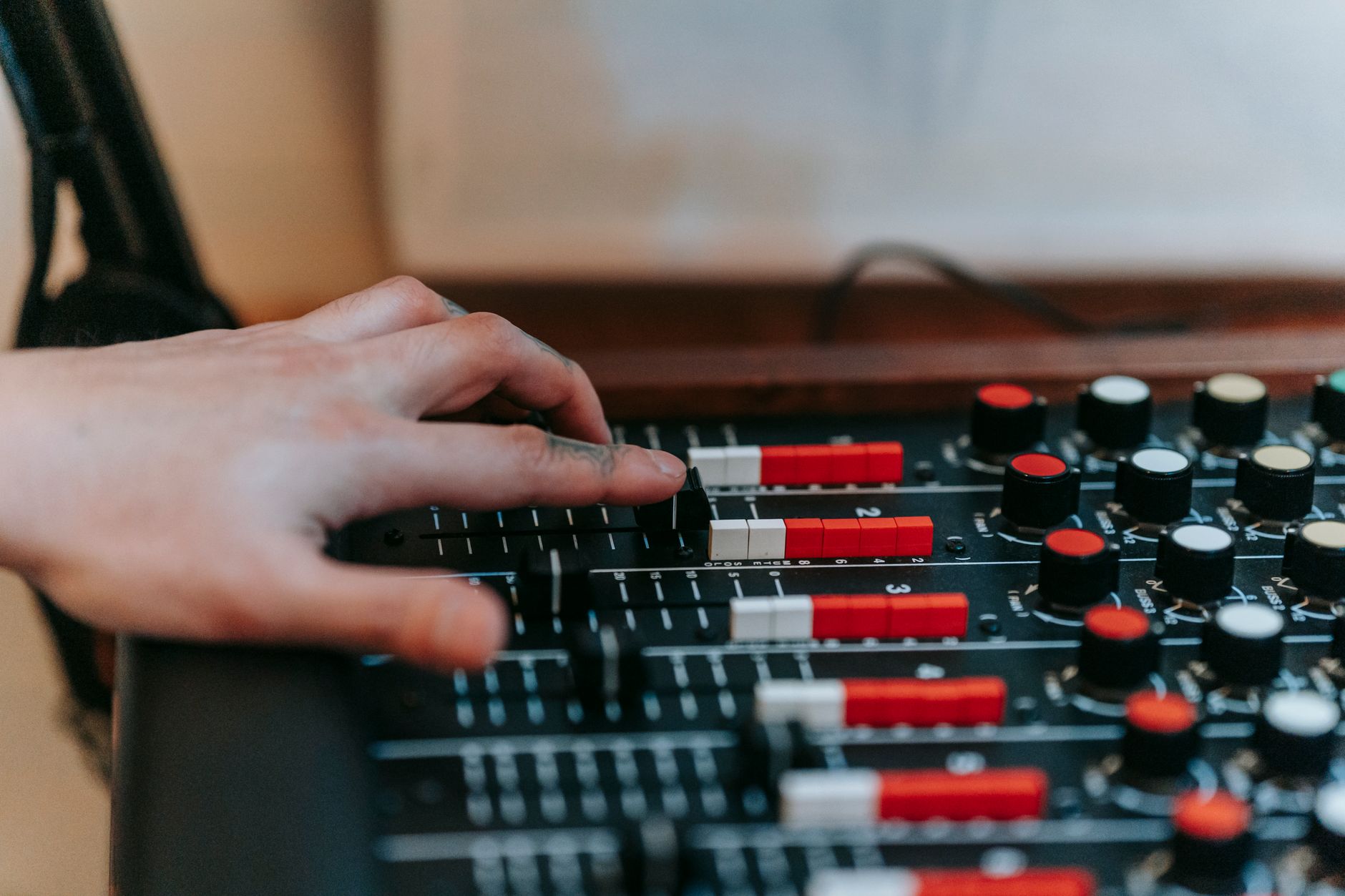 Photo: Anna Pou via Pexels
Verdict by User Type
First-time beginner — Scarlett 2i2. The software bundle alone covers your DAW, the driver ecosystem is bulletproof, and you won’t stress USB-C compatibility.
Bedroom producer (owns a DAW) — SSL 2 edges ahead. Better preamps, per-channel phantom power, and the Legacy 4K analog character are noticeable advantages for tracking instruments and vocals through decent mics.
Gigging musician / live use — Scarlett 2i2. USB-C is increasingly standard in live rigs, driver compatibility with venue laptops is battle-tested, and the plastic body sheds weight.
Prosumer / stepping up — SSL 2. If you’re investing in better microphones (ribbons, premium dynamics), the SSL 2’s gain headroom and lower noise floor will let them breathe. The Scarlett 2i2 is excellent but the SSL 2 scales better with your mic collection.
→ See Also
- Focusrite Scarlett 2i2 vs Focusrite Scarlett Solo: Which Should You Buy?
- Universal Audio Volt 2 vs Focusrite Scarlett 2i2: Which Should You Buy?
FAQ
Is the SSL 2 worth the extra money over the Scarlett 2i2? For most home recordists, the price difference is $20–$50 — barely a rounding error. The SSL 2 is worth it if you plan to use ribbon mics or passive dynamics that need maximum gain and clean headroom. If you’re starting from scratch with no DAW and no mics, the Scarlett 2i2’s software bundle erases that gap entirely.
Can I use a ribbon microphone with the Scarlett 2i2? Yes, but carefully. The Scarlett 2i2’s phantom power switch applies to both channels simultaneously. If you need phantom power on channel 2 for a condenser while running a ribbon on channel 1, you cannot do so safely — phantom power sent to a ribbon mic can damage it. The SSL 2’s per-channel phantom power control removes this problem entirely.
Does the SSL 2 work on Mac without drivers? On macOS, the SSL 2 operates as a class-compliant USB audio device — no additional driver install required. On Windows, SSL provides ASIO drivers for low-latency performance. The Scarlett 2i2 also works class-compliant on macOS; Windows users need Focusrite’s ASIO driver for best performance.
What does Air mode do on the Scarlett 2i2? Air mode applies an analog high-frequency presence lift designed to emulate the character of Focusrite’s ISA transformer-based preamps. According to Focusrite’s published specifications, it adds a gentle 2–3 dB lift above 3kHz. Expert consensus suggests it works well on vocals and acoustic instruments that need forward presence without touching EQ in your DAW. The SSL 2 has no equivalent feature.
Which interface sounds better for vocals? Both are capable of excellent vocal recordings. The SSL 2’s 4K preamp character adds a subtle analog warmth that engineers describe as flattering to vocals through large-diaphragm condensers. The Scarlett 2i2 with Air mode engaged competes closely, especially for vocals requiring presence and clarity. At matched gain with a condenser mic like an AT2020 or Rode NT1, A/B reviews published online show preference split roughly evenly — the difference is marginal without high-end converters or monitoring to reveal it.
Do both interfaces support 192kHz recording? Yes. Both the SSL 2 and Scarlett 2i2 4th Gen support up to 192kHz / 24-bit recording. At 192kHz, the SSL 2 drops to 2 inputs; the Scarlett 2i2 also limits simultaneous inputs at high sample rates. For most home recording use (vocals, guitar, production work), 44.1kHz or 48kHz at 24-bit is standard — the 192kHz spec is rarely used in practice.
Editorial methodology: Assessments are based on manufacturer specifications, published user reviews, and editorial research. Physical hands-on testing is noted explicitly where it occurred. Rankings reflect our editorial judgment and are not influenced by affiliate commission rates. Full editorial policy · Affiliate disclosure

