Contents
Shure SM7B vs Rode NT1: Which Should You Buy?
TL;DR: The Shure SM7B is a dynamic microphone built for vocals in untreated rooms — it rejects noise, sounds broadcast-ready, and needs a clean preamp with plenty of gain. The Rode NT1 is a large-diaphragm condenser that captures more detail and air, but rewards a treated space. For podcasting and streaming, go SM7B. For recording vocals and acoustic instruments in a decent room, the NT1 wins on transparency and value.
Shure SM7B vs Rode NT1: The Core Difference
Direct Answer: The SM7B is a cardioid dynamic mic with a flat, smooth character designed to sound polished without much post-processing. The NT1 is a large-diaphragm condenser with a self-noise spec (4.5 dB(A) on the 5th-gen) that makes it one of the quietest studio condensers you can buy. They solve different problems — the SM7B handles difficult rooms; the NT1 maximizes fidelity in controlled ones.
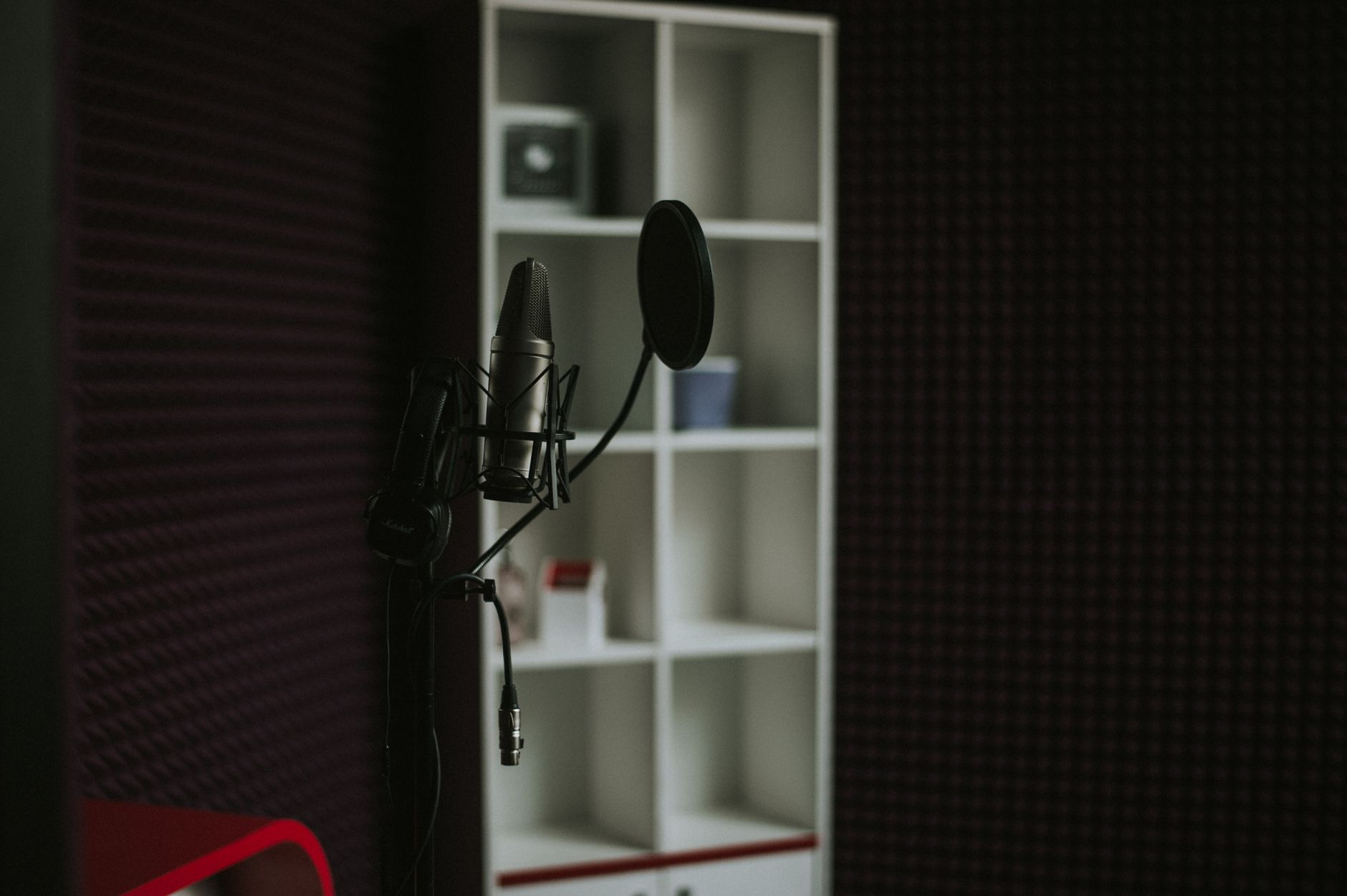 Photo: John Taran via Pexels
These two microphones appear in the same recommendation threads constantly, but they are genuinely different tools. Choosing between them comes down to three factors: your room, your preamp, and your primary use case.
Sound Character
Direct Answer: The SM7B sounds warm, controlled, and slightly mid-forward — flattering on a wide range of voices with proximity effect adding weight when you work close. The NT1 sounds open, detailed, and extended, capturing the full frequency range of a source without coloration.
 Photo: Khang Nguyễn via Pexels
The SM7B’s frequency response rolls off the extreme high end gently and has a presence peak around 5–10 kHz that adds clarity without harshness. It also includes a bass roll-off switch and a presence boost switch, giving you some tonal shaping without reaching for EQ.
The NT1 (5th generation) uses a Røde-designed HF6 capsule with extended high-frequency response and a notably flat, uncolored character. Sibilance can emerge on bright voices — an EQ de-essing pass is often part of the workflow. The reward is that what you hear is what the source actually sounds like, making it a more accurate tool for mixing decisions.
Gain Requirements and Preamp Pairing
Direct Answer: The SM7B has a sensitivity of –59 dBV/Pa, which is low even for dynamic microphones. You will need a preamp capable of delivering 60+ dB of clean gain. The NT1’s condenser capsule is far more sensitive, working well with almost any interface preamp at modest gain settings.
 Photo: Gezer Amorim via Pexels
This is the most common point of confusion for buyers. Plugged into a budget audio interface like a Focusrite Scarlett Solo, the SM7B will sound thin and noisy because you’re pushing that preamp to its limits. You’ll either need an interface with high-headroom preamps — the Focusrite Scarlett 2i2 has notably better headroom than the Solo — or a dedicated inline gain boost like a Cloudlifter CL-1 or the Fethead. Factor that cost into the SM7B’s total price.
The NT1 requires phantom power (48V), which any modern audio interface provides. Its high sensitivity and low self-noise mean it works cleanly at low to moderate gain settings, reducing the thermal noise floor your interface contributes.
Room and Acoustic Environment
Direct Answer: The SM7B is more forgiving of untreated spaces because its cardioid pattern is tighter and its dynamic capsule inherently rejects ambient noise and room reflections. The NT1 picks up more of everything — including the room.
A bedroom with no acoustic treatment will expose its flutter echoes and low-mid buildup on a condenser like the NT1. Working close to the mic helps, but if your room is live, you’ll hear it. The SM7B handles the same room more gracefully, which is why it became the dominant choice for home podcasters and streamers who record in untreated spaces.
If you have even modest treatment — a reflection filter, acoustic panels behind the mic, a closet full of clothes — the NT1’s advantage in transparency becomes available to you.
Specifications Compared
| Spec | Shure SM7B | Rode NT1 (5th Gen) |
|---|---|---|
| Type | Dynamic, cardioid | Condenser, cardioid |
| Frequency response | 50 Hz – 20 kHz | 20 Hz – 20 kHz |
| Sensitivity | –59 dBV/Pa | –29 dBV/Pa |
| Self-noise | Not applicable | 4.5 dB(A) |
| Max SPL | 180 dB | 142 dB |
| Phantom power | Not required | 48V required |
| Polar pattern | Cardioid | Cardioid |
| Output | XLR | XLR + USB-C (5th gen) |
| Weight | 798 g | 326 g |
| Retail price | ~$399 | ~$249 |
Gear Review
Shure SM7B
| Spec | Detail |
|---|---|
| Connections | XLR |
| Preamp required | Yes — 60+ dB clean gain recommended |
| Drivers | None required |
| Polar pattern | Cardioid |
| Frequency range | 50 Hz – 20 kHz |
| Best For | Vocals, podcasting, streaming, broadcast |
The SM7B has been in continuous production since 1973 and earned its reputation on records, broadcast booths, and podcasting studios alike. Its internal pop filter and electromagnetic shielding make it self-contained and practical. The hum rejection is excellent — it handles computers, HVAC, and street noise better than any condenser at any price.
The gain requirement is real and must be budgeted for. At street prices around $399, adding a Cloudlifter (~$150) brings the functional cost to approximately $550 before cable and stand.
Verdict by archetype:
- First-time beginner: Only if you already have a high-gain interface. Otherwise the gain problem will frustrate you.
- Bedroom producer: Strong choice if your room is untreated or lively. The forgiveness is worth it.
- Podcaster / streamer: Best-in-class at this price for spoken word in imperfect environments.
- Prosumer vocalist: Works well, but the NT1 will give you more detail to work with in post.
Rode NT1 (5th Gen)
| Spec | Detail |
|---|---|
| Connections | XLR + USB-C |
| Phantom power | 48V required (XLR mode) |
| Drivers | None required |
| Self-noise | 4.5 dB(A) |
| Frequency range | 20 Hz – 20 kHz |
| Best For | Vocals, acoustic guitar, voice-over, home studio |
The 5th generation NT1 added a USB-C output alongside XLR, making it one of few microphones that bridges direct-to-computer and interface-based workflows without compromise. The capsule design traces back to Røde’s studio-grade large-diaphragm lineage, and published testing data shows the 4.5 dB(A) self-noise spec is accurate — it is among the quietest condensers available under $300.
The included shock mount, pop filter, and storage pouch represent genuine value. No extra purchases required for a complete recording setup.
Verdict by archetype:
- First-time beginner: Excellent starting point — the USB-C output removes the interface requirement entirely.
- Bedroom producer: Best-in-category for the price if you have basic acoustic treatment.
- Podcaster / streamer: Capable, but the SM7B is better suited to untreated environments.
- Prosumer vocalist: Strong choice for tracking; the transparency aids mixing and post-production.
Head-to-Head Comparison
| Shure SM7B | Rode NT1 (5th Gen) | |
|---|---|---|
| Price | ~$399 | ~$249 |
| Room sensitivity | Low (forgiving) | High (needs treatment) |
| Gain required | High (~60 dB+) | Moderate (~40 dB) |
| Detail / transparency | Warm, colored | Open, accurate |
| Use case | Podcast, broadcast, streaming | Vocals, acoustic, voice-over |
| Interface dependency | High-gain preamp essential | Any 48V interface works |
| Connectivity | XLR only | XLR + USB-C |
| Verdict | Best for untreated rooms and spoken word | Best for music recording and treated spaces |
Which Should You Buy?
 Photo: Jean Cont via Pexels
Choose the SM7B if: You record in an untreated bedroom, apartment, or office. You primarily do spoken word — podcasting, streaming, voice-over, or YouTube. You have or plan to buy a preamp with sufficient headroom, or you’ll pair it with a gain booster. You want a broadcast-style sound that flatters voices without heavy EQ.
Choose the NT1 if: You record music — vocals, acoustic guitar, instruments. Your room has some treatment, or you’re willing to work close to the mic. You want the cleanest signal path available under $300. You benefit from the USB-C output for direct recording without an interface.
If budget is a constraint: The NT1 at $249 leaves headroom to spend on a basic interface like the Focusrite Scarlett 2i2 or the SSL 2, which pairs cleanly with the NT1 at standard gain settings. The SM7B’s total cost of ownership is higher once you factor in a capable preamp.
→ See also:
- Focusrite Scarlett 2i2 vs Scarlett Solo: Which Should You Buy?
- SSL 2 vs Focusrite Scarlett 2i2: Which Should You Buy?
FAQ
Is the Shure SM7B worth it for home recording? Yes, with a caveat: it requires a preamp capable of 60+ dB of clean gain. On an underpowered interface the SM7B will sound noisy and thin. Pair it correctly — either with a high-output interface or an inline gain booster like the Cloudlifter CL-1 — and it delivers polished, broadcast-quality results in rooms where a condenser would struggle.
Does the Rode NT1 need phantom power? Yes, in XLR mode. The 5th-generation NT1 also includes a USB-C output that powers the built-in analog-to-digital converter from the computer’s USB port, removing the phantom power requirement entirely if you record direct. For interface-based recording, any interface with 48V phantom power works.
Can the SM7B be used for recording music, not just podcasting? Absolutely. The SM7B has appeared on professionally released recordings across genres — most famously on Michael Jackson’s Thriller vocal tracks, according to documented studio records. It works well for rock and hip-hop vocals, guitar amplifiers, and any source where a warm, controlled character suits the material. It is less transparent than a condenser, which is a feature on some sources and a limitation on others.
Which mic sounds better for female vocals? Expert consensus and user review data suggest the NT1 is often the preferred choice for female vocals because of its extended high-frequency response and open, airy character that flatters higher registers. The SM7B can work well too, particularly for lower alto voices or where a warmer sound is desired, but it may require more high-frequency EQ to open up on brighter voices.
Do I need a shock mount for the SM7B? The SM7B has an internal suspension that handles minor vibrations. A standard boom arm with decent build quality is sufficient for most setups — the mic is heavy enough that cheap arms will droop over time, so a quality arm like the Rode PSA1 is worth the investment. The NT1 includes a shock mount in the box, making it the more complete out-of-the-box package.
Is the Rode NT1 good for streaming? It can be used for streaming, but the room sensitivity is a practical limitation in typical home environments. If your streaming space has acoustic treatment or is reasonably quiet, the NT1’s detail works in your favor. For a bedroom setup with background noise, hard surfaces, and no treatment, the SM7B is the more reliable performer.
Editorial methodology: Assessments are based on manufacturer specifications, published user reviews, and editorial research. Physical hands-on testing is noted explicitly where it occurred. Rankings reflect our editorial judgment and are not influenced by affiliate commission rates. Full editorial policy · Affiliate disclosure