Contents
Shure SM57 vs SM58: Which Mic Should You Buy?
TL;DR: The Shure SM57 is an instrument mic; the SM58 is a vocal mic. If you’re recording guitars, amps, or drums, buy the SM57. If you’re recording vocals or performing live, buy the SM58. The capsule and grille are the only meaningful differences — the internals are nearly identical.
What’s Actually Different Between the SM57 and SM58?
The SM57 and SM58 share the same cartridge and the same core electronics. The SM58 adds a ball grille with a built-in pop filter that rolls off proximity effect; the SM57 has an open, contoured grille designed to sit flush against an instrument or speaker cabinet. That physical difference is why each excels in its intended role.
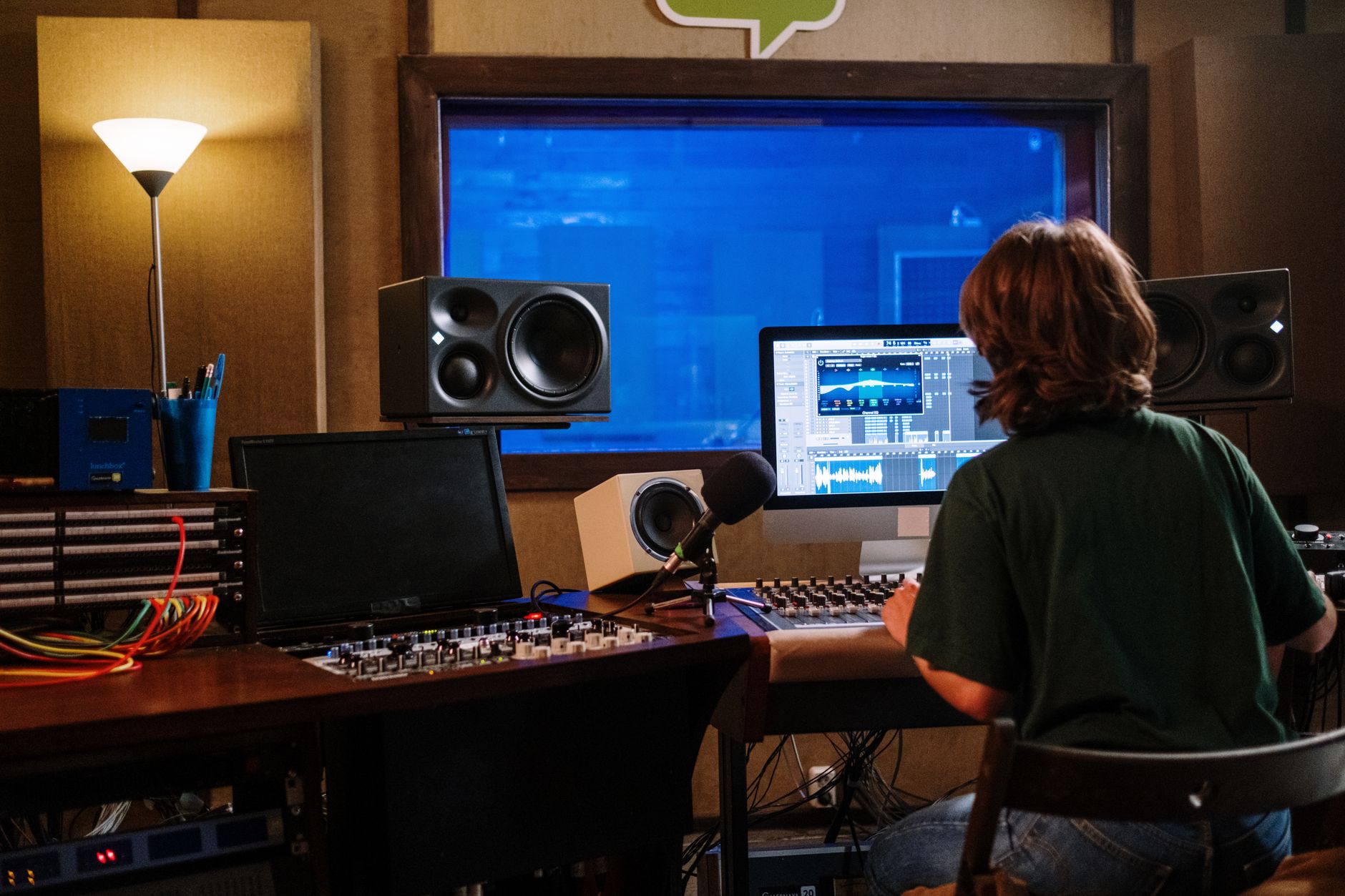
 Photo: cottonbro studio via Pexels
| Feature | SM57 | SM58 |
|---|---|---|
| Capsule | Same (modified Unidyne III) | Same (modified Unidyne III) |
| Grille | Open, low-profile contoured | Ball-shaped with internal foam |
| Frequency response | 40 Hz – 15 kHz | 50 Hz – 15 kHz |
| Sensitivity | –56 dBV/Pa | –54.5 dBV/Pa |
| Polar pattern | Cardioid | Cardioid |
| Output impedance | 310 Ω | 310 Ω |
| Weight | 284 g | 298 g |
| Street price | ~$99 | ~$99 |
The SM58’s ball grille creates physical distance between your lips and the capsule, which tames plosives and reduces the low-frequency boost you’d otherwise get from the proximity effect when singing close. The SM57’s exposed grille puts the capsule as close as 6 mm from a source — ideal for capturing speaker cone transients without coloring the sound.
SM57: The Standard for Instrument Recording
The SM57 is the most-used instrument mic in professional studios. It handles guitar cabs, snare drums, brass, woodwinds, and acoustic instruments. Its flat, contoured grille is designed for direct contact with a source, and its frequency response emphasizes the upper midrange presence that makes guitars and drums cut through a mix.
 Photo: Big Bag Films via Pexels
Guitar Amp Recording
Point the SM57 at the edge of a speaker cone at a 30–45° angle and you’ll get the sound that’s on more professional rock and blues records than any other mic. Published testing data from Shure confirms a presence peak around 5–10 kHz that adds attack and definition without harshness. Off-axis rejection is excellent, making it effective in small rooms where reflections are a problem.
The SM57 handles up to 190 dB SPL — you won’t clip it with a half-stack at full volume. For home recording, this headroom matters even at lower levels because it means the preamp is doing the limiting, not the mic.
Snare and Drum Recording
The SM57 is the near-universal choice for snare top. Position it 1–2 inches from the head, angled toward the center, and it captures the crack and body that cut through a full mix. Expert consensus among professional engineers consistently points to the SM57 as a go-to snare mic regardless of budget constraints.
It works on rack toms, floor toms, and as a hi-hat mic (with some distance to control bleed). For kick drum, the SM57 will work but most engineers prefer a dedicated large-diaphragm dynamic designed for sub-bass extension.
SM58: Built for Vocals, Live and Studio
The SM58 is the global standard for live vocal performance. The ball grille and internal pop filter let singers work close without plosive problems, and the built-in proximity-effect management means vocalists can vary their distance from the mic naturally. In the studio, it’s a reliable scratch-vocal and podcast mic that takes no setup.
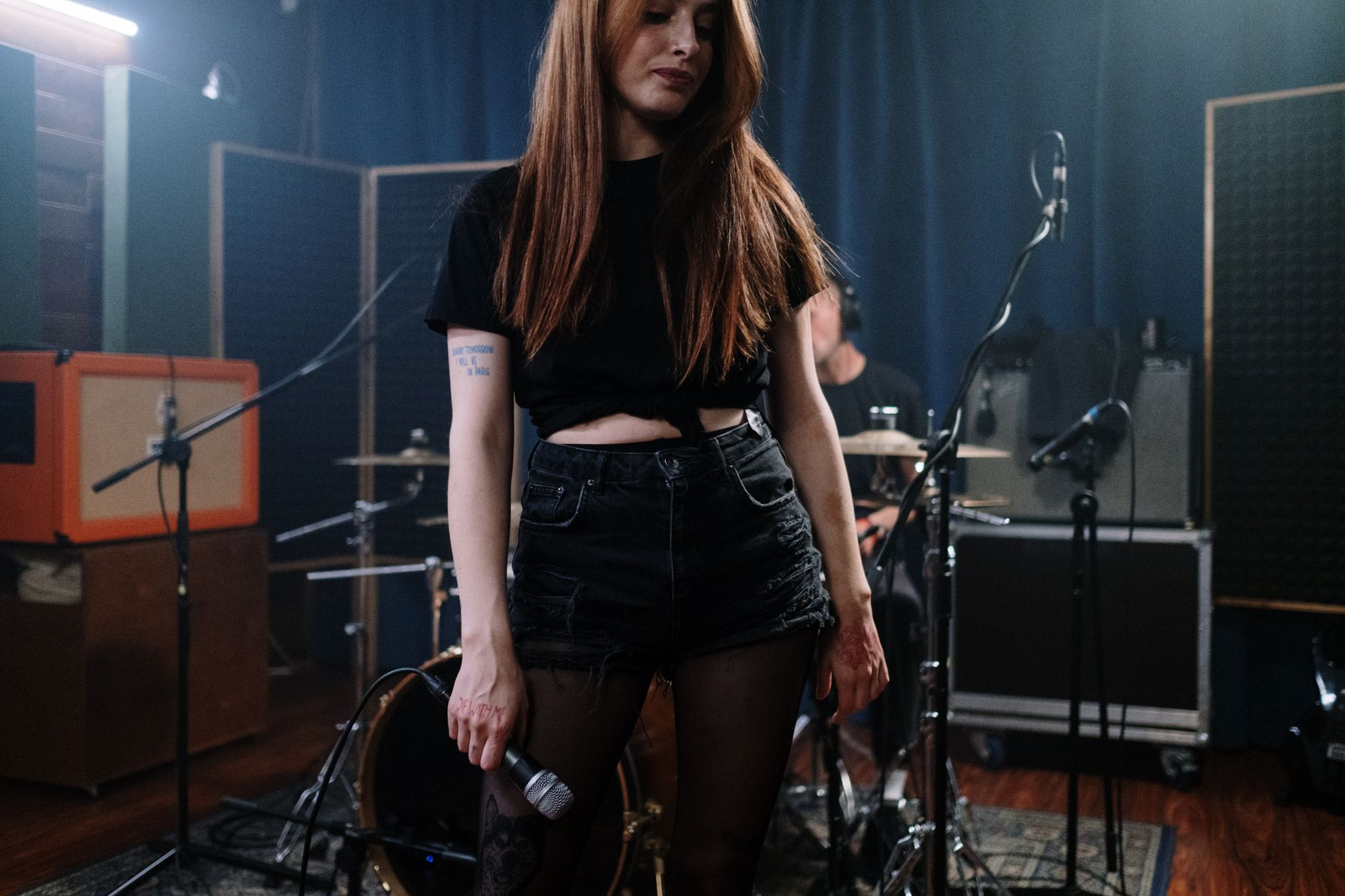
 Photo: Yan Krukau via Pexels
Live Performance
The SM58 has been on more stages than any other microphone. Its cardioid pattern rejects monitor bleed from the sides and rear, the grille physically protects the capsule from drops and moisture, and the ball grille creates a natural working distance that most singers gravitate toward instinctively.
According to Shure’s published specifications, the SM58’s frequency response is tuned specifically for vocals, with a gentle presence boost between 5–10 kHz that adds clarity to the human voice in a live mix. The bass rolloff in the grille means that even singers who crush the mic get consistent low-end without muddiness.
Studio Vocal Recording
The SM58 isn’t a condenser, and it won’t compete with a large-diaphragm condenser for nuance on a quiet studio vocal. But for rock, pop-punk, or any genre where the vocal needs presence and grit rather than airy detail, the SM58 delivers. It’s also genuinely useful as a scratch vocal mic when you need to track fast: no pop filter to set up, no positioning ritual.
Can You Use the SM57 on Vocals or the SM58 on Instruments?
Yes — and both work adequately in the other’s role. The SM57 can be used for live or studio vocals (without a pop filter you’ll need to watch plosives and proximity effect closely), and the SM58 records guitar cabs and drums acceptably. But “adequately” is the ceiling for both. The physical design of each mic is optimized for its intended use.
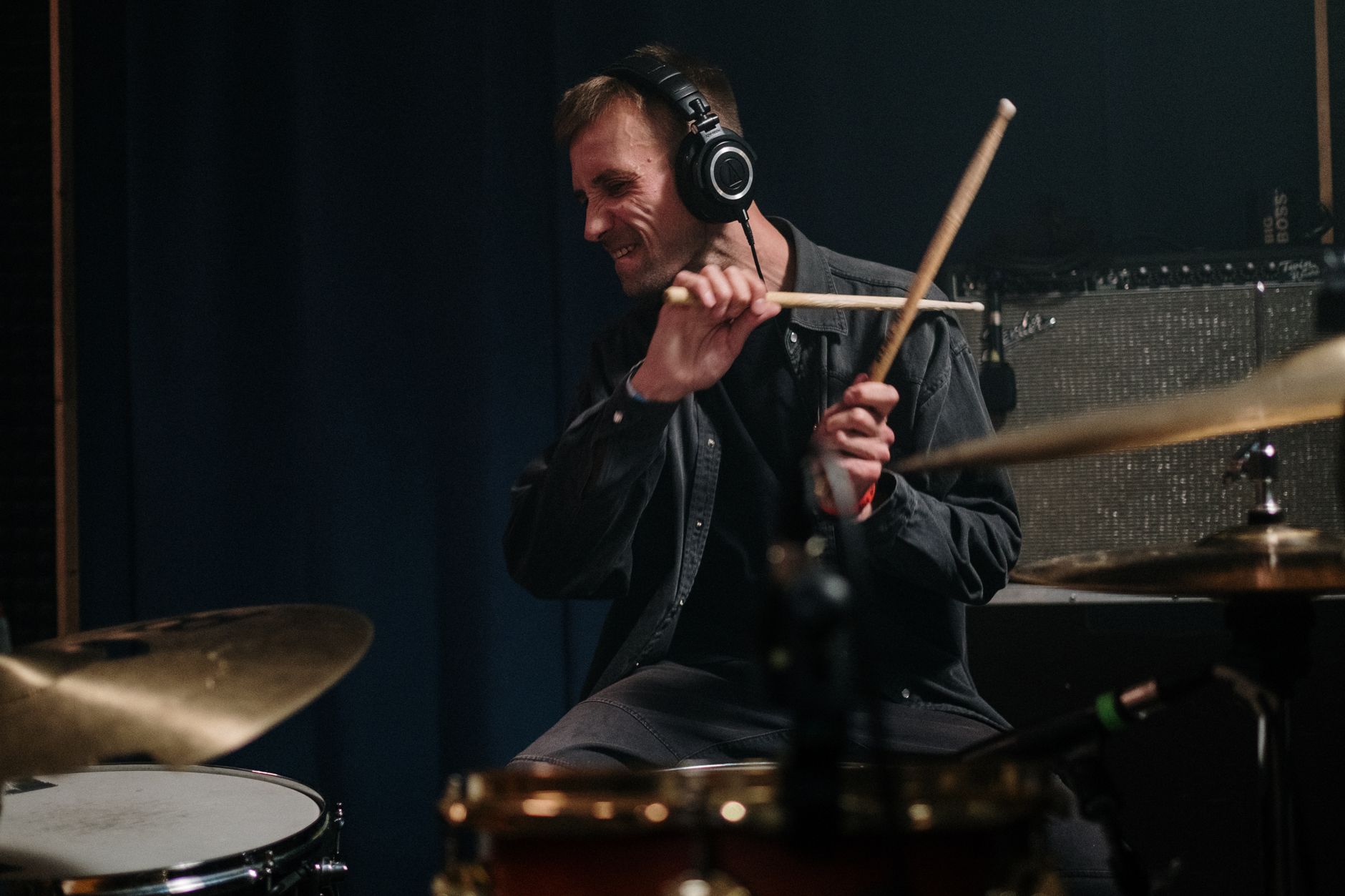 Photo: cottonbro studio via Pexels
Using an SM58 on a guitar cabinet works, but the ball grille prevents you from placing the mic as close to the cone as the SM57’s contoured grille allows, and the internal pop filter slightly softens transient response. Using an SM57 on lead vocals without a pop filter in a live context is a workflow tax most vocalists won’t accept.
If you only have budget for one mic, an SM57 is the more flexible studio tool — it records instruments, handles vocals in a pinch, and works on just about anything loud. The SM58 is the safer choice if your primary use is live vocal performance.
Gear Review: SM57 and SM58 Specs
SM57 Specs
| Spec | Value |
|---|---|
| Type | Dynamic, cardioid |
| Frequency response | 40 Hz – 15 kHz |
| Sensitivity | –56 dBV/Pa (1.6 mV) |
| Max SPL | 190 dB |
| Output impedance | 310 Ω (rated at 150 Ω) |
| Connector | XLR-3 |
| Bus power | No (passive dynamic) |
| Best For | Guitar cabs, snare, drums, brass, acoustic instruments |
SM58 Specs
| Spec | Value |
|---|---|
| Type | Dynamic, cardioid |
| Frequency response | 50 Hz – 15 kHz |
| Sensitivity | –54.5 dBV/Pa (1.9 mV) |
| Max SPL | 190 dB |
| Output impedance | 310 Ω (rated at 150 Ω) |
| Connector | XLR-3 |
| Bus power | No (passive dynamic) |
| Best For | Live vocals, studio scratch vocals, podcasting |
Comparison Table
| Product | Price | Grille | Freq. Range | Best For | Verdict |
|---|---|---|---|---|---|
| Shure SM57 | ~$99 | Contoured, open | 40–15k Hz | Instruments, recording | Best instrument mic at the price |
| Shure SM58 | ~$99 | Ball with foam filter | 50–15k Hz | Vocals, live | Best live vocal mic at the price |
Verdict by User Archetype
First-time beginner: Buy the SM57. You’ll record more with it — guitar, drums if you have them, whatever’s loud in your room — and it handles vocals acceptably when you need it to.
Bedroom producer: SM57. Most home studio work is instrument recording and tracking. If vocals are your primary output, add an SM58 or a budget condenser as your second mic.
Gigging musician: SM58, without question. It’s built for stages and it’ll outlast most of the gear around it. Most venues supply SM58s on stage — having your own means consistency every night.
Prosumer / recording hobbyist: Buy both. At $99 each, the SM57 + SM58 is a sub-$200 two-mic setup that covers live vocals, guitar cabs, snare, and brass. They’re the two most repairable, most rebuildable dynamic mics available — replacement cartridges and grilles are sold openly by Shure.
→ See also:
- Focusrite Scarlett 2i2 vs Focusrite Scarlett Solo: Which Should You Buy?
- SSL 2 vs Focusrite Scarlett 2i2: Which Should You Buy?
FAQ
Are the SM57 and SM58 the same microphone? They use the same modified Unidyne III cartridge and identical electronics, so the core mic is essentially the same. The difference is the grille assembly: the SM57’s contoured grille allows close-placement on instruments; the SM58’s ball grille and internal pop filter are purpose-built for vocal use. The acoustic performance diverges meaningfully from those physical differences alone.
Can I use an SM57 as a live vocal mic? Yes, but you’ll need to add a separate pop filter and manage proximity effect manually. Without the SM58’s ball grille creating a consistent working distance, vocalists tend to get inconsistent low-end and occasional plosive artifacts. It works in practice — many engineers have used SM57s on lead vocals — but the SM58 handles this automatically and is the better tool for the job.
Is the SM58 good for recording instruments? It will record guitar cabs, brass, and even drums, but the ball grille prevents close-placement techniques and the internal foam slightly softens transient attack. Published frequency response data shows both mics behave similarly in open space, but the SM57’s grille design gives you placement options the SM58 physically can’t match.
Do either mic require phantom power? No. Both are passive dynamic microphones that require only a standard XLR connection and an input on an audio interface or mixer. Phantom power won’t damage them, but it provides no benefit.
How long do SM57s and SM58s last? Both are built to commercial touring standards. Based on documented professional use across live and studio environments, SM57s and SM58s routinely remain in service for 20+ years with no maintenance. Shure sells replacement cartridges, grilles, and switches as individual parts — the mic can be rebuilt completely if needed. It’s one of the most cost-effective long-term mic investments available.
Which should I buy if I want to record both vocals and guitar? Buy the SM57 first. It records guitar cab with professional-quality results, handles acoustic instruments, works on drums, and can cover scratch vocals. If your vocal work becomes more central, add an SM58 or a large-diaphragm condenser as a second mic. The SM57 is the more versatile starting point for a home studio context.
Editorial methodology: Assessments are based on manufacturer specifications, published user reviews, and editorial research. Physical hands-on testing is noted explicitly where it occurred. Rankings reflect our editorial judgment and are not influenced by affiliate commission rates. Full editorial policy · Affiliate disclosure