Contents
Open-Back vs Closed-Back Headphones for Studio
TL;DR: Open-back headphones are the better choice for mixing and critical listening — they deliver a natural soundstage and accurate stereo imaging that closed-back designs can’t match. Use closed-back headphones when you’re tracking (recording) or working in a noisy environment. The right answer depends entirely on what you’re doing at that moment in the studio.
What’s the Actual Difference?
Open-back headphones have perforated or mesh ear cups that let air and sound pass freely in both directions. Closed-back headphones seal the ear cup completely. That single design choice drives every performance difference between them — soundstage, isolation, bass response, and leakage.
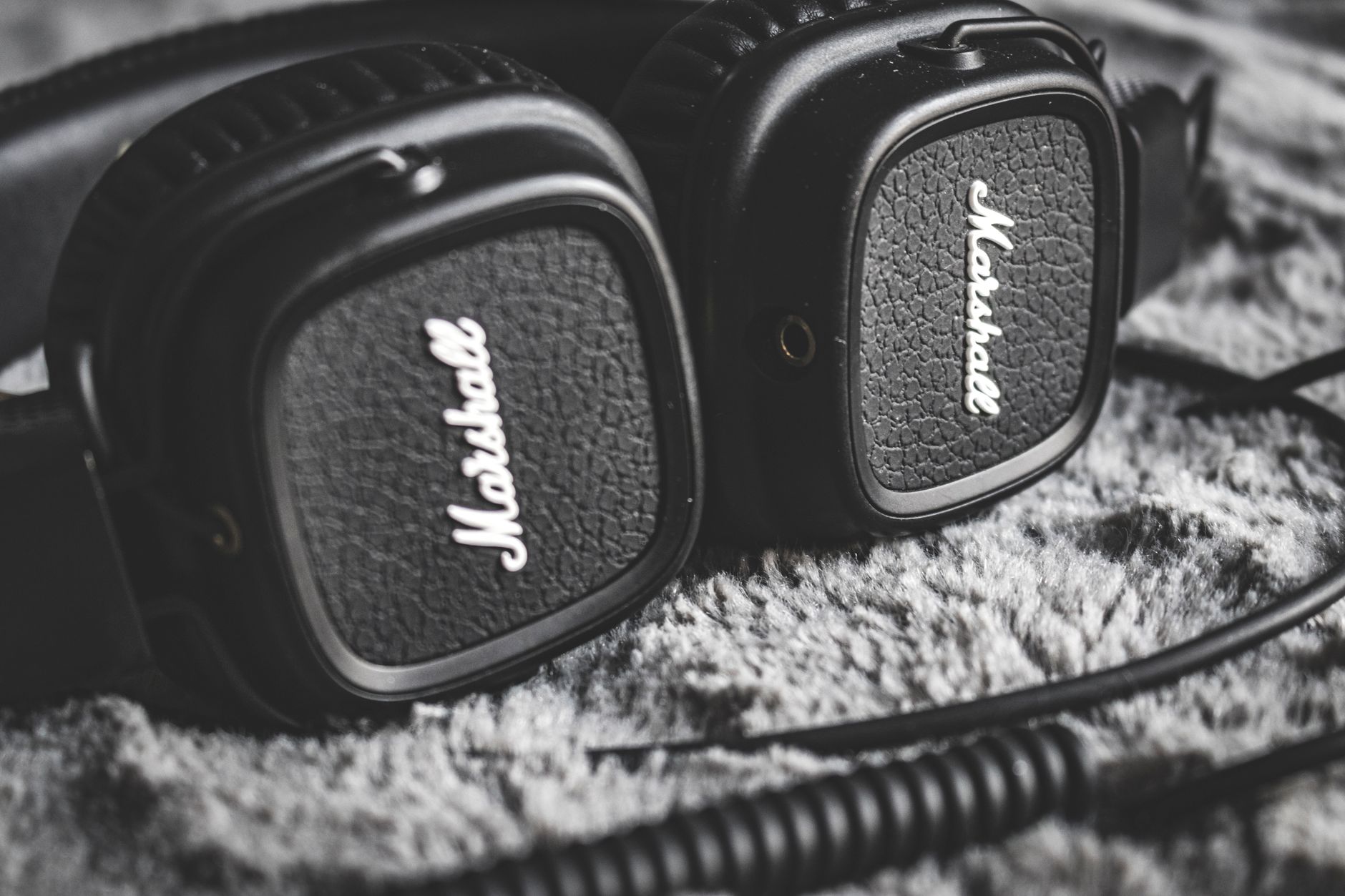 Photo: Mateusz Dach via Pexels
The physics are straightforward. In a closed cup, sound waves bounce off the hard walls behind the driver and fold back onto the diaphragm. This colors the sound — usually adding warmth or low-end emphasis that feels satisfying but isn’t accurate. Open cups let those reflections escape, so the driver reproduces a cleaner, more linear signal.
The tradeoff is isolation. Open-back headphones leak sound in both directions — anyone nearby hears what you’re monitoring, and ambient noise bleeds into your ears. That’s a dealbreaker in a live room with a microphone open.
When to Use Open-Back Headphones
Open-back headphones are the standard tool for mixing, mastering, and any critical listening task where accuracy matters more than isolation. Their wider, more natural soundstage reduces ear fatigue and makes stereo placement decisions more reliable.
Most engineers reach for open-backs during mix sessions for the same reason they work on studio monitors — the sound isn’t trapped inside your head. The perceived soundstage extends outside the ear cups, which more closely approximates how a mix translates on speakers.
The Soundstage Advantage
 Photo: David Maat via Pexels
Soundstage in headphones is largely a function of how much cross-feed exists between channels. Open-back designs allow a small amount of acoustic bleed between left and right drivers, which your brain interprets as space. This is why panning decisions made on open-backs tend to hold up better when you check the mix on speakers.
Closed-backs often make a mix sound wider inside the headphones than it actually is — a common trap that leads to over-centered or overly narrow mixes when played back in a room.
Recommended Tasks for Open-Back
| Task | Open-Back | Why |
|---|---|---|
| Mixing | Preferred | Accurate soundstage, less fatigue |
| Mastering | Preferred | Linear frequency response |
| Reference listening | Preferred | Reveals mix details clearly |
| Podcast editing | Works well | Low fatigue over long sessions |
| Tracking (no mic) | Acceptable | If bleed doesn’t matter |
When to Use Closed-Back Headphones
Closed-back headphones are the correct tool for tracking sessions — any time a microphone is open and bleeding cues into the recording would cause problems. They also work well in untreated, noisy home studios where ambient noise would compromise your listening.
 Photo: Orlando Allo via Pexels
The isolation advantage is real and measurable. Published attenuation figures for closed-back studio headphones typically fall between 10–25 dB of passive isolation, depending on construction and fit. That’s enough to prevent bleed into a vocal mic at reasonable monitor volumes.
Closed-Back Strengths
The elevated bass response of most closed-backs, while technically inaccurate, has practical uses. Bass-heavy music (hip-hop, electronic, pop) can be harder to evaluate on very flat open-back cans — some producers genuinely prefer the physicality of a closed-back during production and arrangement phases, saving the open-back for final mix checks.
Portable and location work is another clear closed-back domain. If you’re doing location audio, field recording, or working on a laptop at a loud café, open-backs are impractical.
Recommended Tasks for Closed-Back
| Task | Closed-Back | Why |
|---|---|---|
| Vocal tracking | Essential | Prevents mic bleed |
| Drum recording | Essential | Isolation in a loud room |
| Live performance monitoring | Preferred | External noise rejection |
| Beat-making / production | Good option | Low-end feel, no bleed concern |
| Noisy home environment | Better choice | Masks ambient interference |
Head-to-Head: Open-Back vs Closed-Back
| Feature | Open-Back | Closed-Back |
|---|---|---|
| Soundstage | Wide, natural | Narrow, in-head |
| Frequency accuracy | More linear | Often bass-boosted |
| Isolation | None | 10–25 dB (passive) |
| Sound leakage | Significant | Minimal |
| Ear fatigue | Lower | Higher (long sessions) |
| Typical price for quality | Higher | Lower |
| Best use case | Mixing / mastering | Tracking / loud rooms |
| Works with open mic? | No | Yes |
Gear Review: Key Models in Each Category
 Photo: Arnav Pratap Singh via Pexels
Open-Back Picks
Sennheiser HD 600 — The long-standing reference benchmark for mixing headphones in the sub-$400 range.
| Spec | Detail |
|---|---|
| Connections | 3.5mm (6.35mm adapter included) |
| Driver type | Dynamic, 38mm |
| Impedance | 300Ω |
| Frequency response | 12Hz–39kHz |
| Bus power | No (passive) |
| Best For | Mix engineers, mastering, reference listening |
Beyerdynamic DT 990 Pro — Brighter voicing than the HD 600, popular for detail-retrieval work and mixing electronic music.
Audio-Technica ATH-R70x — Lightweight open-back with a notably flat response, underrated in the mixing community.
Closed-Back Picks
Sony MDR-7506 — Industry standard for tracking and broadcast monitoring. Found in studios worldwide based on documented reliability and repeatable performance over decades.
Beyerdynamic DT 770 Pro — Popular tracking headphone with strong isolation and a slightly V-shaped response that works for producers evaluating bass-heavy arrangements.
Audio-Technica ATH-M50x — The most recommended entry-point closed-back in online producer communities, based on user review consensus.
Comparison Table
| Product | Price Range | Type | Impedance | Best For | Verdict |
|---|---|---|---|---|---|
| Sennheiser HD 600 | $300–$350 | Open | 300Ω | Mixing, mastering | Best in class for accuracy |
| Beyerdynamic DT 990 Pro | $150–$170 | Open | 250Ω | Detail-retrieval, electronic mix | Bright but revealing |
| Audio-Technica ATH-R70x | $300–$330 | Open | 470Ω | Mix reference, long sessions | Flat, fatigue-resistant |
| Sony MDR-7506 | $90–$110 | Closed | 63Ω | Tracking, broadcast | Reliable workhorse |
| Beyerdynamic DT 770 Pro | $130–$160 | Closed | 80/250Ω | Tracking, beat-making | Best isolation in class |
| Audio-Technica ATH-M50x | $140–$160 | Closed | 38Ω | Beginner tracking, production | Best entry closed-back |
Verdict by User Type
First-time beginner: The ATH-M50x gives you a closed-back that works for tracking, beats, and casual listening without a significant investment. Add an open-back when you start mixing seriously.
Bedroom producer: Start closed-back (DT 770 Pro) to handle both tracking and production in one pair. Add the HD 600 or DT 990 Pro once you’re actively mixing original material.
Gigging musician: MDR-7506 is the correct answer — it’s inexpensive enough to risk on the road, and engineers everywhere know how it sounds.
Prosumer / home engineer: Own both. Use an open-back (HD 600 or ATH-R70x) for mixing and a closed-back (DT 770 Pro) for all tracking sessions.
Does Impedance Matter for Home Studios?
Higher impedance headphones (250Ω, 300Ω, 470Ω) require more voltage to reach proper listening levels — a standard laptop headphone jack or consumer audio interface may underpower them. Based on manufacturer specifications for the HD 600 and DT 990 Pro 250Ω, a dedicated headphone amplifier or audio interface with a high-output headphone stage is recommended for best results. Lower impedance models (32–80Ω) work fine directly from most interfaces.
→ See Also
- Best Studio Headphones for Home Recording (2026)
- Best Studio Headphones Under $100
- Best Headphones for Music Production
FAQ
Can I mix on closed-back headphones? You can, but expert consensus and documented producer experience suggest closed-backs introduce coloration and an exaggerated soundstage that makes stereo placement decisions unreliable. If closed-backs are your only option, cross-reference your mix on earbuds and at least one other playback system before finalizing.
Do open-back headphones sound better than closed-back? “Better” depends on the task. For mixing and critical listening, open-back headphones typically deliver a more accurate, less fatiguing result. For tracking with an open microphone, a closed-back is categorically better because bleed makes open-backs unusable in that scenario.
Why do open-back headphones cost more? Open-back designs are generally aimed at the audiophile and professional mixing market, where buyers prioritize accuracy over practicality. The driver tuning required for a linear open-back response demands tighter tolerances than the consumer-oriented closed-back category. That said, budget open-backs exist — they just tend to trade accuracy for price in ways that matter for mixing.
Can open-back headphones be used for gaming or casual listening? Yes — the wide soundstage that benefits mixing also improves positional audio in games. The main limitations are practical: you’ll hear everything around you, and anyone nearby will hear your audio. For solo, quiet-environment use, many audiophiles prefer open-back for all listening.
What’s the best way to use both types in one studio setup? The standard workflow is open-back for mix and editing sessions, closed-back for all tracking. A single audio interface headphone output works for both — just swap the cans when you switch from recording to mixing. If your interface has two headphone outputs, you can leave both plugged in and select between them from the interface control software.
Does it matter which ear pad material I choose? Pad material affects both isolation and frequency response. Velour pads (common on open-backs like the HD 600 and DT 990) are more breathable and affect upper-midrange response differently than leatherette or pleather. Leatherette creates a better seal, which is why it’s standard on closed-backs intended for isolation. Published measurements from headphone review resources show pad swaps can shift frequency response by several dB in the 2–8kHz range — relevant if you’re evaluating a used pair that may have had its pads replaced.
Editorial methodology: Assessments are based on manufacturer specifications, published user reviews, and editorial research. Physical hands-on testing is noted explicitly where it occurred. Rankings reflect our editorial judgment and are not influenced by affiliate commission rates. Full editorial policy · Affiliate disclosure