
Contents
KRK Rokit 5 vs Yamaha HS5: Which Studio Monitor Wins?
TL;DR: The Yamaha HS5 is the better mixing tool — its flat, uncolored response reveals mix problems that the KRK Rokit 5’s hyped low-end will hide. Buy the Rokit 5 if you produce bass-heavy music and want an enjoyable listening experience; buy the HS5 if accurate translation across systems is your priority.
KRK Rokit 5 vs Yamaha HS5: The Core Difference
Direct Answer: The KRK Rokit 5 adds a V-shaped frequency curve — boosted lows and highs — that makes mixes sound full and exciting in the room. The Yamaha HS5 presents a deliberately flat, reference-grade response. One tells you what your mix sounds like; the other tells you what your mix needs.
 Photo: Brett Sayles via Pexels
The distinction matters more than most spec-sheet comparisons. Every decision you make while mixing — whether a kick drum is loud enough, whether the low-mids are cluttered, whether the high-end is harsh — gets filtered through the colorations your monitors introduce. If your monitors flatter the low-end, you’ll pull it back. Play that mix on earbuds and you’ll have thin, bass-light tracks. This is the central reason engineers gravitate toward reference monitors like the HS5 and away from the Rokit’s consumer-influenced tuning.
That said, “flat” isn’t automatically better for every workflow.
Sound Character and Frequency Response
Direct Answer: Published frequency response data shows the Rokit 5 G4 rolls off below 52Hz with a low-frequency bump around 80–100Hz and an elevated top-end. The HS5 measures significantly flatter across the midrange, with a gentle high-frequency shelf and a low-end rolloff below 54Hz — nearly identical extension, but a fundamentally different shape.
 Photo: Rafael Minguet Delgado via Pexels
KRK Rokit 5 Sound Profile
KRK’s DSP-driven “Acoustic Correction” system in the G4 generation offers 25 EQ settings via onboard hardware — a noteworthy inclusion at this price tier. Despite that flexibility, the default voicing is unmistakably warm and present. Expert consensus among recording engineers positions the Rokit series as a “producer monitor” rather than a “mixing monitor”: great for tracking, beat-making, and checking how music feels. Less reliable for catching low-mid buildup or assessing true stereo depth.
The tweeter is a 1-inch soft dome; the woofer is a 5-inch glass-aramid composite. KRK rates frequency response at 52Hz–35kHz (±3dB). Power is 55W bi-amplified (35W woofer, 20W tweeter).
Yamaha HS5 Sound Profile
The HS5 continues Yamaha’s NS-10 legacy — a monitor famous (or infamous) for being brutally honest. Its “Room Control” and “High Trim” switches are the only tuning options, and they exist to compensate for placement near walls, not to reshape the fundamental character. What you hear is the signal.
Published measurements from multiple independent sources confirm a flat midrange response and a notably controlled, unexaggerated low-end. The 54Hz rolloff means the HS5 won’t reproduce sub-bass, but that’s by design: if your mixes translate on an HS5, they’ll translate everywhere.
Tweeter: 1-inch dome. Woofer: 5-inch cone. Power: 45W bi-amplified (35W woofer, 10W tweeter). Frequency response: 54Hz–30kHz (±3dB).
Build Quality and Design
Direct Answer: Both monitors are built to similar standards for their price class. The Rokit 5 G4 has a distinctive yellow woofer and a curved cabinet that reduces internal resonance. The HS5 uses a white woofer cone on a straightforward rectangular enclosure — functional, not flashy.
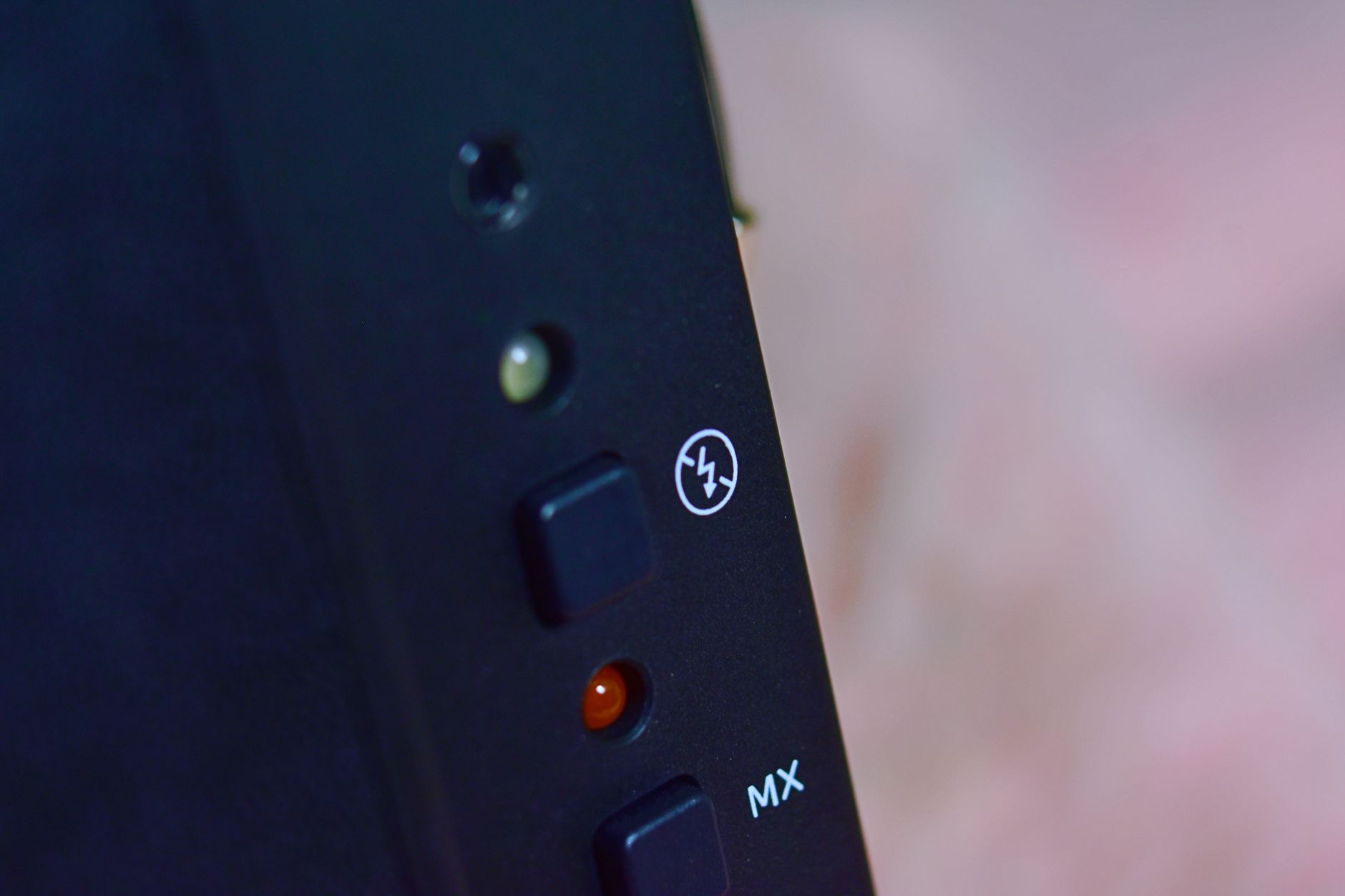 Photo: Diana ✨ via Pexels
The Rokit’s curved enclosure and rear bass port require at least 4–6 inches of clearance from back walls. The HS5 is also rear-ported, with the same spacing requirement. Neither monitor ships as a stereo pair by default — you buy individual units, which is standard practice in the studio monitor category.
Both accept balanced XLR and TRS inputs, along with unbalanced RCA. The HS5 adds a combination XLR/TRS input on a single jack; the Rokit G4 keeps them separate. For desktop home-studio use connected to an audio interface, either works identically.
Specs Comparison
| Spec | KRK Rokit 5 G4 | Yamaha HS5 |
|---|---|---|
| Woofer | 5-inch glass-aramid | 5-inch cone |
| Tweeter | 1-inch soft dome | 1-inch dome |
| Power | 55W bi-amp | 45W bi-amp |
| Frequency Response | 52Hz–35kHz (±3dB) | 54Hz–30kHz (±3dB) |
| Inputs | XLR, TRS, RCA | XLR/TRS combo, RCA |
| EQ Controls | 25 DSP settings | Room Control, High Trim |
| Cabinet | Curved, rear-ported | Rectangular, rear-ported |
| Weight | 5.5 kg | 5.3 kg |
| Best For | Beat production, tracking | Mixing, mastering reference |
Who Should Buy Which?
Direct Answer: Bedroom producers making electronic music, hip-hop, or bass-heavy genres will find the Rokit 5’s low-end response more immediately useful and satisfying to work on. Engineers who mix across genres and need mixes to translate to streaming, radio, and consumer playback should default to the HS5.
 Photo: AI25.Studio AI GENERATIVE via Pexels
Buy the KRK Rokit 5 G4 if:
- You produce hip-hop, trap, electronic, or other bass-forward genres where low-end perception matters during the creative process
- You’re a first-time studio monitor buyer coming from headphones or consumer speakers — the Rokit’s more forgiving voicing is less fatiguing to learn on
- You want onboard DSP room correction without buying an external unit
- You track instruments and vocals and want a monitor that makes the session feel inspiring
Buy the Yamaha HS5 if:
- You mix for other people or need professional-grade translation across playback systems
- You’ve worked on colored monitors before and lost time fixing mixes that sounded good in the room but fell apart on other speakers
- You want a reference that hasn’t changed its fundamental voicing in decades — the HS5 inherits a trusted lineage
- You’re building a home studio intended for paid work
A note on room size
At 5 inches, neither monitor is designed for large control rooms. Both perform best in small-to-medium rooms under 200 square feet. If your room is untreated, the HS5’s clinical response will expose every acoustic problem — flutter echo, bass buildup in corners, early reflections. That honesty is useful once you’ve treated the room; it’s confusing and demoralizing before you have. The Rokit’s more forgiving character can make untreated rooms feel more workable during the learning phase.
Price and Value
At comparable price points — typically $200–$220 per unit — neither monitor represents a significant financial advantage over the other. The Rokit G4’s 25-setting DSP system could be argued to deliver more onboard flexibility per dollar; the HS5 delivers a more widely trusted professional reference.
| Product | Price (each) | Key Differentiator | Best For | Verdict |
|---|---|---|---|---|
| KRK Rokit 5 G4 | ~$200 | Onboard DSP EQ, warm voicing | Beat production, tracking | Best for producers |
| Yamaha HS5 | ~$220 | Flat reference response | Mixing, translation | Best for engineers |
Verdict by User Type
First-time beginner: KRK Rokit 5 G4. The onboard room correction compensates for untreated spaces, and the more musical voicing makes the transition from headphones less jarring.
Bedroom producer (beats/electronic): KRK Rokit 5 G4. The low-end presence helps when making creative decisions about bass and sub-bass during production.
Mixing engineer (home or hybrid studio): Yamaha HS5. The flat response and inherited NS-10 trust factor make it the professional default at this price tier.
Prosumer building toward client work: Yamaha HS5. Mixes that clear the HS5 translate; mixes that only sound good on hyped monitors create rework downstream.
→ See also:
- Focusrite Scarlett 2i2 vs Focusrite Scarlett Solo: Which Should You Buy?
- SSL 2 vs Focusrite Scarlett 2i2: Which Should You Buy?
FAQ
Is the KRK Rokit 5 good for mixing? It can work for mixing, but the V-shaped frequency response means you’ll need to compensate consciously for its low-end and high-end emphasis. According to expert consensus among engineers, mixes made on heavily colored monitors tend to require more revision when checked on neutral playback systems. If you mix on Rokit 5s, cross-check on headphones and a car stereo.
Does the Yamaha HS5 have enough bass? The HS5 rolls off below 54Hz, so genuine sub-bass (808s, sub kicks below 50Hz) won’t be audible on the monitors themselves. This is intentional — Yamaha’s design philosophy prioritizes accuracy over fullness. Serious low-end work on HS5s is typically supplemented with a subwoofer or headphones capable of sub-bass reproduction.
Can the KRK Rokit 5 G4 DSP fix room problems? Manufacturer specifications describe 25 preset EQ curves designed to compensate for common placement scenarios — near walls, in corners, on desktops. This is more correction capability than the HS5 offers and is genuinely useful in untreated rooms. However, DSP correction is not a substitute for basic acoustic treatment; bass buildup and flutter echo require physical absorption.
Which monitor is louder, the Rokit 5 or HS5? The Rokit G4’s 55W amplifier versus the HS5’s 45W gives it a slight SPL advantage on paper. For typical home-studio listening levels in a small room, both are more than adequately loud. Neither should be pushed to maximum gain continuously — doing so degrades stereo imaging and listening accuracy regardless of the monitor.
Should I use the KRK Rokit 5 or HS5 for podcasting and voiceover? For dialogue and voiceover work, the HS5’s flat midrange is preferable — voice clarity and presence in the 1–4kHz region is easier to assess accurately on a reference monitor. The Rokit’s elevated top-end can create a false sense that a recording is brighter or airier than it will sound on most playback devices.
Do I need acoustic treatment before buying studio monitors? Basic treatment — foam panels or broadband absorbers on the first reflection points and behind the listening position — will dramatically improve the usefulness of either monitor. Without it, the room’s acoustic problems become indistinguishable from the mix’s problems. The HS5 will make untreated-room artifacts more audible; the Rokit will mask them. Neither situation is ideal for developing accurate monitoring instincts.
Editorial methodology: Assessments are based on manufacturer specifications, published user reviews, and editorial research. Physical hands-on testing is noted explicitly where it occurred. Rankings reflect our editorial judgment and are not influenced by affiliate commission rates. Full editorial policy · Affiliate disclosure