Contents
Focusrite Scarlett 2i2 vs 4i4: Which Should You Buy?
TL;DR: The focusrite scarlett 2i2 vs focusrite scarlett 4i4 decision comes down to I/O count, not quality — both use identical preamps and converters. Get the 2i2 if you record one or two sources at a time. Step up to the 4i4 if you need four simultaneous inputs, MIDI I/O, or balanced monitor outputs.
The Core Difference: I/O Count, Not Sound Quality
Both interfaces share the same Air-mode preamps and 24-bit/192kHz converters from Focusrite’s 4th Generation platform. The 4i4 costs roughly $80–100 more and adds two extra combo inputs, MIDI in/out, and balanced TRS monitor outputs. If your sessions never exceed two simultaneous sources, you’re paying for ports you won’t use.
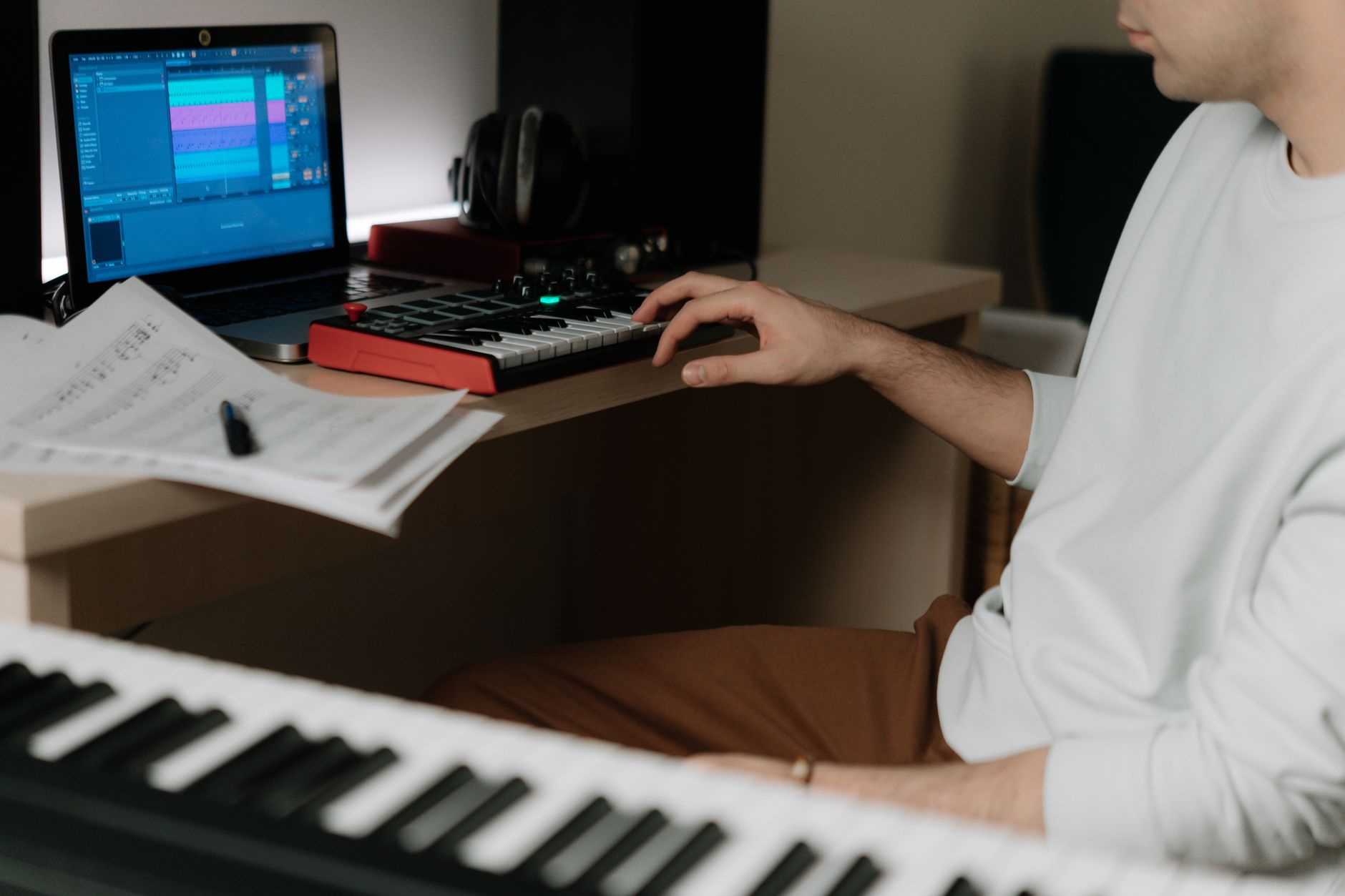 Photo: cottonbro studio via Pexels
This is the critical point most buyers miss: upgrading from the 2i2 to the 4i4 does not improve your recordings. The analog signal path, preamp gain structure, and A/D conversion are effectively identical. Published specs from Focusrite confirm both units measure at ≤-129 dBFS EIN (equivalent input noise) and a dynamic range of 111 dB for the mic preamps. What changes is routing flexibility.
The 2i2 gives you two combo XLR/TRS inputs on the front, one headphone output, and unbalanced RCA-style monitor outputs. The 4i4 adds two rear combo inputs (inputs 3 and 4), a second headphone output with independent level control, balanced TRS monitor outputs, and a MIDI in/out pair — all in a slightly larger but still bus-powered chassis.
Specs Breakdown
| Spec | Scarlett 2i2 (4th Gen) | Scarlett 4i4 (4th Gen) |
|---|---|---|
| Mic inputs | 2 (front) | 4 (2 front, 2 rear) |
| Line inputs | 2 | 4 |
| Instrument inputs | 2 (via combo) | 2 (front, via combo) |
| Monitor outputs | 2× unbalanced RCA | 2× balanced TRS |
| Headphone outputs | 1 | 2 (independent level) |
| MIDI I/O | None | In + Out |
| Bit depth / Sample rate | 24-bit / 192kHz | 24-bit / 192kHz |
| Bus powered | Yes (USB-C) | Yes (USB-C) |
| Approx. street price | ~$200 | ~$280–300 |
Who Should Buy the Scarlett 2i2
The 2i2 is the right call for anyone recording vocals and one instrument, podcasters, and solo home-studio producers. It handles every single-source and two-source scenario without compromise, and the money saved goes toward better microphones or acoustic treatment — both of which improve your sound more than extra ports you won’t use.
 Photo: Benjamin Dominguez via Pexels
The most common recording setup in home studios is voice plus guitar, or two vocalists, or a mono synth plus a vocal. The 2i2 covers all of these. The unbalanced monitor outputs are a legitimate limitation if you’re running long cable runs to studio monitors (over ~10 feet, ground noise becomes possible), but for the typical bedroom desk setup with monitors within arm’s reach, it’s rarely an issue in practice.
User reviews across major retailers consistently cite the 2i2’s gain range as sufficient for dynamic mics including the Shure SM7B — a common concern — without the noise floor becoming problematic. Focusrite’s published gain range is up to 56 dB, which is adequate for all but the most gain-hungry ribbons.
Choose the 2i2 if:
- You record solo or with one other person
- Your monitor cable runs are short (under 10 feet)
- You don’t use MIDI hardware controllers or keyboards
- Budget matters and you’d rather spend the difference on a better mic or plugin bundle
Who Should Buy the Scarlett 4i4
The 4i4 is purpose-built for producers who run outboard gear, drummers recording multiple mics, podcasters with more than two guests, or anyone with a MIDI keyboard or hardware synth in their setup. The balanced monitor outputs and dual headphone amps are genuine professional-grade additions — not marketing padding.
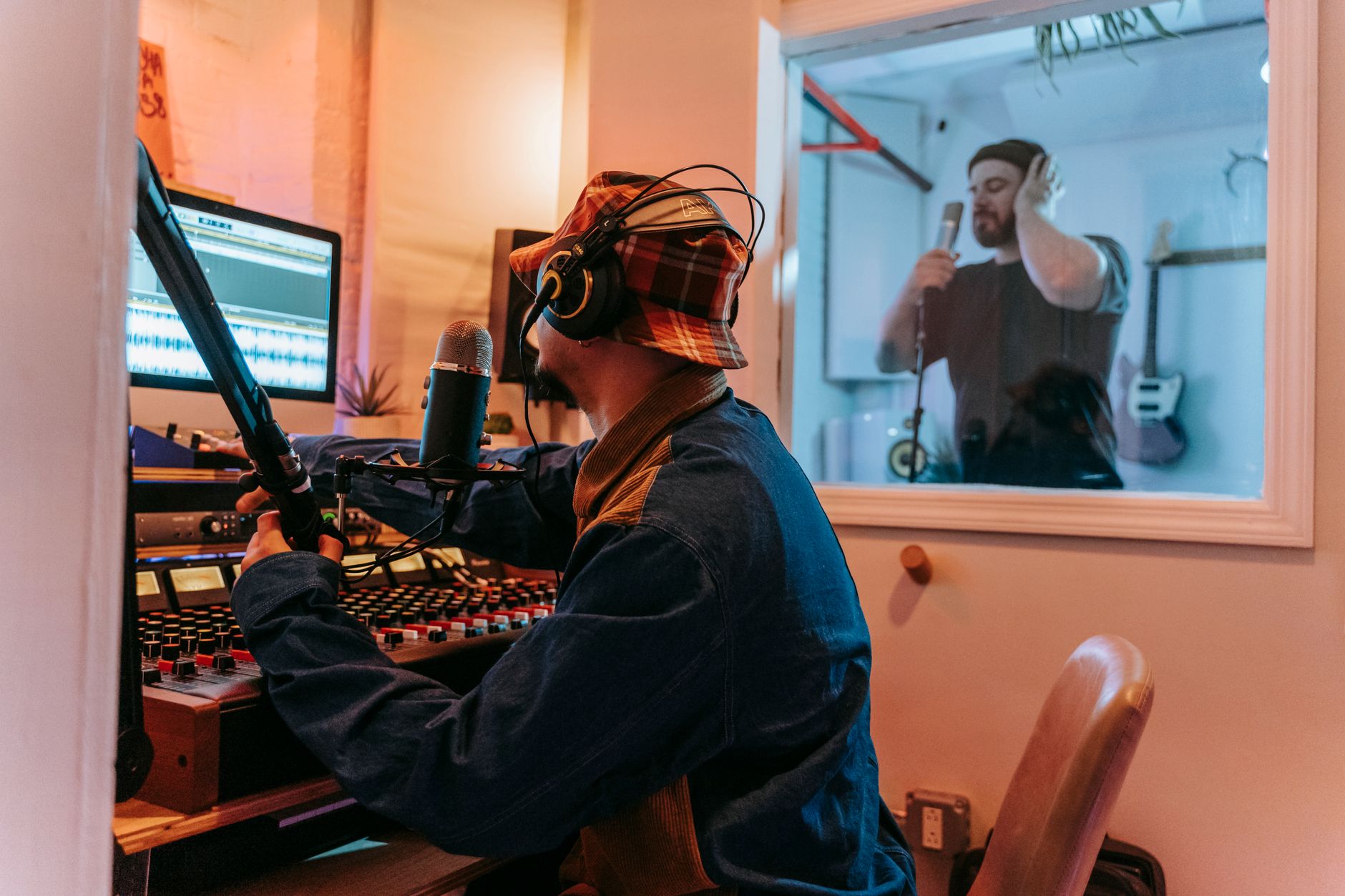 Photo: Anna Pou via Pexels
The balanced TRS outputs on the 4i4 are a meaningful upgrade for longer monitor cable runs and for anyone using active studio monitors with balanced inputs — which describes most monitors above the entry level. Balanced connections reject common-mode noise across the cable length, which matters when your interface sits next to a computer full of RF interference.
The second headphone output is underrated for collaboration. Tracking with a vocalist while providing them a separate cue mix — different reverb, different level balance — requires two independent headphone amps. The 2i2 cannot do this; the 4i4 handles it natively without a separate headphone amp.
MIDI I/O is the sleeper feature for producers. If you run a hardware synth, drum machine, or any outboard MIDI device, the 4i4 eliminates the need for a separate USB MIDI interface. That’s one fewer device, one fewer cable, one fewer driver to manage.
Choose the 4i4 if:
- You record drums, a full band, or any 3–4 simultaneous source setup
- You use MIDI keyboards, hardware synths, or outboard MIDI gear
- Your studio monitors are balanced and cable runs exceed 10 feet
- You need two independent headphone mixes (e.g., tracking with a vocalist)
- You run outboard effects or preamps into inputs 3 and 4 as line-level returns
Head-to-Head Comparison
| Feature | Scarlett 2i2 | Scarlett 4i4 | Winner |
|---|---|---|---|
| Preamp quality | ≤-129 dBFS EIN | ≤-129 dBFS EIN | Tie |
| Converter quality | 111 dB DR | 111 dB DR | Tie |
| Input count | 2 | 4 | 4i4 |
| Monitor outputs | Unbalanced | Balanced TRS | 4i4 |
| Headphone outputs | 1 | 2 (independent) | 4i4 |
| MIDI I/O | No | Yes | 4i4 |
| Bus power | Yes | Yes | Tie |
| Street price | ~$200 | ~$280–300 | 2i2 |
| Value for 2-source users | Excellent | Overpaying | 2i2 |
 Photo: TStudio via Pexels
Gear Review: Focusrite Scarlett 2i2 (4th Gen)
Specs
| Spec | Detail |
|---|---|
| Connections | 2× combo XLR/TRS (front), USB-C |
| I/O count | 2 in / 2 out |
| Preamps | 2× Focusrite Air-mode, up to 56 dB gain |
| Bit depth / Sample rate | 24-bit / 192kHz |
| Bus power | Yes (USB-C) |
| Best For | Solo recording, singer-songwriters, podcasters, beatmakers |
Verdict by Archetype
- First-time beginner: Start here. Simple two-knob interface, USB-C plug-and-play on Mac/Windows, and the included Focusrite Creative Pack (Ableton Live Lite, Plug-in Collective) gets you producing immediately.
- Bedroom producer: Sufficient for 95% of sessions. The unbalanced outputs are the only real ceiling; treat them as a future-upgrade path rather than a problem.
- Gigging musician: Portable, bus-powered, and rugged enough for rehearsal rooms. If you also need MIDI for a keyboard live, the 4i4 becomes worth considering.
- Prosumer: If you’re doing any serious overdub sessions with a vocalist in the room or tracking multiple sources, you’ve outgrown the 2i2. The 4i4 is the upgrade; the Solo Step was down.
Gear Review: Focusrite Scarlett 4i4 (4th Gen)
Specs
| Spec | Detail |
|---|---|
| Connections | 2× combo XLR/TRS (front), 2× combo XLR/TRS (rear), 2× balanced TRS monitor out, 2× headphone, MIDI in/out, USB-C |
| I/O count | 4 in / 4 out |
| Preamps | 2× Focusrite Air-mode (front inputs), up to 56 dB gain |
| Bit depth / Sample rate | 24-bit / 192kHz |
| Bus power | Yes (USB-C) |
| Best For | Producers with MIDI gear, duo recording, outboard gear users, dual-headphone sessions |
Verdict by Archetype
- First-time beginner: More interface than you need, and $80–100 more for features you won’t use for months. Start with the 2i2 unless you already own MIDI gear.
- Bedroom producer: The sweet spot buyer. MIDI hardware, balanced monitors, and the option to expand with outboard gear are all addressed. This is the interface that grows with a maturing setup.
- Gigging musician: MIDI I/O is convenient for hybrid live setups. The extra weight and size are negligible.
- Prosumer: Reasonable as a primary interface for small-format sessions. Producers running more than four simultaneous sources will need to look at the Scarlett 18i20 or a different platform, but for most home-studio workflows the 4i4 handles everything short of full-band live tracking.
Final Verdict
The focusrite scarlett 2i2 vs focusrite scarlett 4i4 is a feature choice, not a quality choice. Sound is identical; the 4i4 just does more. Default to the 2i2 if your sessions are one or two sources — you’ll get equivalent recordings and spend the difference somewhere it matters. Choose the 4i4 the moment you have a MIDI keyboard on your desk, a vocalist who needs a separate headphone mix, or balanced monitors on your meter bridge.
Neither is a wrong answer. Both are the best-selling interfaces in their class for a reason.
→ See also:
- Focusrite Scarlett 2i2 vs Focusrite Scarlett Solo: Which Should You Buy?
- SSL 2 vs Focusrite Scarlett 2i2: Which Should You Buy?
FAQ
Does the 4i4 sound better than the 2i2? No. Both use identical preamp circuits and A/D converters from the 4th Generation Scarlett platform. Published specs from Focusrite show the same EIN, dynamic range, and THD figures for both units. The price difference buys routing flexibility, not audio quality.
Can the Scarlett 2i2 power a Shure SM7B without a preamp booster? According to Focusrite’s published specifications and widely documented user experience, the 2i2’s 56 dB gain range is sufficient for the SM7B in most recording environments. In quiet rooms with a clean signal chain, most users report acceptable noise floors. In louder environments or with noisier gain stages, a clean preamp booster like the Cloudlifter is an option worth considering.
What are the rear inputs on the 4i4 used for? Inputs 3 and 4 on the rear of the 4i4 are combo XLR/TRS, accepting both microphone-level (with phantom power) and line-level signals. Common use cases include returns from outboard hardware (compressors, EQs), a second pair of microphones for recording two vocalists simultaneously, or stereo line-level sources like keyboards and drum machines.
Is the 4i4 still bus-powered like the 2i2? Yes. The 4th Generation Scarlett 4i4 is fully bus-powered over USB-C, with no external power supply required. This is a notable improvement over some previous generations and competing interfaces at this I/O count.
Can you use the 4i4 for podcasting with multiple guests? Yes, and it handles two-person in-person podcast setups well. Inputs 1 and 2 take microphones on the front; two guests get independent headphone mixes via the dual headphone outputs. For four-person in-person setups all on microphones simultaneously, all four inputs can be used, though mixing and monitoring four distinct headphone mixes would require an external headphone amp distribution solution.
Is there a latency difference between the 2i2 and 4i4? No meaningful difference. Both are USB 2.0 class-compliant interfaces on the same chipset. Round-trip latency at 96kHz with a 64-sample buffer is documented by Focusrite as approximately 2.99ms on both units under identical driver conditions. Driver quality and host computer performance are the primary latency variables, not which Scarlett model you own.
Editorial methodology: Assessments are based on manufacturer specifications, published user reviews, and editorial research. Physical hands-on testing is noted explicitly where it occurred. Rankings reflect our editorial judgment and are not influenced by affiliate commission rates. Full editorial policy · Affiliate disclosure