Contents
Audio-Technica ATH-M50x vs Beyerdynamic DT 770 Pro: Which Wins?
TL;DR: The audio-technica ath-m50x vs beyerdynamic dt 770 pro comparison comes down to portability versus studio accuracy. The M50x is a self-contained, foldable workhorse for tracking and casual mixing anywhere. The DT 770 Pro is a flatter, more revealing closed-back built for long sessions at a fixed desk — especially in the 80Ω version paired with an audio interface. For most home-studio beginners, the DT 770 Pro 80Ω edges it on mix translation.
Sound Signature: V-Shaped Fun vs. Analytical Flat
Direct Answer: The ATH-M50x has a consumer-friendly V-shaped curve — boosted bass and air — that sounds exciting but can flatter mixes. The DT 770 Pro runs noticeably flatter through the midrange with controlled low-end, making problems easier to hear before they appear in export.
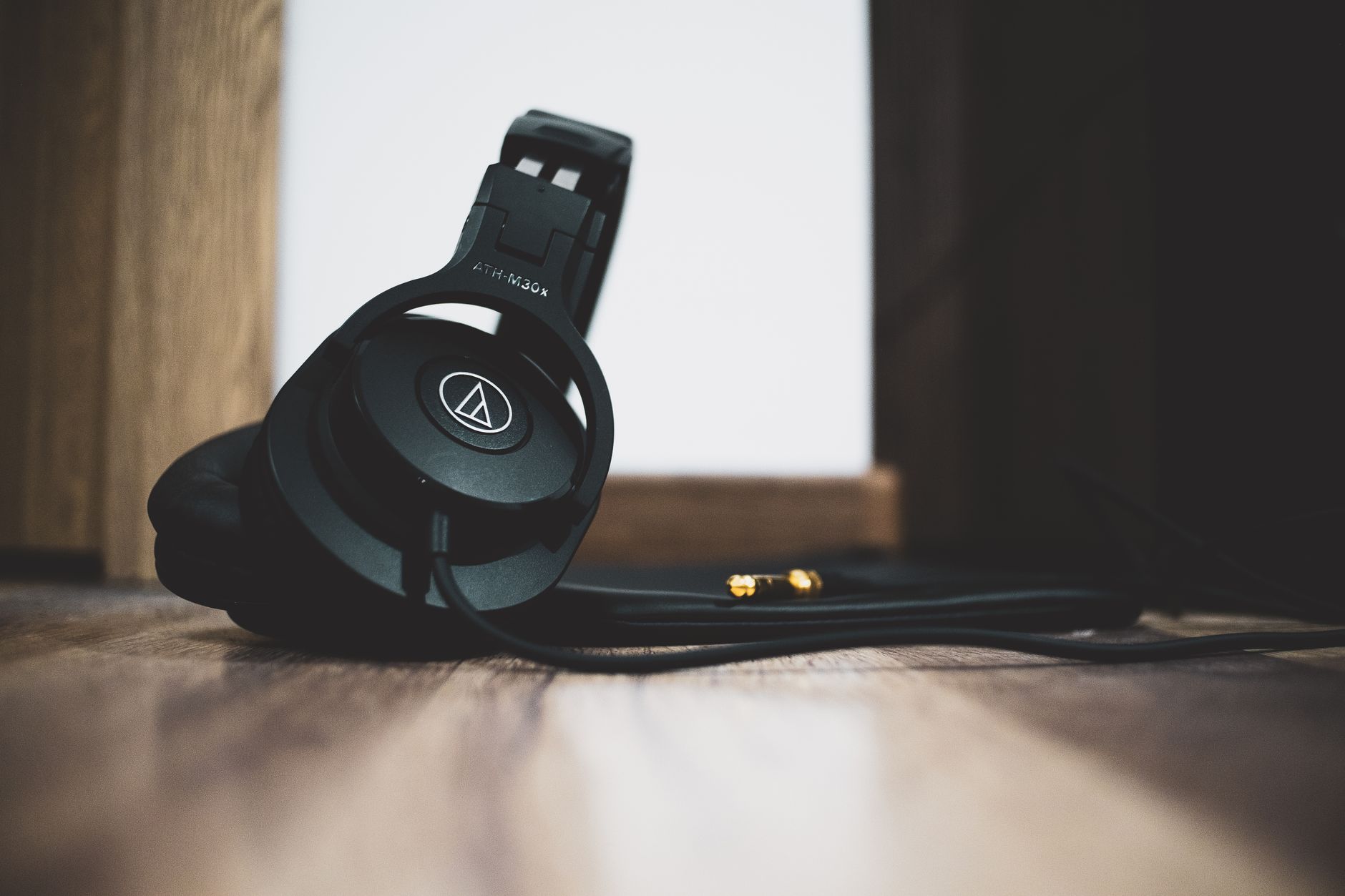 Photo: Cosmin Gavris via Pexels
The M50x’s low-frequency emphasis (centered around 80–100 Hz) means kick drums and bass lines feel bigger than they are. That’s fine for A/B reference listening, but it’s a liability when you’re making EQ decisions on a bassline. Published frequency response measurements from Rtings.com confirm the M50x’s bass shelf sits 5–8 dB above a truly flat target.
The DT 770 Pro’s response varies meaningfully by impedance version. The 32Ω version (designed for phones) adds a slight mid-bass bump to compensate for weak headphone outputs. The 80Ω version — the studio sweet spot — flattens considerably, delivering the controlled low-end that makes it genuinely useful for mixing duties. The 250Ω version is flatter still but requires a dedicated headphone amp to reach listening level.
Treble Character
 Photo: Willo M. via Pexels
Beyerdynamic’s trademark treble spike around 8–10 kHz is present on the DT 770 Pro, and it reads as “brightness” or “harshness” depending on your ears and source material. For mixing, this actually helps: sibilance problems and harsh cymbal transients reveal themselves quickly. For long tracking sessions or casual listening, some engineers find it fatiguing after two to three hours. The M50x’s treble is more polite and less extended, which is easier to live with but less revealing of high-frequency mix issues.
Build, Comfort, and Long-Session Wearability
Direct Answer: The DT 770 Pro is the more comfortable headphone for sessions exceeding two hours. Its velour pads and lighter clamping force distribute pressure better than the M50x’s pleather pads, which trap heat and compress noticeably on the ear.
 Photo: MART PRODUCTION via Pexels
The M50x’s folding mechanism makes it the clear winner for portability — it collapses into a compact bundle and ships with a carry pouch. If you track vocals in different rooms, work at a laptop on location, or need one pair of headphones that commutes with you, the M50x’s physical form factor matters.
The DT 770 Pro is not portable in any practical sense. It’s a fixed-form, desk-stays-on-desk headphone. The fixed cable on the DT 770 Pro (straight or coiled, depending on version) is the other meaningful limitation — if it fails, you’re replacing the entire unit. The M50x ships with three detachable cables (coiled, straight, and a short 1.2 m), so a damaged cable is a cheap fix.
Clamping force on the M50x is higher than the DT 770 Pro, which helps passive isolation (rated at ~35 dB attenuation) but adds fatigue over long sessions. Published third-party measurements put both headphones in the 35–38 dB passive isolation range, so isolation is roughly equivalent for recording purposes.
Impedance and Source Matching
Direct Answer: The ATH-M50x (38Ω, 99 dB/mW sensitivity) will run at full volume from a phone, tablet, or laptop headphone output. The DT 770 Pro 80Ω (96 dB/mW) benefits from an audio interface or headphone amp — it’ll work from a phone, but you’ll be running the output near maximum and the low-end control will be compromised.
| Spec | ATH-M50x | DT 770 Pro 32Ω | DT 770 Pro 80Ω | DT 770 Pro 250Ω |
|---|---|---|---|---|
| Impedance | 38Ω | 32Ω | 80Ω | 250Ω |
| Sensitivity | 99 dB/mW | 96 dB/mW | 96 dB/mW | 96 dB/mW |
| Recommended source | Any | Phone/tablet | Interface/amp | Dedicated amp |
| Cable | Detachable | Fixed | Fixed | Fixed |
| Weight | 285 g | 270 g | 270 g | 270 g |
If you already own a Focusrite Scarlett, SSL 2, or similar interface, the DT 770 Pro 80Ω is powered adequately from its headphone output. The M50x doesn’t require that dependency — it’s genuinely plug-and-play from anything.
Gear Review: ATH-M50x
 Photo: Biekir Litovchenko via Pexels
| Spec | ATH-M50x |
|---|---|
| Type | Closed-back, circumaural |
| Impedance | 38Ω |
| Sensitivity | 99 dB/mW |
| Frequency Response | 15 Hz – 28 kHz |
| Driver Size | 45 mm |
| Cable | Detachable (3 included) |
| Foldable | Yes |
| Weight | 285 g |
| Best For | Tracking, portable mixing, all-source use |
Audio-Technica ATH-M50x — industry standard for a reason. The detachable cable system alone justifies the price over similarly-priced fixed-cable competitors. Sound is colored but flattering enough that mix decisions transfer reasonably to consumer speakers.
Verdict by archetype:
- First-time beginner: Best starting headphone. Works with any device, sounds good immediately, doesn’t require extra gear.
- Bedroom producer: Solid for tracking and reference; be aware the bass boost will flatter your low-end decisions. Cross-reference on speakers or earbuds.
- Gigging musician: The folding design and multi-cable kit make it the practical on-the-road choice.
- Prosumer / mixing focus: Acceptable but not optimal — the V-shaped response requires constant mental compensation. The DT 770 Pro 80Ω is more honest.
Gear Review: Beyerdynamic DT 770 Pro
| Spec | DT 770 Pro (80Ω) |
|---|---|
| Type | Closed-back, circumaural |
| Impedance | 80Ω |
| Sensitivity | 96 dB/mW |
| Frequency Response | 5 Hz – 35 kHz |
| Driver Size | 45 mm |
| Cable | Fixed, straight (3 m) |
| Foldable | No |
| Weight | 270 g |
| Best For | Studio tracking, critical monitoring, long sessions |
Beyerdynamic DT 770 Pro 80Ω — the reference-class closed-back that professional studios stock for a reason. Velour pads, replaceable parts (pads, headband), and a track record that spans decades. The fixed cable is the only genuine compromise.
Verdict by archetype:
- First-time beginner: Excellent if you own any audio interface. Will reveal problems in your mix early and build accurate ears faster.
- Bedroom producer: The 80Ω version with a Focusrite Scarlett or equivalent is arguably the best closed-back monitoring setup under $200 total.
- Gigging musician: Not practical — fixed cable and non-folding design rule it out for live or travel use.
- Prosumer / mixing focus: Strong choice for closed-back monitoring. The DT 990 Pro (open-back) or Sennheiser HD 650 offers better stereo imaging if isolation isn’t required.
Head-to-Head Comparison
| ATH-M50x | DT 770 Pro 80Ω | |
|---|---|---|
| Price | ~$149 | ~$149 |
| Sound signature | V-shaped (fun) | Near-flat (analytical) |
| Bass accuracy | Boosted | Controlled |
| Treble | Polite, rolled-off | Extended, revealing |
| Comfort (2h+) | Moderate (pleather) | Better (velour) |
| Portability | Excellent (foldable) | Poor (fixed form) |
| Source flexibility | Any source | Interface recommended |
| Cable | Detachable | Fixed |
| Isolation | ~35 dB | ~35 dB |
| Mix accuracy | Moderate | Good |
| Best For | Portable use, tracking | Studio monitoring |
The Verdict: Which One Should You Buy?
Buy the DT 770 Pro 80Ω if you have an audio interface and spend most of your time at a desk. The flatter response produces better mixing decisions, the velour pads make long sessions survivable, and the replaceable parts mean it will last a decade with basic maintenance.
Buy the ATH-M50x if you need one pair of headphones that works everywhere — laptop, phone, interface, studio, commute — without carrying a separate amp. It’s also the better choice if you’re not yet committed to a fixed home-studio setup.
If budget allows, many producers own both: the DT 770 Pro stays at the desk for critical work, the M50x travels.
→ See Also
- Focusrite Scarlett 2i2 vs Focusrite Scarlett Solo: Which Should You Buy?
- SSL 2 vs Focusrite Scarlett 2i2: Which Should You Buy?
FAQ
Is the ATH-M50x good for mixing? It’s usable but not ideal. The bass emphasis means you’ll tend to under-apply low-end in your mixes, and that translates poorly to consumer speakers and earbuds. It’s better used as a reference and tracking headphone than as your primary mixing tool. If mixing is your primary goal, the DT 770 Pro 80Ω is more honest.
Do I need an amp for the Beyerdynamic DT 770 Pro? The 80Ω version does not require a dedicated headphone amplifier — the headphone output on most audio interfaces (Focusrite Scarlett, SSL 2, PreSonus) drives it to adequate listening level. The 250Ω version does benefit from amplification. Avoid running the 80Ω version from a phone at maximum volume for extended periods; the low-end control degrades at underpowered output levels.
Which headphones last longer, ATH-M50x or DT 770 Pro? Both are durable, but the DT 770 Pro has a meaningful edge in longevity. Its ear pads, headband cushion, and cable are all user-replaceable parts available directly from Beyerdynamic. The M50x’s detachable cable is also replaceable, but the ear pads are a tighter fit to source. Published user reports and professional studio feedback consistently cite the DT 770 Pro’s serviceability as a long-term cost advantage.
Are the ATH-M50x good for recording vocals? Yes — the M50x’s high passive isolation (~35 dB) prevents bleed into the microphone during tracking, which is the primary requirement for a recording headphone. The V-shaped response isn’t a problem when the goal is isolation rather than mix accuracy. The DT 770 Pro performs equivalently for isolation, so this isn’t a differentiator between the two.
What’s the difference between the DT 770 Pro 32Ω, 80Ω, and 250Ω versions? The three versions differ in impedance and intended source. The 32Ω is tuned for phones and mobile devices with a slight bass boost to compensate for weak outputs. The 80Ω is the standard studio version — flatter response, works well with audio interfaces. The 250Ω is the flattest and most revealing but requires a proper headphone amplifier to reach usable listening levels. For home studio use, 80Ω is the default recommendation.
Can I use the DT 770 Pro without an audio interface? The 80Ω version will produce sound from a laptop or phone headphone jack, but the output will be near maximum volume and the controlled low-end response that makes it valuable for mixing will be partially compromised. For casual listening it’s fine; for critical monitoring, an audio interface or headphone amp is the correct pairing.
Editorial methodology: Assessments are based on manufacturer specifications, published user reviews, and editorial research. Physical hands-on testing is noted explicitly where it occurred. Rankings reflect our editorial judgment and are not influenced by affiliate commission rates. Full editorial policy · Affiliate disclosure