Contents
Audio-Technica AT2035 vs AT2020: Which Should You Buy?
TL;DR: The audio-technica at2035 vs audio-technica at2020 comes down to budget and use case. The AT2020 is the best-value starter mic under $100; the AT2035 adds a pad, high-pass filter, and noticeably better off-axis rejection for around $50 more. Buy the AT2020 if you’re starting out. Buy the AT2035 if you’re tracking instruments or need more signal chain flexibility.
AT2020 vs AT2035: The Core Differences
The AT2020 is a fixed-response cardioid condenser with no onboard controls. The AT2035 adds a -10 dB pad, 80 Hz high-pass filter, and a wider dynamic range — 148 dB SPL max vs 144 dB on the AT2020. Both share the same basic capsule topology, but the AT2035 handles louder sources and noisier rooms more gracefully.
 Photo: Alpha En via Pexels
The AT2020 launched in 2004 and became the default recommendation for anyone buying their first large-diaphragm condenser. It does exactly what it promises: clean, detailed pickup at a price that doesn’t demand justification. The AT2035 arrived later as a step-up model, and the differences are modest but real.
Both are side-address cardioids requiring 48V phantom power. Both ship with a mount and a pouch. Neither sounds dramatically different on a trained vocal at moderate levels in a treated space — that’s important context before you spend the extra money.
Sound Quality: Where They Actually Differ
Both mics have a similar presence peak around 8–12 kHz that adds air and detail. User reviews and independent measurement data consistently show the AT2035 has tighter off-axis rejection and a slightly smoother high-frequency rolloff — audible mainly on instruments, less so on centered vocals.
 Photo: Anna Pou via Pexels
On voice, the gap narrows considerably. For podcasting, voiceover, or a single vocalist tracking in a quiet room, most listeners would be hard-pressed to hear a meaningful difference in controlled listening conditions. Where the AT2035 pulls ahead:
- Acoustic guitar — the high-pass filter cuts room rumble without touching the instrument’s body; the AT2020 needs this handled in the DAW
- Loud sources — 148 dB SPL max handles a snare or guitar cab without clipping; the AT2020’s 144 dB ceiling is tighter
- Rooms with HVAC noise — the 80 Hz filter engages before signal hits your interface
If you’re recording primarily voice in a reasonably quiet space, the AT2020 is not a compromise — it’s the right tool.
Specs Comparison
| Spec | AT2020 | AT2035 |
|---|---|---|
| Capsule | 16 mm large-diaphragm | 17 mm large-diaphragm |
| Polar Pattern | Cardioid | Cardioid |
| Frequency Response | 20 Hz – 20 kHz | 20 Hz – 20 kHz |
| Sensitivity | -37 dB (14.1 mV/Pa) | -33 dB (22.4 mV/Pa) |
| Max SPL | 144 dB (w/ pad) | 148 dB (w/ pad) |
| Dynamic Range | 124 dB | 128 dB |
| Self-Noise | 20 dB SPL | 12 dB SPL |
| Pad | None | -10 dB |
| High-Pass Filter | None | 80 Hz |
| Phantom Power | 48V | 48V |
| Weight | 345 g | 403 g |
| Mount | Pivoting stand mount | Pivoting stand mount |
The self-noise figure is worth flagging: 12 dB SPL on the AT2035 vs 20 dB SPL on the AT2020. That’s a genuine 8 dB gap. In a treated room with a good signal chain, you won’t notice. Recording a soft acoustic instrument with a quiet preamp in an untreated bedroom, you might. The AT2035’s lower noise floor gives it real headroom for delicate sources.
Which Preamp Do You Need?
Either mic runs cleanly off a basic two-channel interface, but the AT2035’s lower sensitivity (-33 dB vs -37 dB) means it returns a hotter output signal — useful if your interface has modest preamp gain.
 Photo: Julia Nobre via Pexels
If you’re pairing with a Focusrite Scarlett 2i2 or similar entry-level interface, both mics work without issue. The AT2035’s higher output is a minor practical advantage — you’ll hit adequate gain earlier, leaving cleaner headroom. Neither mic requires a preamp upgrade. Neither will expose preamp weaknesses at the prices most beginners are running.
The AT2020 USB variant sits in a different category entirely — a self-contained solution with its own built-in converter. Worth knowing if you’re comparing based on a search result that surfaced both.
→ See also:
- Focusrite Scarlett 2i2 vs Focusrite Scarlett Solo: Which Should You Buy?
- SSL 2 vs Focusrite Scarlett 2i2: Which Should You Buy?
Gear Review: AT2035 vs AT2020
AT2020 — Specs
| Category | Detail |
|---|---|
| Connections | XLR |
| I/O Count | 1 output |
| Capsule / Transducer | Large-diaphragm condenser |
| Bit Depth / Sample Rate | Analog (interface-dependent) |
| Bus Power | 48V phantom required |
| Best For | Vocals, podcasting, streaming |
AT2035 — Specs
| Category | Detail |
|---|---|
| Connections | XLR |
| I/O Count | 1 output |
| Capsule / Transducer | Large-diaphragm condenser |
| Bit Depth / Sample Rate | Analog (interface-dependent) |
| Bus Power | 48V phantom required |
| Best For | Vocals, acoustic guitar, loud sources |
Head-to-Head
| Product | Price | Key Spec | Pad / HPF | Best For | Verdict |
|---|---|---|---|---|---|
| AT2020 | ~$99 | 20 dB self-noise | None | Voice, streaming | Best starter LDC |
| AT2035 | ~$149 | 12 dB self-noise | -10 dB / 80 Hz | Instruments + voice | Best all-rounder step-up |
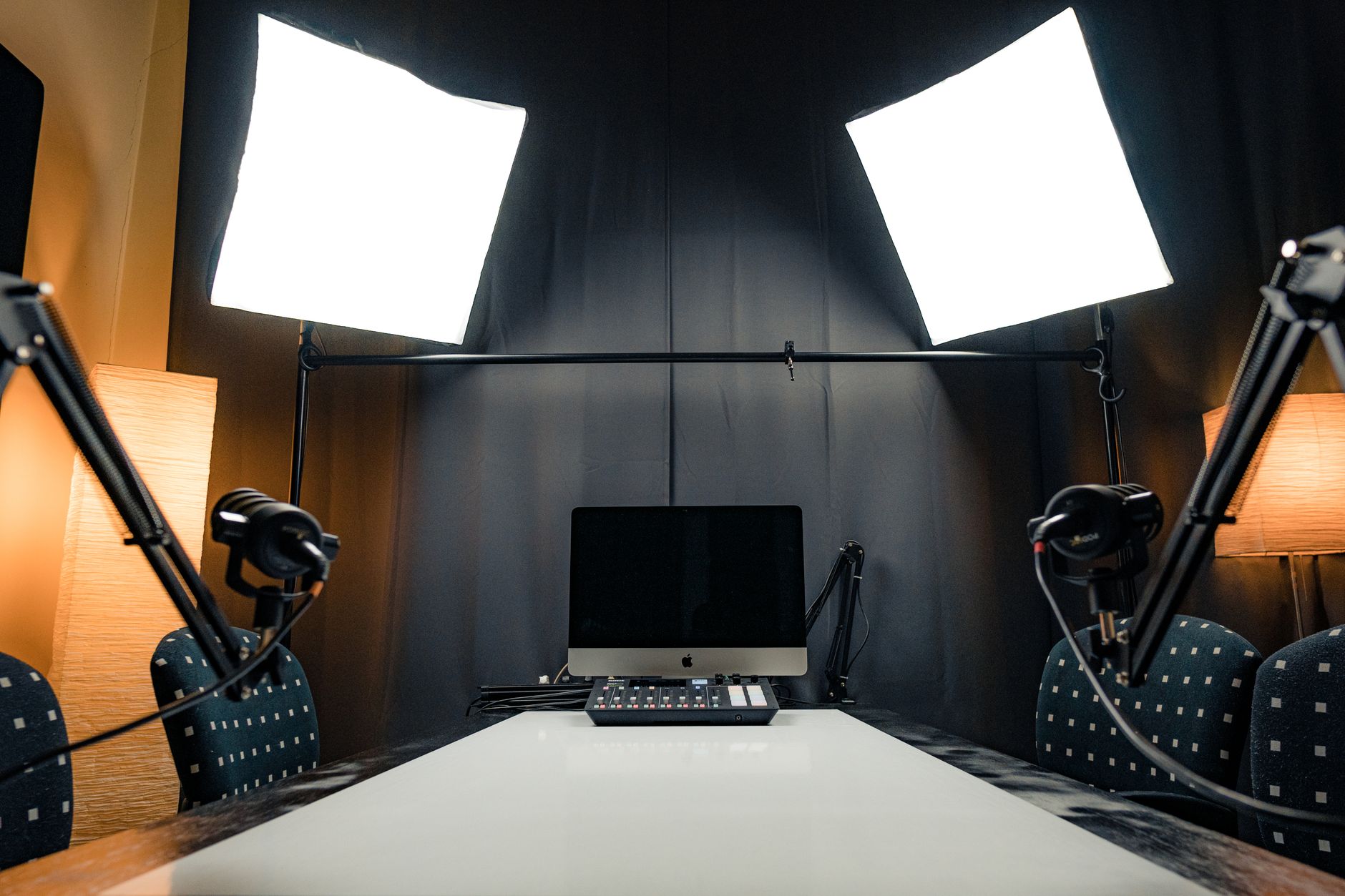 Photo: dlxmedia.hu via Pexels
Verdict by User Archetype
First-time beginner: Buy the AT2020. The $50 difference buys nothing you’ll use before you understand why you’d need it. Put that money toward acoustic treatment or a better interface.
Bedroom producer tracking voice + instruments: Buy the AT2035. The pad and filter earn their cost the first time you mic a guitar cabinet or track acoustic guitar with HVAC running.
Gigging musician needing a portable recording solution: AT2020. Lighter, simpler, lower cost if it gets damaged in a bag.
Prosumer / semi-pro home studio: AT2035, no question. The lower noise floor is the real differentiator at this tier — 12 dB SPL opens up quieter sources and gives you more flexibility in the mix.
FAQ
Is the AT2035 worth the extra money over the AT2020? For voice-only use in a quiet room, the AT2020 is hard to justify upgrading. For instrument recording or any work where you want onboard signal chain tools (pad, high-pass filter), the AT2035 earns the premium. The 8 dB self-noise improvement is real and audible on delicate acoustic sources.
Can you use the AT2020 or AT2035 without an audio interface? Both require an XLR interface and 48V phantom power — neither connects directly to a computer via USB. The AT2020 USB is a separate product that does connect directly, but it’s a different mic with a built-in converter. For the XLR versions reviewed here, a basic audio interface is required.
Which is better for podcasting? The AT2020 is the more common recommendation for podcasting specifically, and for good reason: its frequency response flatters speech, it’s forgiving of imperfect mic technique, and the cost is lower for multi-mic podcast setups. The AT2035 offers no meaningful benefit for this use case.
Do either of these mics need a cloudlifter or preamp booster? No. Both mics are efficient enough to run cleanly on any modern USB audio interface. A cloudlifter is designed for passive dynamic mics or ribbon mics with very low output — it adds gain noise with condensers and provides no benefit here.
How do the AT2020 and AT2035 compare to mics in the $200+ range? Both sit near the top of the entry-level large-diaphragm condenser tier. Step-up competitors like the Rode NT1 (5 dB self-noise) offer meaningfully better noise floor performance. Above $200, you’re buying measurably lower self-noise, better off-axis response, and more consistent capsule matching — improvements that matter in a treated room but are hard to hear through untreated reflections.
What’s the AT2035’s high-pass filter actually for? It rolls off frequencies below 80 Hz — the range that contains HVAC rumble, traffic vibration, and low-end boominess from close-miking (proximity effect). Engaging it before the preamp stage keeps that energy out of your gain structure entirely, which is cleaner than high-passing in a DAW after the fact.
Which mic handles loud sources better? The AT2035, by design. Its -10 dB pad raises the maximum SPL ceiling to 148 dB, making it viable in front of a guitar amp or a kick drum in a pinch. The AT2020 without a pad tops out at 144 dB SPL — fine for voice and acoustic instruments, marginal for close-miked loud sources.
Editorial methodology: Assessments are based on manufacturer specifications, published user reviews, and editorial research. Physical hands-on testing is noted explicitly where it occurred. Rankings reflect our editorial judgment and are not influenced by affiliate commission rates. Full editorial policy · Affiliate disclosure