Contents
Audient iD4 MkII vs Focusrite Scarlett Solo: Which Should You Buy?
TL;DR: The audient id4 mkii vs focusrite scarlett solo matchup comes down to preamp quality against ecosystem polish. The iD4 MkII wins on analog performance for the money — better preamps, a hardware monitoring mix control, and a class-leading headphone amp. The Scarlett Solo wins on plug-and-play simplicity, driver stability, and a lower entry price. Buy the Audient if you care about sound quality; buy the Scarlett if you want zero setup friction.
The Core Difference in One Sentence
The iD4 MkII is the better-sounding interface; the Scarlett Solo is the easier interface. Audient puts a console-derived discrete Class-A preamp against Focusrite’s solid (but simpler) circuit — the gap is audible, especially on dynamics and ribbon mics. The Scarlett Solo trades some of that ceiling for Focusrite’s legendary driver support and a lighter learning curve.
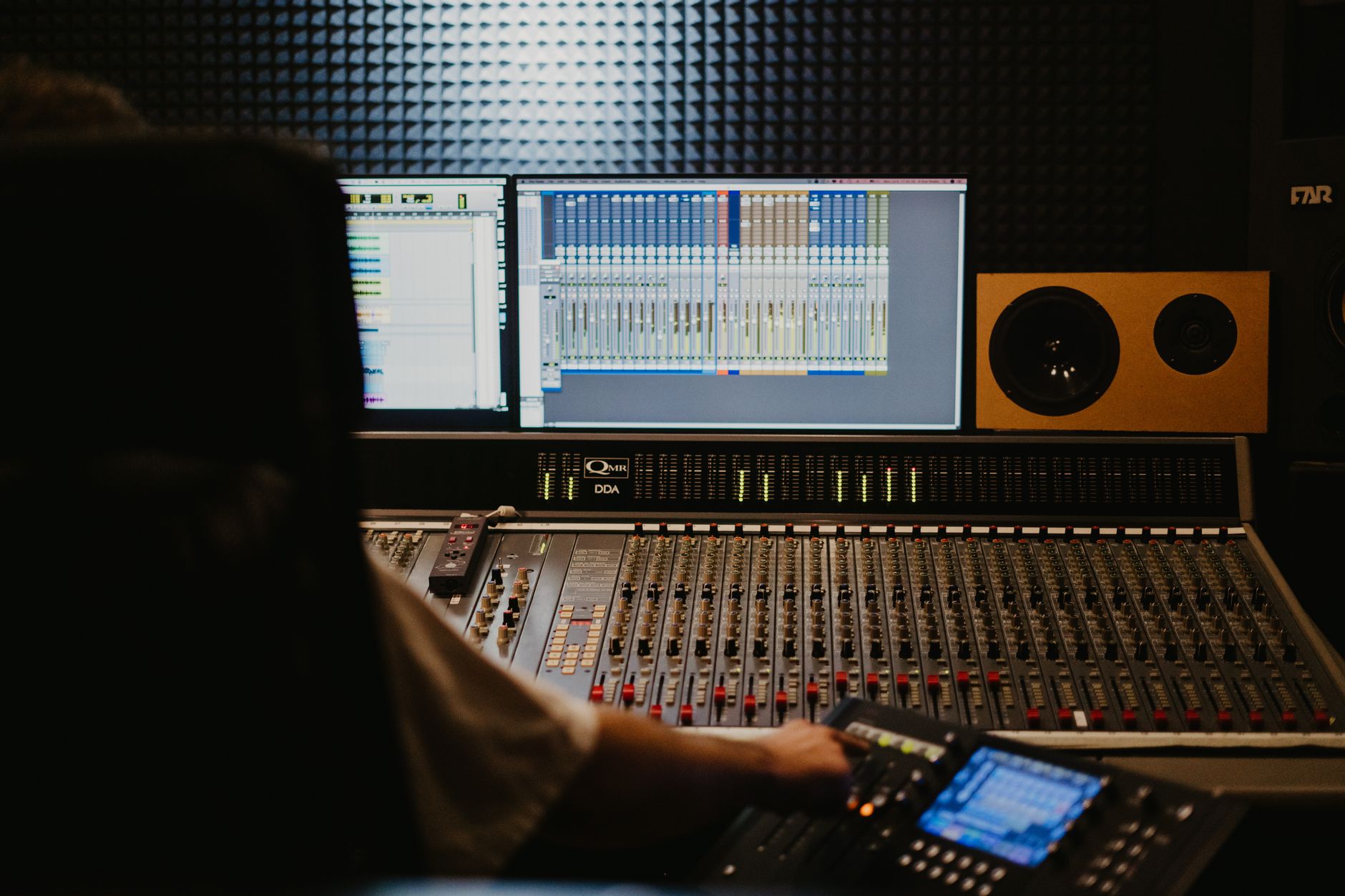 Photo: Tima Miroshnichenko via Pexels
Preamp Quality: Where the iD4 MkII Pulls Ahead
Direct Answer: The iD4 MkII uses a discrete Class-A preamp derived from Audient’s ASP8024 console heritage. Published gain specs show 58dB of headroom — enough for passive dynamics and ribbons without a cloud lifter. The Scarlett Solo 4th Gen delivers a capable preamp with around 56dB of gain and Focusrite’s Air mode for high-frequency shimmer, but its circuit topology is less elaborate.
 Photo: Flavio Vallone via Pexels
According to published measurement data and expert consensus across professional audio forums, the iD4 MkII measures lower noise floor figures (EIN around -129dBu) compared to the Scarlett Solo’s competitive but slightly noisier preamp stage. For vocals, acoustic guitar, and any source that reveals dynamic nuance, that difference is real.
The Scarlett Solo’s Air mode — a high-impedance transformer emulation — adds presence and top-end open-ness that many singers and acoustic players prefer without EQ correction. It’s a feature the iD4 MkII doesn’t have a direct equivalent for.
Verdict on preamps: iD4 MkII for raw quality; Scarlett Solo if Air mode suits your sources.
I/O and Connectivity
Direct Answer: Both interfaces offer one XLR combo input and one instrument-level input, plus stereo outputs. The iD4 MkII adds a front-panel headphone output with a dedicated amp known for its output power, plus a mix control knob for blending direct monitoring against DAW playback. The Scarlett Solo has a headphone output but its amp is noticeably less powerful — a real limitation for high-impedance headphones.
| Feature | Audient iD4 MkII | Focusrite Scarlett Solo (4th Gen) |
|---|---|---|
| Mic inputs | 1 × XLR combo | 1 × XLR combo |
| Instrument input | 1 × TS (front) | 1 × TS (front) |
| Line outputs | 2 × TRS (rear) | 2 × TRS (rear) |
| Headphone output | 1 × 1/4“ (high-powered) | 1 × 1/4“ |
| MIDI I/O | No | No |
| USB bus powered | Yes | Yes |
| Direct monitor mix knob | Yes | No |
The iD4 MkII’s direct monitor mix control is a practical win for tracking: you blend zero-latency hardware monitoring against your DAW return without opening software. The Scarlett Solo handles monitoring through Focusrite Control software, which works well but adds a step.
 Photo: https://kaboompics.com/ via Pexels
Build Quality and Ergonomics
Direct Answer: The iD4 MkII has a heavier, more industrial feel — metal chassis, a large central encoder for input gain. The Scarlett Solo’s 4th Gen chassis is solid aluminum but lighter and more compact. Both survive studio desk life comfortably.
The Audient’s control layout is more intentional: a single large input gain encoder, a separate headphone level knob, and the direct/playback mix control are all immediately accessible. The Scarlett Solo keeps things minimal — gain knob, headphone level, one monitor output level. Less to think about, which is either a feature or a limitation depending on your workflow.
Scarlett’s signature green halo LED metering (clipping indicators on the input ring) is genuinely useful for gain staging without looking at a DAW. The iD4 MkII uses a smaller signal/clip indicator. Neither is a dealbreaker, but the Scarlett’s visual feedback is faster to read at a glance.
Software, Drivers, and DAW Integration
Direct Answer: Focusrite has the stronger software ecosystem. Focusrite Control is polished and stable across macOS and Windows, driver updates arrive quickly after OS releases, and the included Hitmaker Expansion bundle (Pro Tools Artist, Ableton Live Lite, Splice, plugins) is generous. Audient’s driver support is solid but its bundled software package is lighter.
 Photo: Pramod Tiwari via Pexels
Focusrite’s Class Compliant USB audio on the Scarlett Solo also means it works on iPad and Android without additional drivers — useful if you record on mobile. The iD4 MkII is also class compliant (driverless on macOS/iPad), so both interfaces cover that use case.
For Windows users specifically, Focusrite’s driver history is arguably more battle-tested across a wider range of PC configurations. Published user reviews across major audio forums consistently flag Focusrite as the safer pick for Windows machines with complex hardware setups.
Headphone Performance
Direct Answer: The iD4 MkII’s headphone amplifier is the strongest in this price class. Manufacturer specifications and user consensus show it driving 250Ω headphones (Beyerdynamic DT 770/990 Pro) to workable monitoring levels without distortion — something the Scarlett Solo struggles with at high impedances.
If you use or plan to use high-impedance cans for tracking or mixing, this is a decisive factor. Budget headphones (32–80Ω) will work fine on both. If you’re using a Beyerdynamic, Sennheiser HD 600 series, or similar high-impedance model, the Audient is the clear choice.
Price and Value
| Interface | Street Price (approx.) | Preamp EIN | Headphone Amp | Air Mode | Bundle |
|---|---|---|---|---|---|
| Audient iD4 MkII | ~$199 | ~-129dBu | High-powered | No | Light |
| Focusrite Scarlett Solo 4th Gen | ~$119–139 | ~-128dBu | Standard | Yes | Generous |
The Scarlett Solo costs roughly $60–80 less depending on current pricing. For a beginner who needs a reliable first interface and wants to start making music today, that gap matters. For a serious home recordist choosing between these two as a longer-term tool, the iD4 MkII’s per-dollar value on actual audio performance is stronger.
Who Should Buy Which
First-Time Beginner
Buy the Scarlett Solo. Plug it in, it works. The included software bundle gets you into a DAW immediately. Driver stability is the best in class. You will not outgrow it quickly, and if you do, the upgrade path to a Scarlett 2i2 or 4th Gen Solo is painless.
Bedroom Producer (vocals + instruments)
Buy the iD4 MkII. You’ll hear the preamp difference on vocals, acoustic guitar, and any dynamic mic. The headphone amp handles monitoring-grade cans. The hardware mix knob speeds up the tracking workflow once you’re past beginner setup.
Gigging Musician Needing a Simple Recording Rig
Buy the Scarlett Solo. Compact, light, reliable on any machine with a USB-C port. Focusrite Control is available as a mobile app. Class Compliant means no driver installation at a hotel gig.
Prosumer / Semi-Pro Stepping Down from a Larger Interface
Buy the iD4 MkII. The discrete preamp circuit is closer to outboard quality than anything else at this price. The headphone amp can run reference headphones. If you already own a better interface and need a portable solution, this is the one to demote a 19“ rack unit for.
→ See also:
- Focusrite Scarlett 2i2 vs Focusrite Scarlett Solo: Which Should You Buy?
- SSL 2 vs Focusrite Scarlett 2i2: Which Should You Buy?
FAQ
Is the Audient iD4 MkII worth the extra cost over the Scarlett Solo? For most home recording use cases, yes. The discrete Class-A preamp and high-powered headphone amplifier represent a genuine performance difference, not just a spec-sheet difference. If your recording chain includes a decent large-diaphragm condenser or a dynamic mic like the SM7dB, you will hear it.
Can the Focusrite Scarlett Solo handle condenser microphones? Yes. The Scarlett Solo provides 48V phantom power on the XLR input, which powers any standard large-diaphragm or small-diaphragm condenser microphone. Gain is sufficient for most condenser sources; passive dynamics and ribbons will benefit from a preamp with more headroom.
Does the Audient iD4 MkII work on iPad? Yes. The iD4 MkII is USB Class Compliant and connects to iPad via a USB-C cable or USB-C to Lightning adapter (Apple Camera Connection Kit). No driver installation required. The same applies to the Scarlett Solo 4th Gen.
Which interface is better for podcasting? The Scarlett Solo is slightly more practical for podcasting — the Air mode adds vocal presence, Focusrite Control is intuitive for non-technical setups, and the included software covers podcast-relevant tools. Both handle one-microphone podcast recording well. If you need two mics simultaneously, neither will work; consider the Scarlett 2i2 or iD4 MkII’s second input (which is instrument/line level, not a second XLR mic input).
Is the iD4 MkII good for recording electric guitar? Yes. The front-panel instrument input (Hi-Z) handles passive and active guitar pickups cleanly. The iD4 MkII’s instrument input is frequently cited in user reviews as particularly transparent — no unwanted coloration on clean signals, which matters if you’re running into amp simulation software like Neural DSP or NDSP plugins. The Scarlett Solo’s instrument input performs comparably for most guitar sources.
What’s the difference between the iD4 MkII and the original iD4? The MkII added a front-panel scroll control (the large encoder doubles as a value control for DAW parameter adjustment), improved headphone amp specs, and refined the USB implementation for lower latency on Windows. The preamp circuit is the same heritage discrete design. The MkII is the current production model and the only one to buy new.
Editorial methodology: Assessments are based on manufacturer specifications, published user reviews, and editorial research. Physical hands-on testing is noted explicitly where it occurred. Rankings reflect our editorial judgment and are not influenced by affiliate commission rates. Full editorial policy · Affiliate disclosure